

More news on this day
San Francisco International Airport is bracing for a sharp increase in flight delays after the Federal Aviation Administration moved this week to cut the airport’s hourly arrival capacity by roughly one third, a step linked to new safety restrictions and a months long runway repaving project.
Get the latest news straight to your inbox!
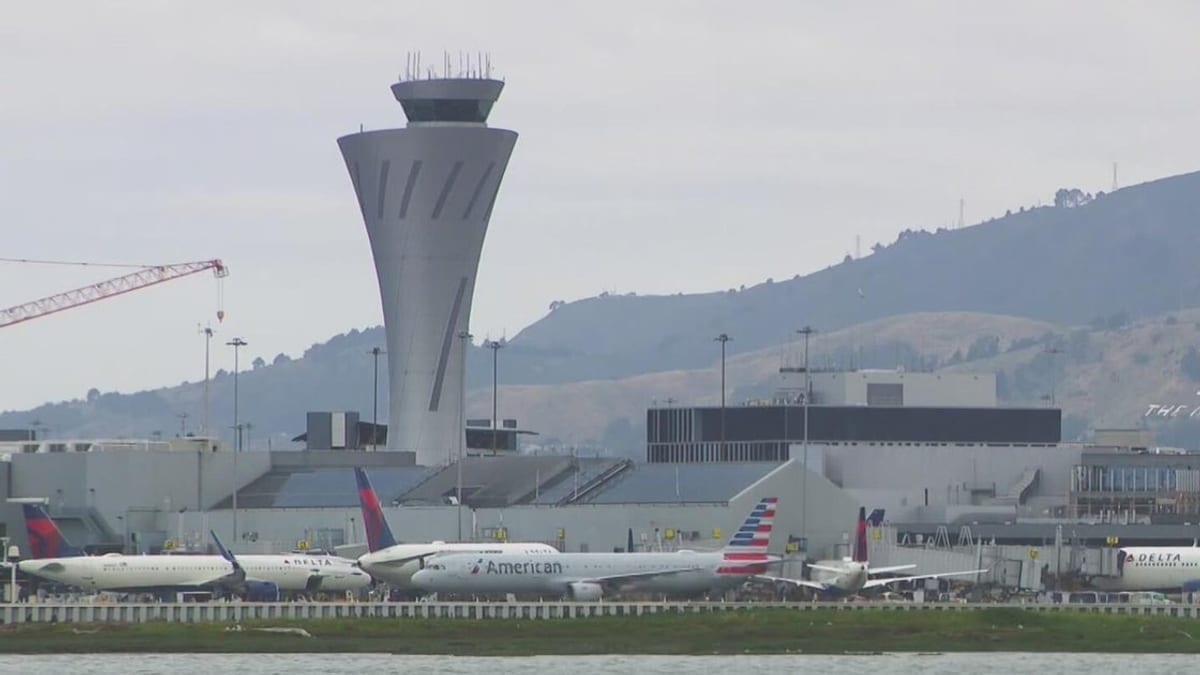
Image by AirGuide Business
Arrivals Cut from 54 to 36 per Hour
Published coverage indicates that San Francisco International Airport’s maximum arrival rate is dropping from about 54 flights per hour to 36, a reduction of one third that will reshape traffic flows into one of the country’s busiest hubs. The change follows the closure of one of SFO’s north south runways for a six month resurfacing project that began March 30, 2026, combined with new federal rules on how aircraft approach the airport’s closely spaced parallel runways.
Reports from outlets including the Associated Press, the Washington Post, and regional travel publications describe a layered set of constraints. The runway closure alone had already lowered the authorized peak arrival rate to around 45 flights per hour. The FAA’s additional safety driven arrival restrictions are now cutting that figure further to 36, tightening the funnel of aircraft allowed to land in any given hour.
Publicly available information shows that the reduced rate applies during key daytime and evening periods when demand for arrivals is typically highest. During those windows, aviation analysts expect controllers to rely more heavily on ground delay programs and airborne holding to meter traffic into the Bay Area, especially when weather or congestion elsewhere in the system sends additional flights toward SFO.
These measures are being introduced as the airport enters the busy spring and summer travel seasons, increasing the likelihood that the new arrival cap will translate directly into longer and more frequent delays for domestic and international passengers.
New Safety Rules Target Parallel Runway Approaches
Alongside the construction related constraints, the FAA is tightening how aircraft can land on SFO’s east west parallel runways, which are separated by about 750 feet. According to multiple aviation news outlets, the agency is limiting side by side simultaneous approaches in clear weather and requiring more staggered spacing between aircraft on the two runways.
This marks a notable shift for SFO, which has long relied on simultaneous parallel operations to sustain high arrival rates in favorable conditions. Under the revised procedures, one aircraft may need to fly slightly offset from the other or arrive with greater separation, reducing the number of landings that can safely occur within each hour.
Industry commentary points to longstanding concerns about closely spaced parallel operations in complex terminal airspace such as the San Francisco Bay Area, where SFO traffic interacts with flows to and from Oakland and San Jose. Recent runway incidents at other major airports, as highlighted in national coverage, have also renewed scrutiny of how closely aircraft operate near runways and taxiways.
By tightening approach rules at the same time that a key runway is out of service, the FAA is effectively building an extra margin of safety into SFO’s arrival system. The tradeoff is a sustained period in which the airport will operate below its previous peak capacity, even in good weather.
Up to One in Four Arrivals Facing Lengthy Delays
Airport forecasts cited in local broadcast and print reports suggest the combined impact of construction and federal restrictions could be significant for travelers. Before the latest FAA decision, SFO expected roughly 10 to 15 percent of flights to be delayed during the runway project, with average waits under 30 minutes.
Revised projections now indicate that approximately 25 percent of arriving flights could experience delays of at least 30 minutes while the new arrival limits are in effect. Some aviation analysts note that this estimate may prove conservative on peak travel days or when weather reduces the ability to use visual approaches, potentially pushing even more flights into holding patterns or schedule adjustments.
Major carriers are assessing how to absorb the capacity cut. Public statements and reporting indicate that United Airlines, which accounts for a large share of traffic at SFO, and Alaska Airlines, the second largest operator, are reviewing their schedules and monitoring on time performance. Early data in local coverage show a patchwork of outcomes, with clusters of delays on some days and relatively smooth operations on others as the system adjusts.
For passengers, the practical impact is likely to be felt across the journey. Longer waits at origin airports, missed connections in San Francisco, and tighter rebooking options are all possible as airlines try to fit existing demand into fewer arrival slots. Travel planners suggest building extra connection time into itineraries that route through SFO in the months ahead.
Six Month Construction Timeline Extends Disruption
The runway at the center of the repaving project is expected to remain closed until early October, according to airport planning documents and local news coverage. That timeline means the reduced arrival capacity will overlap with summer vacation travel, the Labor Day holiday period, and the early part of the fall conference season in the Bay Area.
While some of the delay risk is tied specifically to the construction work, the newly formalized FAA safety rules on approaches are described in industry reporting as a more permanent change. Once the runway reopens, SFO’s maximum arrival rate could recover somewhat, but it may not reach the higher levels seen when fully unconstrained side by side visuals were permitted in clear conditions.
Airport materials emphasize that the repaving is part of a broader effort to maintain runway integrity and support long term reliability. However, the coincidence of a major infrastructure project with new operational restrictions has created a compressed period of disruption, concentrating schedule pressures into a defined but lengthy window.
Travel industry observers note that this kind of sustained constraint at a major hub can have cascading effects well beyond the Bay Area. Flights diverted or delayed at SFO can create ripples through airline networks, influencing on time performance at downline airports around the United States and on some transpacific routes.
What Travelers Can Do to Manage the Turbulence
With arrival capacity cut and delays already rising, consumer travel experts are advising flyers to approach SFO itineraries with additional caution. Recommendations shared across airline, airport, and travel news outlets focus on practical steps to build resilience into trip plans.
Morning flights into San Francisco are generally seen as less vulnerable to extended knock on delays than late afternoon and evening arrivals, which tend to bear the brunt of compounding schedule disruptions. Where possible, passengers may benefit from selecting earlier arrival times and avoiding tightly timed connections, particularly for international onward travel.
Published guidance also stresses the value of monitoring flight status through airline apps and signing up for real time alerts. With the FAA’s restrictions expected to remain in place for months, last minute gate or departure time changes are likely to be commonplace as carriers respond to evolving flow control measures from air traffic management.
For travelers with flexibility, alternate Bay Area airports such as Oakland or San Jose may offer options with fewer delays on certain routes, though capacity at those airports is also limited. For many itineraries, however, SFO will remain the primary gateway, making awareness of the current constraints and proactive planning essential for minimizing disruption during this period of heightened delays.