

More news on this day
Hundreds of U.S. air travelers were thrust into a fresh wave of disruption on Sunday as San Francisco International Airport reported 66 flight cancellations and 90 delays, snarling operations for JetBlue, Delta Air Lines, American Airlines, United Airlines and several other carriers at one of the country’s most delay-prone hubs.
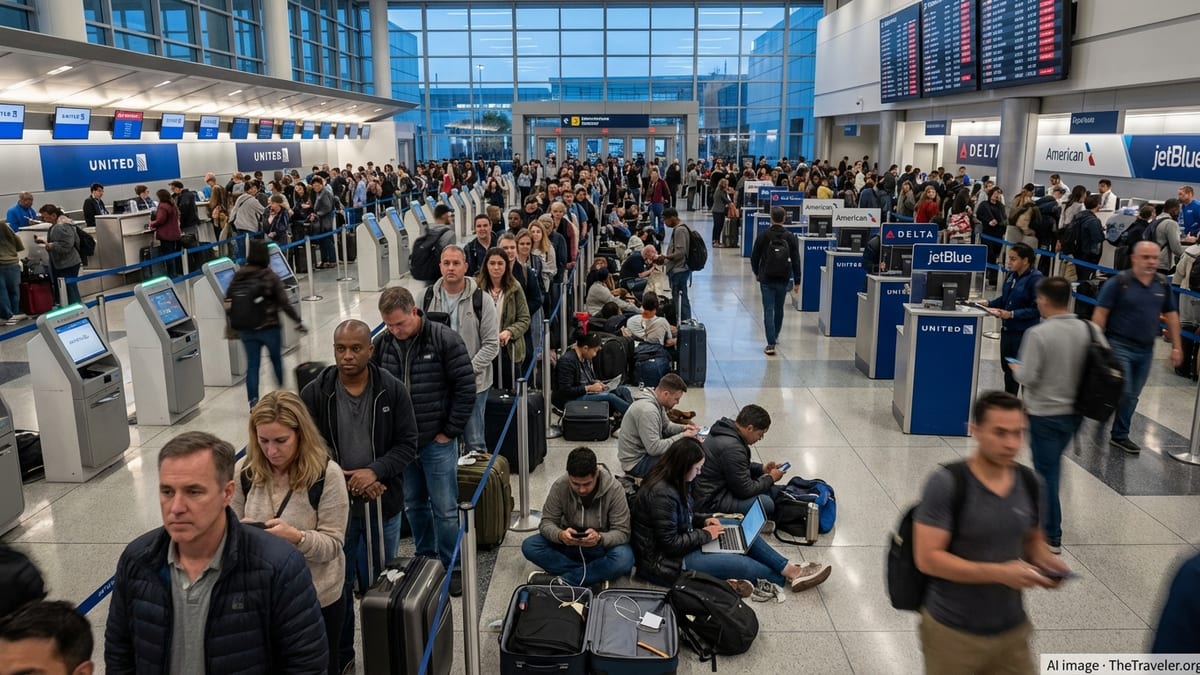
San Francisco Disruptions Add New Strain to a Fragile U.S. Air Network
The latest operational crunch at San Francisco International Airport comes amid a turbulent winter for U.S. aviation, with extreme weather and persistent congestion repeatedly testing carriers’ schedules. Airport data on Sunday showed dozens of flights scrubbed and many more running late, underscoring how quickly conditions at a single major hub can ripple across the national network.
San Francisco has long ranked among the country’s most delay-prone large airports, a function of its coastal location, frequent low clouds and winds, and tightly sequenced runway operations. Recent analyses of federal statistics place San Francisco at or near the top of U.S. airports for late arrivals, with more than a third of flights in the past year arriving behind schedule. That vulnerability has made even relatively brief bursts of adverse conditions translate into outsized disruption for passengers.
On Sunday, the combination of weather-related spacing on arrival routes, residual congestion from earlier delays and crowded weekend schedules pushed operations beyond their tipping point. Airlines adjusted by canceling selected departures and tightening connections, a strategy meant to stabilize the day’s flying but one that left many passengers scrambling for alternatives.
While the disruptions were centered in the Bay Area, their effects extended across the continental United States as aircraft and crews scheduled to pass through San Francisco failed to arrive where they were needed next. By late afternoon, travelers from the East Coast to Hawaii were reporting missed connections, unexpected layovers and last-minute rebookings linked to the San Francisco bottleneck.
JetBlue, Delta, American and United Among Hardest Hit Carriers
Major U.S. airlines bore the brunt of Sunday’s problems at San Francisco, mirroring broader trends this winter as large network carriers and their partners absorbed most of the fallout from storms and air traffic constraints. United, which operates a major hub at San Francisco, faced a wave of cancellations and rolling delays, complicating its transcontinental and transpacific operations as aircraft and crews fell out of position.
American Airlines and Delta Air Lines also reported schedule disruption tied to San Francisco, even though their largest domestic hubs sit elsewhere. Delta in particular has been navigating a series of winter weather events across its system, including thousands of cancellations linked to January’s Winter Storm Fern and new disruptions expected from another strong storm system tracking across the eastern United States. Additional delays out of San Francisco added strain to a network that remains in recovery mode from earlier shocks.
JetBlue, which has already drawn scrutiny from U.S. regulators over chronic delays on some routes, faced another challenging operational day as its San Francisco services encountered significant late departures and arrivals. Even a relatively small number of cancellations can weigh heavily on passengers when alternative frequencies are limited, leaving some JetBlue travelers facing long waits for the next available seat.
Regional affiliates flying under the banners of the major carriers were also affected. These operators, which connect secondary markets to San Francisco and other large hubs, typically run high-utilization schedules with limited spare aircraft. When a single rotation is canceled or significantly delayed, the disruption can cascade through the rest of the day’s flying, particularly on thinner routes where there are few backup options.
Weather, Winds and a Tight Runway Configuration Fuel Delays
San Francisco’s vulnerability to irregular operations is closely tied to meteorological and geographic factors that leave airlines little margin for error. Low clouds, fog and coastal winds routinely force air traffic controllers to increase the spacing between arriving aircraft or reduce the number of active arrival streams, effectively cutting the airport’s hourly capacity even when runways remain technically open.
Earlier this month, strong winds in the Bay Area forced the Federal Aviation Administration to implement a ground delay program for inbound flights to San Francisco, with average arrival delays stretching beyond four hours at the height of the event. Although Sunday’s disruptions were less extreme, they occurred against a backdrop of a stormy season in California, with back-to-back systems bringing rain, turbulence and shifting wind patterns to the region.
San Francisco’s runway layout further amplifies those challenges. Parallel runways that operate efficiently in clear conditions can require more conservative spacing when crosswinds increase or visibility drops, reducing the rate at which flights can safely land and depart. Once capacity falls below scheduled demand, airlines must quickly decide which flights to cancel or hold in order to prevent gridlock.
For passengers, the distinction between a minor reduction in capacity and a full-blown operational crunch is often invisible. They experience the outcome as a string of delay notices, gate changes and rebookings, particularly when aircraft already in the air are forced into holding patterns or diverted to other airports until conditions improve at San Francisco.
A Winter of Systemwide Chaos Sets the Stage
Sunday’s cancellations and delays at San Francisco did not occur in isolation. The U.S. aviation system has been buffeted for weeks by a series of powerful winter storms that have triggered mass cancellations at major hubs from Atlanta to New York, Dallas, Chicago and beyond. One of the most severe episodes came in late January, when a sprawling winter storm system, widely referred to as Winter Storm Fern, produced over ten thousand flight cancellations nationwide over several days.
That storm disrupted the full length of the country’s aviation corridor, from the U.S. Southwest and Texas through the Midwest and into the Northeast, forcing carriers to ground aircraft, reposition crews and issue broad travel waivers. Analysts have described the period as one of the most challenging for U.S. airlines since the pandemic, with widespread knock-on effects lasting long after the last snow band moved offshore.
In the weeks since Fern, airlines have been working to restore normal operations and clear backlogs in maintenance and crew scheduling. However, the persistence of new storm systems has meant that many networks have had little chance to fully stabilize. Another major winter storm, dubbed Hernando, is now threatening to bring heavy snow and high winds to the Mid Atlantic and New England, raising the prospect of renewed disruption in the coming days.
Against that backdrop, San Francisco’s latest problems are being watched closely by industry observers who warn that the U.S. system remains vulnerable to cascading delays when multiple regions come under weather-related pressure at once. With aircraft and crews stretched thin, a bad operational day at one large hub can quickly transmit stress throughout the country.
Passengers Confront Long Lines, Missed Connections and Limited Options
For travelers at San Francisco on Sunday, the operational challenges were immediately visible in crowded check in halls, lengthy security queues and packed customer service desks. With many flights departing late and dozens canceled outright, passengers jockeyed for scarce seats on remaining services and sought rerouting options that would still get them to weddings, business meetings and family events on time.
Families with young children and elderly passengers were among the most affected, as rebookings often involved multiple stops or overnight stays. Hotels near the airport reported rising demand as passengers accepted meal and lodging vouchers or chose to pay out of pocket to secure a room rather than risk sleeping in the terminal. For some travelers, the most practical option was to abandon their trip entirely, seeking refunds or future travel credits in place of a severely disrupted journey.
Lines at airline service counters grew after each wave of cancellations, despite expanded staffing and the use of mobile rebooking tools. Industry experts note that while airlines have invested heavily in digital self-service options, many passengers still prefer or require face-to-face assistance when their itinerary falls apart, especially if they are traveling as a group or need special accommodations.
Social media provided a running commentary on the unfolding situation, with passengers sharing photos of departure boards lit up with red delay codes, clips of crowded gate areas and accounts of last-minute gate changes or inbound aircraft returning to stand for deicing and maintenance checks. While some praised gate agents for their efforts under pressure, others expressed frustration at inconsistent communication and limited updates on the causes of their delays.
Regulators Tighten Focus on Airline Reliability and Passenger Rights
The San Francisco disruption also lands in a regulatory climate that has grown increasingly attentive to airline reliability and consumer protections. The U.S. Department of Transportation has stepped up enforcement actions in recent years, penalizing carriers for chronic delays, inadequate passenger communication and failure to provide timely refunds when flights are significantly disrupted.
JetBlue has been among the most prominent airlines to come under federal scrutiny, paying a multimillion-dollar penalty over what regulators described as chronic delays and unrealistic scheduling on certain routes. That case has become a reference point in broader debates over how aggressively the government should push airlines to align their published schedules with the realities of crowded airspace and increasingly volatile weather.
At the same time, regulators have rolled out rules aimed at simplifying refunds and clarifying what compensation passengers can expect when flights are canceled or heavily delayed. Airlines are under pressure to publish clear policies, including whether they provide meal vouchers, hotel accommodations or alternate transportation during irregular operations like the one unfolding at San Francisco.
Consumer advocates say episodes such as Sunday’s underline the need for even stronger protections, arguing that passengers often remain confused about their rights and may accept travel credits or partial solutions even when they are entitled to full refunds. They also call for greater transparency around delay causes, contending that travelers should be able to distinguish between disruptions driven by weather, air traffic control constraints or airline staffing and maintenance issues.
Airlines and Airport Move to Contain the Damage
As delays mounted on Sunday, airlines at San Francisco activated contingency playbooks that have become all too familiar during peak disruption periods. Carriers trimmed later flights to help reset schedules for the next day, offered customers fee-free changes to alternative dates or nearby airports, and in some cases proactively rerouted aircraft to avoid known weather bottlenecks along certain routes.
Airport officials worked with federal air traffic managers to adjust arrival and departure rates based on evolving conditions, aiming to keep operations moving even if at a reduced tempo. Announcements in terminals encouraged passengers to stay in close contact with their airline’s mobile app or text alerts, which often deliver gate changes and rebooking options faster than traditional display boards.
For ground workers, the disruption meant extended shifts and rapid turnarounds as they sought to service delayed aircraft, manage baggage flows and assist passengers at gates. Labor groups have warned that chronic overtime during peak disruption can contribute to burnout and safety concerns, a point that could resurface in future contract talks if irregular operations continue at today’s pace.
Industry analysts say the speed with which airlines and the airport can restore a normal pattern of departures and arrivals at San Francisco will be a key test of the resilience investments made since the pandemic. These include expanded spare aircraft capacity, more flexible crew scheduling systems and predictive tools that use weather and demand data to forecast trouble spots before they materialize.
What Travelers Can Do as Disruptions Persist
With winter weather systems still active and San Francisco’s latest problems highlighting the fragility of U.S. air operations, travel experts are urging passengers to take additional precautions when planning trips in the coming weeks. Early morning nonstop flights are typically advised as the best hedge against cascading delays, since those aircraft often overnight at the departure airport and are less exposed to knock-on effects from prior flights.
Booking directly with airlines rather than through third-party platforms can also simplify the rebooking and refund process when schedules melt down. During major disruption events, carriers often prioritize customers who purchased tickets through their own channels, and travelers may find it easier to modify itineraries or access travel waivers without navigating a separate intermediary.
Passengers are similarly being encouraged to enable airline app notifications, keep a close eye on real-time flight status and consider travel insurance that specifically covers delays and missed connections. While such measures cannot prevent cancellations, they can help travelers respond more quickly when schedules change and secure scarce alternative seats before they disappear.
For now, those passing through San Francisco face another reminder that even on days without a headline-grabbing storm, a combination of tight schedules, stressed infrastructure and marginal weather can push a major U.S. hub into crisis, with consequences felt far beyond the Bay Area’s runways.