

More news on this day
A fresh wave of mass flight cancellations centered on San Francisco International Airport has cascaded across the United States this week, stranding thousands of travelers, straining already thin airline schedules and highlighting how quickly a single hub’s disruption can ripple through the national aviation system.
Get the latest news straight to your inbox!
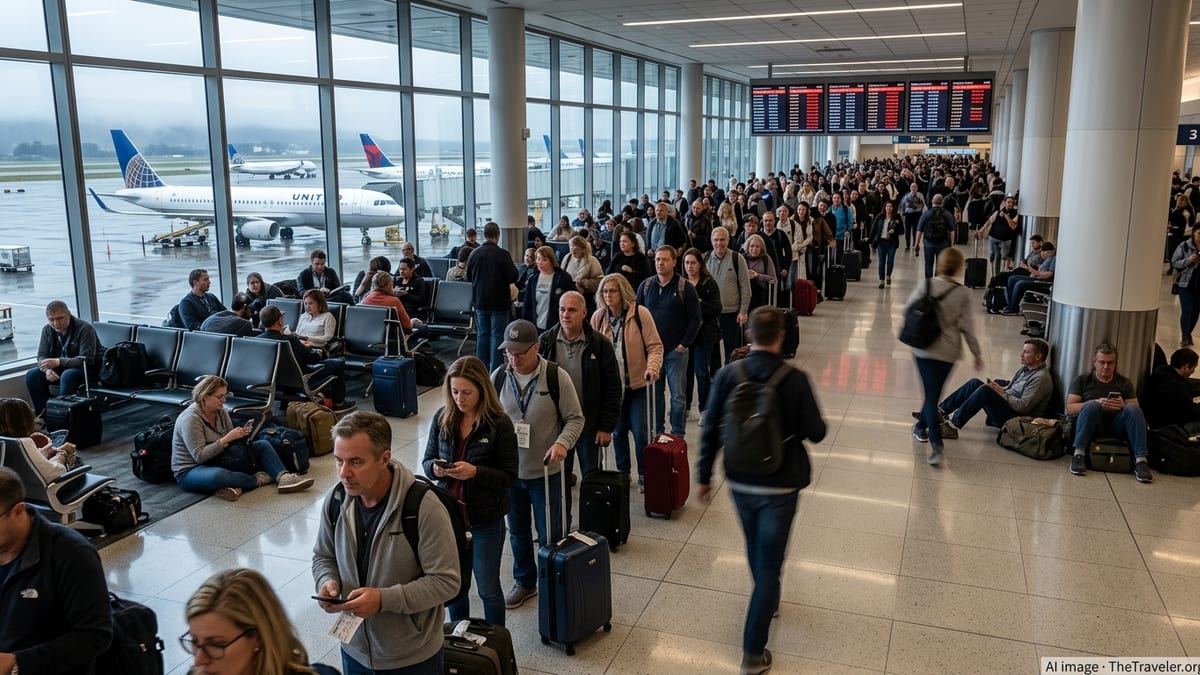
Weather, Shutdown Fallout and System Strain Converge at SFO
Publicly available flight tracking data and media coverage indicate that San Francisco International Airport has become a flashpoint in a broader breakdown hitting U.S. air travel in mid-March. A powerful storm system that dumped heavy snow across the Midwest and pushed severe weather into the East has already forced the cancellation or delay of thousands of flights nationwide, while a protracted federal funding standoff continues to pressure airport operations and staffing.
Reports show that from March 15 to the morning of March 16, more than 5,000 flights were canceled across the United States as the large storm complex swept through the central states and into the Great Lakes and Mid Atlantic. At the same time, previous federal actions to reduce scheduled flights at major hubs during the recent 43 day government shutdown have left airlines operating with limited slack in their systems, particularly at busy coastal gateways such as San Francisco.
San Francisco’s role as a major transcontinental and transpacific hub has amplified the turmoil. When departures or arrivals are suspended or sharply curtailed at SFO, aircraft and crews that feed cross country and international routes fall out of position, creating knock on disruptions from the West Coast to the Northeast and beyond. As the March storm snarled schedules in the Midwest and East, that fragility became more visible for travelers departing from or connecting through the Bay Area.
Airport planning documents and recent federal notices describe how earlier flight reductions at high traffic airports, introduced to cope with staffing strain during the shutdown, were only recently eased. That backdrop has left operations especially vulnerable to sudden weather shocks and surging spring travel demand, making a sharp spike in cancellations at SFO more likely to reverberate across the country.
Nationwide Gridlock as Cancellations Stack Up
Airline operations data and coverage from national outlets show that the latest wave of disruption has not been confined to one region. As storms battered the eastern half of the United States, major hubs from New York and Chicago to Atlanta recorded hundreds of cancellations and delays in a single day, with totals climbing into the thousands nationwide. With San Francisco playing a central role in transcontinental connections, cancellation spikes there have intensified the pressure on already overloaded networks.
Travelers attempting to leave San Francisco have reported long queues at customer service desks, crowded gate areas and rebookings pushed several days out as airlines work through the backlog of displaced passengers. Posts on public travel forums describe missed weddings, abandoned vacations and rerouted business trips as travelers scramble for scarce seats on remaining flights.
The impact has been particularly severe for those relying on tight connections. When an outbound flight from SFO is canceled, passengers bound for a second or third leg through other hubs often find entire itineraries unraveling, as downstream flights are already full or similarly disrupted by weather and staffing problems. This domino effect has contributed to scenes of congestion at airports far from California, where travelers holding tickets that originate or terminate at San Francisco are left stuck in transit.
Data from flight tracking services suggests that recovery may be gradual rather than immediate. With thousands of flights scrubbed in the space of just a few days and many aircraft and crews out of position, airlines face the complex task of rebuilding schedules while attempting to accommodate passengers who have already lost their original travel dates.
Structural Weaknesses in the U.S. Air Travel System Exposed
The chaos tied to San Francisco’s cancellations follows a series of high profile aviation breakdowns in recent years, from widespread airline specific meltdowns to major winter storms that erased more than ten thousand flights in a single day. Aviation analysts have noted that each new disruption appears to expose similar structural weaknesses, including thin staffing, aging technology and tight scheduling that leaves little capacity to absorb shocks.
Recent winter storms, such as the late January system that produced one of the worst days for cancellations since early 2020, underlined how dependent airlines are on a finely tuned chain of aircraft rotations and crew assignments. When a single piece of that chain fails at a large hub like SFO, delays and cancellations can travel quickly across the map, overwhelming call centers, rebooking tools and airport facilities.
Industry reporting after the federal shutdown also pointed to the role of air traffic control staffing and security screening capacity in limiting resilience. Temporary nationwide flight reductions at dozens of major airports were introduced to cope with controller shortages, and while those emergency caps have been lifted, efforts to rebuild staffing pipelines continue. Public policy discussions now increasingly link these long running issues to the repeat episodes of turmoil that travelers are experiencing.
Observers have also drawn comparisons between the present disruption and previous airline specific crises that saw carriers cancel thousands of flights in a matter of days because of crew scheduling problems and software failures. In each case, large hubs like San Francisco served as pressure points where overwhelmed systems became most visible to the public.
Travelers Scramble for Alternatives as Delays Stretch On
With cancellations and rolling delays centered on SFO feeding into a nationwide logjam, travelers have been turning to workarounds to reach their destinations. Public posts on travel and regional forums describe last minute rental car caravans, overnight intercity bus trips and rail journeys as passengers attempt to bypass clogged airline routes or reach alternative airports with functioning schedules.
Some Bay Area residents have reported driving to Sacramento or smaller regional airports in hopes of finding available seats on flights that have not yet been swept up in the disruption. Others have opted to abandon air travel plans entirely, rescheduling trips for later in the spring once airlines and airports have had time to stabilize operations and move aircraft back into place.
Consumer advocates note that the patchwork of airline policies on compensation, hotel vouchers and meal assistance has created additional confusion for those caught up in the cancellations. Travelers often must navigate complex rules that distinguish between weather related disruptions, system failures and staffing shortfalls, with coverage and cash reimbursements varying widely by carrier and circumstance.
Publicly available guidance from travel insurance providers indicates that coverage for cascading cancellations can also be inconsistent. Many policies include strict definitions of qualifying events and require travelers to document the timing and cause of their disruption, leaving some passengers uncertain about whether their expenses will be recouped.
What the SFO Crisis Signals for the Months Ahead
The latest episode at San Francisco International arrives just as the United States enters a peak travel stretch that includes spring break, the Easter period and the run up to the summer holiday season. Aviation planners have repeatedly warned that a combination of strong demand, constrained capacity and lingering staffing challenges could make 2026 one of the most difficult years for on time performance since the pandemic era.
Recent federal notices and airport board reports emphasize ongoing efforts to improve system resilience, including technology upgrades, staffing initiatives and contingency plans for future funding lapses. However, analysts caution that such measures will take time to translate into smoother travel experiences, particularly at complex hubs like SFO where runway configurations, local weather and heavy international traffic already pose daily operational challenges.
The current turmoil is likely to shape traveler behavior in the near term. Public commentary suggests that some passengers are rethinking itineraries that rely on tight layovers through large hubs, while others are shifting bookings toward early morning departures that are statistically less affected by rolling delays. For airports competing for regional travelers, sustained disruption at San Francisco could accelerate a gradual shift in demand toward less congested alternatives.
For now, the situation at SFO stands as another stark example of how quickly the national aviation network can seize up when weather hazards, policy aftershocks and structural weaknesses collide. As airlines work to clear backlogs and travelers navigate a maze of rebookings, the latest meltdown offers a preview of the stakes heading into the busy months ahead.