

More news on this day
Arriving flights at San Francisco International Airport face a challenging six months ahead, as a major runway repaving project and new federal landing rules combine to cut arrival capacity and could delay as many as one in four incoming flights.
Get the latest news straight to your inbox!
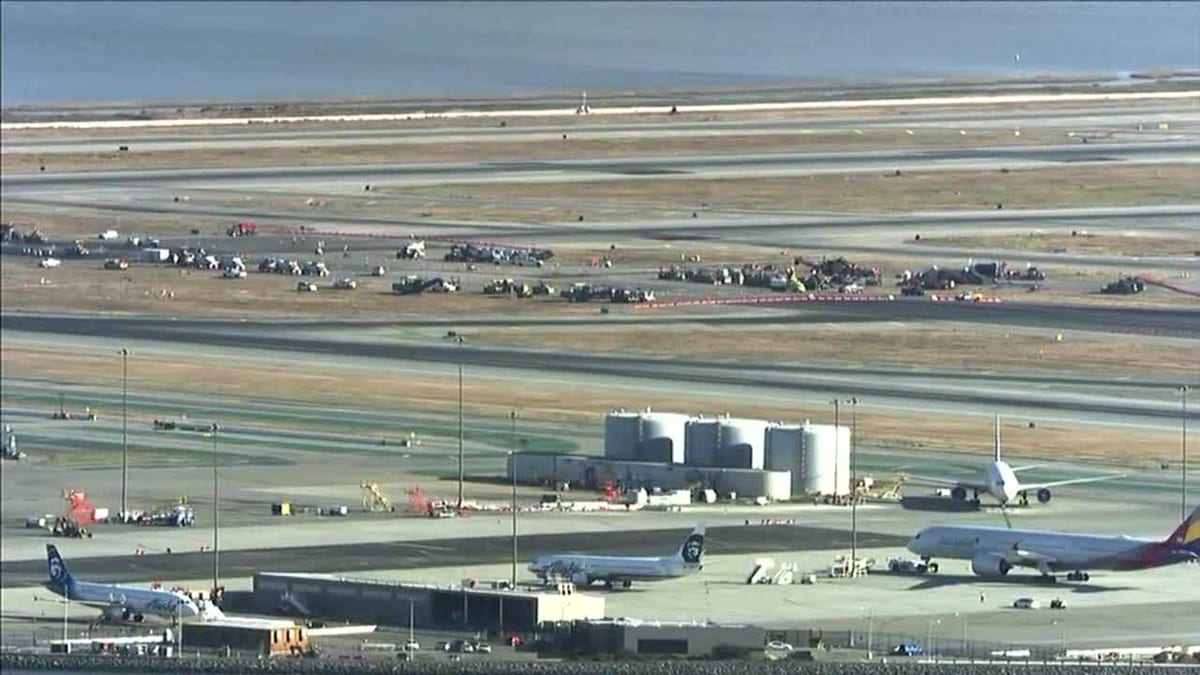
Image by ktvu.com
Runway Closure Cuts Arrival Capacity for Six Months
San Francisco International Airport has begun a substantial airfield upgrade centered on repaving one of its north-south runways and realigning nearby taxiways. Public project documents describe the work as a fast-paced, high-cost rehabilitation effort intended to modernize pavement and improve long-term safety and reliability on the airfield.
The construction requires a full closure of Runway 1 Right for roughly six months starting March 30, shifting all arrivals and most departures onto the airport’s longer east-west pair, Runways 28 Left and 28 Right. Operational data previously published by the airport indicates that, in good weather and with its full runway system available, SFO can typically handle an average of about 54 arrivals per hour.
With one runway out of service and traffic pushed onto fewer strips of pavement, that capacity is shrinking. Federal planning materials and recent news coverage indicate that SFO’s maximum arrival rate is being trimmed to around 36 flights per hour during the construction period, a cut of one third that will ripple through airline schedules and passenger itineraries throughout the busy spring and summer travel seasons.
The runway project itself is part of a broader cycle of periodic pavement replacement that large hubs must undertake as surfaces wear under constant use. Airport presentations note that the current work also includes taxiway realignment and associated lighting and signage upgrades designed to streamline ground movements once the runway reopens.
FAA Tightens Rules on Parallel Landings
At the same time the construction is underway, the Federal Aviation Administration is changing how closely spaced parallel approaches are handled at SFO. According to recent aviation industry reports and national news coverage, the agency has decided to restrict simultaneous side-by-side landings on the airport’s parallel runways, citing the complexity of the surrounding airspace and the close spacing between strips.
Historically, SFO has relied on dual approaches to maximize throughput during periods of high demand and favorable weather, using both runways in a pair to bring in arrivals at a rapid clip. With one runway closed for repaving and new limits on parallel operations on the remaining pair, the FAA’s effective arrival cap has dropped to about 36 flights per hour, compared with 54 previously.
Publicly available information shows that the revised arrival rate is not tied solely to the construction project but is also part of a permanent adjustment to operating rules at the airport. The repaving work accounts for a portion of the hourly reduction, while the landing rule change is responsible for the rest. Together, they represent a significant shift in how traffic will be managed at one of the country’s busiest West Coast gateways.
Industry analysts note that this kind of combined infrastructure and regulatory change tends to have outsized impacts at airports with already congested schedules, especially during peak morning and evening periods when airlines concentrate departures and arrivals for connecting passengers.
From 10–15% to 25% of Arrivals Facing Delays
When SFO first briefed local communities and travelers on the runway closure, airport materials and regional coverage suggested that roughly 10 to 15 percent of flights might face delays of around 30 minutes during the construction phase. Those estimates were based largely on the capacity hit from taking one runway out of service and assuming that other operating procedures would remain stable.
More recent reporting indicates that the picture has worsened as the FAA’s tighter parallel-landing rules have been folded into the planning. Local television news coverage and aviation-focused outlets now state that the combined effect of the repaving, taxiway work, and the federal arrival cap could push delay potential to approximately 25 percent of incoming flights, with those affected experiencing delays of at least half an hour.
Some national business reports similarly describe expectations that about one quarter of arrivals could be delayed during the six-month construction window, reinforcing the notion that the impact will be widely felt. These delays may not occur evenly throughout the day but are likely to cluster in the busiest bank periods when demand to land exceeds the newly reduced hourly capacity.
Historically, SFO has seen particular vulnerability to delays during periods of low clouds, rain, or strong winds, which can further limit usable runway configurations. With less margin built into the system during construction and under the new rules, routine weather shifts could also magnify congestion and push more flights into extended holding patterns or ground delays at their departure airports.
What Travelers Can Expect at SFO
For passengers moving through SFO between spring and early autumn, the immediate consequence of the repaving project and new operating rules is a higher baseline risk of schedule disruptions. Airlines may adjust timetables and build in additional padding, but once incoming flights exceed the 36-per-hour ceiling, queues are likely to form in the air and on the ground.
Travel coverage focusing on the Bay Area suggests that delay patterns could be most noticeable at morning and evening peaks, when many long-haul, transcontinental, and regional flights converge. Travelers connecting through SFO on tight layovers may encounter increased risk of missed connections, and evening arrivals could face later-than-expected landing times that ripple into ground transportation and hotel plans.
Some carriers have signaled through public statements and schedule filings that they are reviewing operations into SFO in light of the new constraints. While major airlines can shift certain flights to neighboring airports in Oakland or San Jose, the concentration of long-haul and international services at SFO means that significant portions of traffic will continue to funnel through the constrained hub.
Travel industry observers recommend that passengers monitor their flight status frequently on the day of travel and consider allowing extra time for connections, especially on itineraries that involve evening arrivals or departures during commonly busy hours at the airport.
Timeline, Costs and Long-Term Outlook
The current phase of runway work is described in local government and airport documents as a roughly six-month effort, beginning March 30 and scheduled to wrap up around early October. Reports referencing internal briefings have cited a target date of October 2 for the affected runway to return to service, though timelines for large civil projects can be influenced by weather and construction conditions.
Public presentations by airport staff to community forums and oversight bodies have placed the cost of the broader rehabilitation effort, including repaving and taxiway realignment, in the range of hundreds of millions of dollars. The investment is part of an ongoing capital program aimed at modernizing the airfield and maintaining compliance with evolving federal safety and design standards.
Once the runway reopens and the physical work is complete, SFO is expected to regain some of its lost operational flexibility, particularly during busy travel periods and in marginal weather. However, published coverage notes that the FAA’s stricter rules on parallel landings are intended to remain in place beyond the construction window, meaning the airport’s peak arrival capacity may not return to its previous 54-per-hour level.
In the longer term, travelers could see a more predictable but somewhat constrained operating environment at SFO, with airlines refining schedules to fit within the new limits and the modernized runway and taxiway system supporting smoother movements when traffic levels and weather cooperate.