

More news on this day
San Francisco International Airport is bracing for months of disruption as a major runway repaving project combines with new federal arrival rules that sharply reduce how many flights can land each hour, raising the prospect of widespread delays for Bay Area travelers through early autumn.
Get the latest news straight to your inbox!
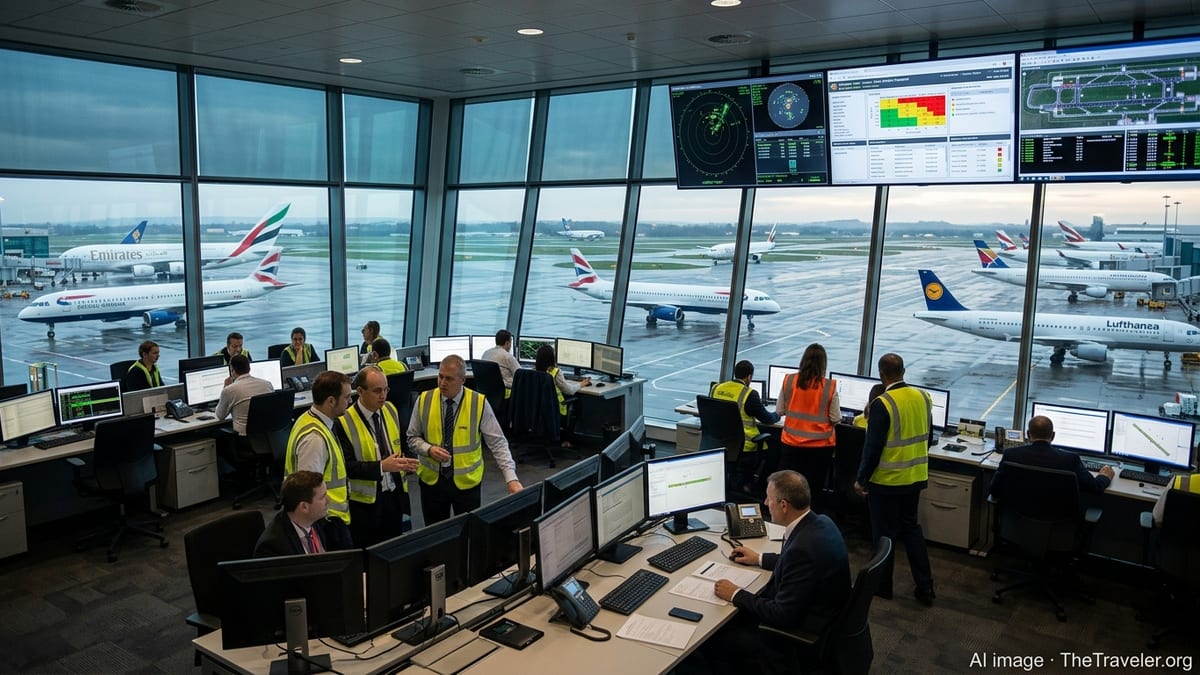
Runway closure and repaving reshape SFO operations
A key runway at San Francisco International Airport was taken out of service at the end of March for a six month repaving and restriping project, according to airport construction notices and local broadcast coverage. The work targets Runway 1 Right, part of the north-south pair closest to San Francisco Bay, and is scheduled to last until early October 2026.
During the construction period, the parallel runway, 1 Left, is being reassigned as a taxi corridor to keep ground movements flowing around the work site. That shift leaves SFO relying primarily on its two longer, closely spaced west-facing runways for most takeoffs and landings, particularly during the summer travel peak when demand traditionally surges.
Publicly available information indicates that airport planners had initially projected modest disruption from the project, expecting roughly 10 to 15 percent of flights to face delays tied directly to the closure. Those forecasts were based on typical weather patterns and the assumption that existing arrival procedures would remain in place.
The scale of the impact changed markedly once federal regulators moved to curtail one of SFO’s signature features: simultaneous landings on its side by side runways. That decision has turned a routine infrastructure upgrade into a systemwide test of the airport’s capacity and resilience.
FAA tightens rules on parallel arrivals at SFO
New guidance from the Federal Aviation Administration has effectively ended the long standing practice of routinely landing two aircraft at the same time on SFO’s closely spaced parallel runways, based on recent national reporting and industry briefings. The north side of the airfield features a pair of runways separated by only about 750 feet, a configuration that has historically allowed the airport to handle dense arrival banks in favorable weather.
Under the revised rules, arrivals must now be spaced farther apart, significantly reducing the number of planes that can land each hour. Associated Press coverage and aviation trade publications indicate that SFO’s arrival rate is dropping from about 54 flights per hour to roughly 36 during the current construction period, a cut of about one third.
The change is described in public reports as permanent for SFO, reflecting heightened concern over operations on closely spaced parallels in complex airspace. The San Francisco Bay Area sits at the center of a crowded aviation corridor that also includes Oakland and San José, along with several smaller airports whose traffic patterns intersect with SFO’s arrival and departure flows.
Federal safety reviews in recent years have focused on runway incursions and near collisions at major hubs, and the new arrival spacing rules at SFO fit into a broader national push to reduce risk. While the parallel runway restriction is not described as a nationwide standard, regulators have identified the combination of SFO’s geometry and regional traffic mix as a unique case.
Delays expected to hit a quarter of arriving flights
With one runway closed and stricter spacing in effect on the remaining arrival corridors, the airport now expects a far more visible impact on passengers than originally projected. Local television coverage and aviation focused outlets report that about 25 percent of arriving flights could experience delays of 30 minutes or more on busy days.
The greatest pressure is likely to fall on peak periods in the morning and evening, when tightly banked arrivals feed cross country and international connections. When weather is marginal, the loss of capacity could cascade through airline schedules, creating knock on disruptions for flights into and out of SFO’s domestic and overseas markets.
Aviation analysts note in recent coverage that actual conditions will vary daily, depending on demand, wind patterns and how aggressively airlines trim or retime flights to fit the lower arrival cap. While the FAA rule does not explicitly cancel specific services, a sustained reduction in hourly throughput may compel carriers to adjust schedules, swap aircraft types or push more connections through alternative West Coast hubs.
Early data points shared in local news reports suggest that some airlines have already seen clusters of delays tied to the new operating environment, though the full effect may not be evident until late spring and summer traffic build. Passengers booked on tight connections at SFO are being urged by travel advisors in media interviews to monitor itineraries closely and allow extra time where possible.
What travelers can expect through October
For passengers, the immediate takeaway is that flights involving San Francisco are now more vulnerable to schedule disruptions than they were just a few weeks ago. Publicly available forecasts from airport and industry sources indicate that elevated delay risk is likely to persist into early October, when the runway project is slated to wrap up and the closed pavement is expected to return to service.
Even after the repaved runway reopens, the permanent change in federal rules around parallel approaches means SFO may not fully recover its previous arrival capacity. Aviation observers quoted in recent trade and consumer travel coverage suggest that the airport could remain more delay prone than other West Coast gateways that rely on wider runway spacing or independent approach streams.
Travel industry reports recommend that passengers flying through SFO during the construction window build additional buffer into their plans. That can include selecting earlier flights in the day, avoiding very short connections, and considering nonstop options when feasible. Some corporate travel managers are also encouraging employees to factor in potential missed connections when arranging critical same day meetings.
Regional airports such as Oakland and San José may see a modest uptick in demand as Bay Area travelers look for alternatives, particularly for point to point domestic trips. However, SFO’s role as a primary international hub and a major base for long haul operations means that many global itineraries will continue to route through its runways, even as work crews and new safety rules reshape how those runways are used.
Longer term questions for a growing hub
The timing of the capacity squeeze coincides with broader growth and modernization plans at San Francisco International Airport. United Airlines and other carriers have been investing in expanded schedules and upgraded facilities, supported by a multibillion dollar program to renovate terminals and airside infrastructure. Planning documents released by the city and county of San Francisco outline ambitions to accommodate higher passenger volumes over the next decade.
Against that backdrop, the current arrival restrictions raise fresh questions about how much traffic SFO can realistically absorb without prolonged congestion. Community groups and neighboring cities have already been scrutinizing the airport’s expansion blueprints, especially around noise and environmental impacts linked to more frequent flights over residential areas.
Transportation planners and aviation specialists, writing in recent policy submissions and environmental reviews, have pointed to operational bottlenecks on SFO’s airfield as a constraint that could intensify without additional capacity or procedural innovations. The combination of complex airspace, crosswinds off the Pacific and now tighter federal rules on runway use leaves little margin when weather or traffic spikes push the system to its limits.
For now, the focus remains on getting through the next six months of construction and adjusted arrival rates with as little disruption as possible. But the experience is likely to feed into ongoing debates over long term investments at SFO and across the Bay Area’s airport network, as policymakers and travelers alike weigh the trade offs between safety, growth and reliability in one of the country’s most important aviation markets.