

More news on this day
Travelers using San Francisco International Airport in the coming months are being urged to prepare for longer travel days, as a major runway construction project combines with new federal landing rules that significantly cut the number of flights allowed to arrive each hour.
Get the latest news straight to your inbox!
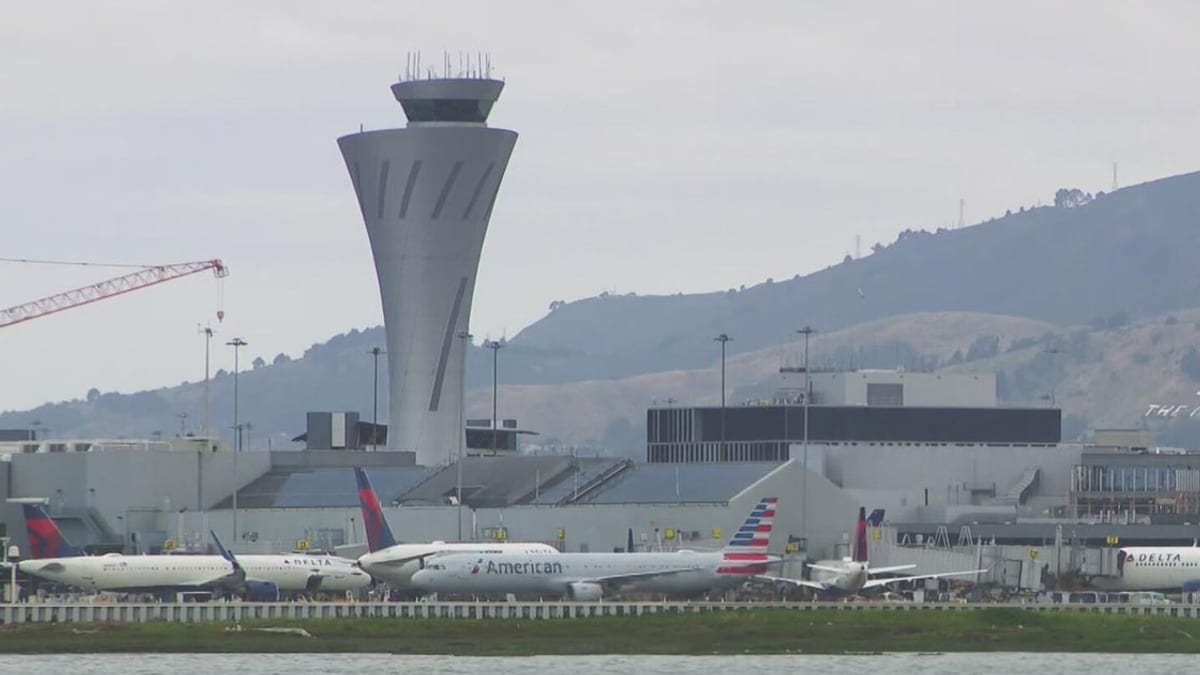
Image by CBS News
Runway 1R closure compresses traffic onto main arrival pair
Publicly available information from the airport shows that San Francisco International Airport has closed Runway 1 Right, a key north–south runway, for a six‑month repaving and taxiway upgrade project running from March 30 to October 2, 2026. During that period, most arrivals and departures are being funneled onto the longer west‑facing Runways 28 Left and 28 Right, increasing operational pressure on the airport’s primary arrival pair.
The construction program, budgeted at about 180 million dollars and partially funded by Federal Aviation Administration grants, includes resurfacing the runway, installing updated lighting and making changes to connecting taxiways intended to improve efficiency once the work is complete. While the project is framed as essential maintenance that should support more reliable operations over the long term, it temporarily removes one of SFO’s four runways from service at a time when overall demand for air travel remains strong.
Airport materials indicate that Runway 1 Left, which parallels the construction area, is being reassigned primarily as a taxiway to help manage ground congestion. That choice concentrates takeoffs and landings on the 28L and 28R pair instead of splitting movements between the cross‑runway system, a configuration that tends to work well in clear weather but leaves less flexibility when winds or low clouds force changes in the usual traffic pattern.
Earlier planning documents suggested the airport initially expected only a modest rise in delays tied directly to the runway closure. However, subsequent federal rule changes affecting how those same runways can be used for landings are now amplifying the effect of the construction.
Federal rule change cuts simultaneous parallel landings
According to recent national coverage, the Federal Aviation Administration has introduced a new safety rule at San Francisco that effectively bans the “side‑by‑side” simultaneous landings on the closely spaced parallels 28L and 28R that had long been a hallmark of the airport’s high‑throughput operations. The change follows a series of safety reviews and concern about how closely spaced approaches interact with busy and complex Bay Area airspace.
Reports indicate that, as a result of the new rule, SFO’s permitted arrival rate has been reduced from about 54 landings per hour to roughly 36, a cut of one‑third. The limit is being applied at the same time that Runway 1R is unavailable, meaning that air‑traffic controllers have fewer options to sequence arriving aircraft when weather, spacing requirements or downstream congestion slow the flow of traffic into the airport.
Public descriptions of the rule emphasize that it is tailored to San Francisco’s specific runway geometry and does not represent a nationwide overhaul of parallel‑runway procedures. The airport’s pairs of runways are closer together than at many other large hubs, and the Bay Area is ringed by additional commercial and general‑aviation airfields, which makes designing and managing approach paths more complex.
The FAA has indicated in public materials that the restriction on side‑by‑side landings is being introduced as a safety measure at the same time as the construction project, but is expected to remain in place beyond the end of the runway work. For passengers, that means some of the delay risk now taking shape could persist in busy periods even after the repaving is finished and Runway 1R reopens.
Delay outlook: fewer arrivals per hour and longer waits
Recent coverage by national and local outlets suggests that about one quarter of arriving flights at SFO over the coming six months could experience delays of at least 30 minutes. That estimate reflects the combined impact of the reduced hourly arrival cap and the closure of Runway 1R, and represents a noticeably higher level of disruption than airport planners initially modeled when they focused only on the construction element.
Historically, San Francisco has been vulnerable to delays because of the interplay between its tightly spaced parallels and frequent coastal weather, especially low marine clouds and fog that require larger spacing between arrivals. The new limits on parallel landings are expected to be most disruptive at peak times in the morning and evening, when airlines schedule dense arrival banks to feed domestic and international connections.
While airlines are still adjusting their schedules to the new constraints, observers note that carriers may be forced either to accept longer average delays into SFO or to trim the number of flights scheduled in the busiest hours. Some reports indicate that the largest airlines at the airport are reviewing operations to determine whether retiming or consolidating flights might reduce knock‑on delays that can ripple throughout the national network.
For individual travelers, the practical effect is likely to be longer gate holds before departure to San Francisco, airborne holding patterns as traffic stacks up during busy periods, and tighter margins for making connections. Disruptions may be magnified on days with low clouds or strong winds, when the airport has fewer viable runway configurations and the new rules leave less room to recover from earlier backups.
Noise shifts and regional spillover as traffic patterns change
The concentration of takeoffs and landings on the 28L and 28R pair is also changing how noise and air‑traffic patterns are distributed across the San Francisco Peninsula. Local reporting and airport community briefings describe expectations for more frequent departures overhead in several Peninsula communities while construction continues, particularly in areas aligned with the west‑facing runways.
Communities that normally see less traffic when the north–south runways are available may notice more sustained periods of jet noise as departure paths are adjusted to accommodate the temporary closure. At the same time, residents under routes typically used when Runway 1R is active may see some relief, at least until the repaving project is completed and the runway returns to service.
Aviation analysts have also noted that regional spillover is possible if airlines choose to shift some capacity to Oakland or San Jose to sidestep the most congested arrival windows at SFO. Any such adjustments would depend on airline network strategies, gate availability and passenger demand, but the combination of runway work and arrival caps at San Francisco could make nearby airports more attractive for certain flights over the coming months.
Noise and operations committees that monitor airport activity are expected to track how the temporary runway configuration affects community complaints and on‑time performance. Those findings could influence how future construction projects are sequenced and how long‑term airspace changes are designed around the Bay Area’s three major commercial airports.
What travelers can do to minimize disruption
Travel and aviation reports recommend that passengers with trips booked through SFO in the coming months build extra time into their plans, especially when connecting from shorter flights to long‑haul domestic or international services. Booking longer connection windows, choosing earlier flights in the day when possible, and avoiding tight same‑day commitments after arrival can help reduce the impact if flights encounter holding patterns or departure delays.
Some airlines may issue schedule changes as they adapt to the lower arrival limits, which can occasionally open opportunities for free rebooking under carrier policies. Industry guidance suggests that travelers monitor their reservations closely, use airline apps for real‑time notifications and consider proactive rebooking if connection times drop below comfortable margins.
Experts also note that travelers with flexibility might consider alternate Bay Area airports for certain itineraries, particularly point‑to‑point domestic trips that do not require an SFO connection. However, San Francisco International remains the region’s primary long‑haul hub, and many international and transcontinental flights will continue to rely on its facilities despite the temporary slowdown.
With the repaving work already underway and the new federal rules now in effect, the airport is entering a period in which reliability will depend heavily on weather and how smoothly airlines and air‑traffic managers adapt to the reduced arrival capacity. For passengers, understanding the causes of the disruption and planning for extra time may be the most practical strategies while San Francisco’s runways undergo their latest overhaul.