

More news on this day
Shanghai’s cruise recovery has moved firmly into a new phase of upmarket growth, as the ultra-luxury Seven Seas Explorer and premium Oceania Regatta add high-spend international travelers to the steadily rising passenger flows at Wusongkou International Cruise Terminal.
Get the latest news straight to your inbox!
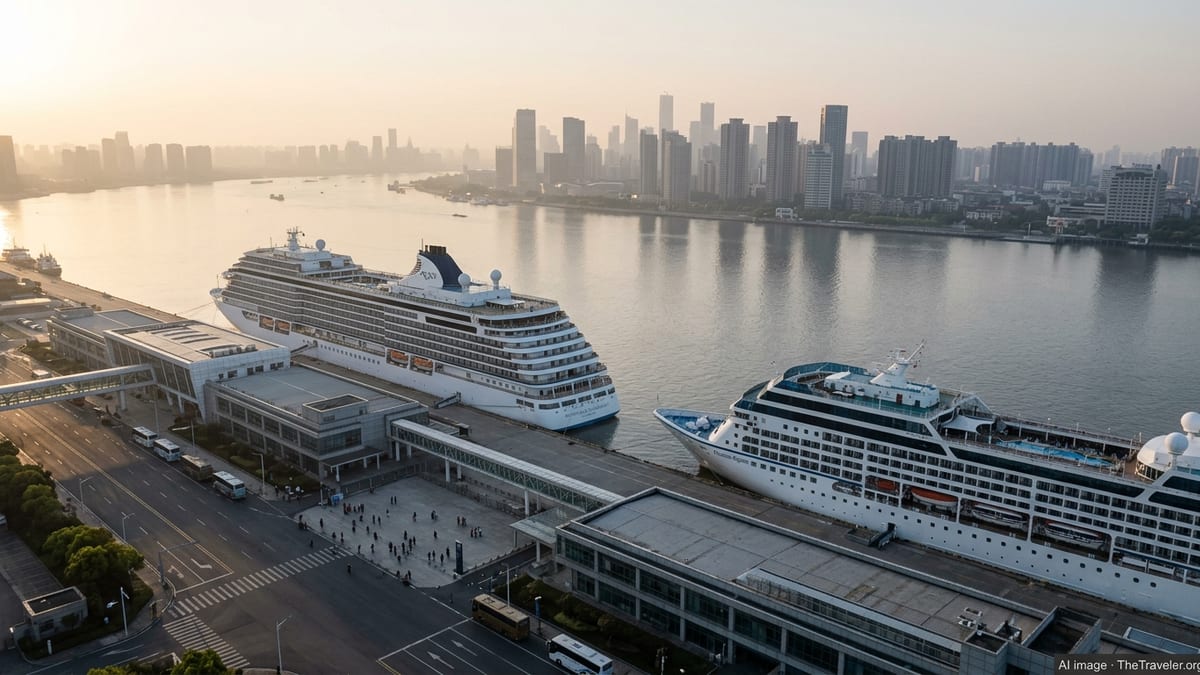
High-End Cruise Calls Highlight Shanghai’s Tourism Rebound
The arrival of Regent Seven Seas Cruises’ Seven Seas Explorer and Oceania Cruises’ Regatta at Shanghai’s Wusongkou International Cruise Terminal is emerging as a symbolic moment in the city’s cruise revival. Both ships are positioned at the upper end of the global market, with relatively small capacities and high per-passenger spending, and their Shanghai calls are being seen as a sign that luxury demand has returned to China’s leading cruise gateway.
Publicly available deployment data for 2026 indicates that Regatta is scheduled to operate Asia itineraries that include Shanghai, with a February voyage ending with an overnight stay in the city. One such program routes the ship from Seoul to Shanghai over 14 days, combining Japanese ports and a call at Tianjin before concluding with two days in Shanghai, giving guests extended time on shore.
Industry schedules show that Seven Seas Explorer, one of the most expensive cruise ships ever built on a per-berth basis, is also charting Asia programs that feature marquee ports in East Asia. Its inclusion of Shanghai in future seasons, aligned with the broader reopening of Chinese cruise homeports, adds a further layer of prestige to Wusongkou’s roster of visiting vessels.
These deployments coincide with an upswing in Shanghai’s cruise traffic. Municipal data and trade reporting describe double- and triple-digit growth rates in ship calls and passenger volumes since 2024, reinforcing the view that the market is not only recovering in volume but also moving up the value chain.
Wusongkou Terminal Sets New Benchmarks for Passenger Volumes
Shanghai’s Wusongkou International Cruise Terminal has rapidly re-established itself as one of Asia’s busiest cruise hubs. Government and industry summaries for 2024 and 2025 describe a sharp rebound, with the terminal handling more than 200 cruise arrivals in 2024 and over 1.3 million passengers for the year, returning the port to its pre-pandemic scale of operations.
By early 2025, Shanghai authorities reported that cruise ports in the city welcomed more than 350,000 inbound and outbound passengers in just the first two months of the year, on around 130 ship calls. Separate coverage highlights Wusongkou’s performance, including a new single-day record of roughly 4,800 inbound foreign tourists on March 16, as multiple international vessels arrived within hours of each other.
Forecasts for the full 2025 calendar suggest that Wusongkou could set another record, with projections of around 206 to more than 230 cruise calls depending on the source and methodology. These numbers would put the terminal at the forefront of the Asia Pacific cruise rebound, consolidating its position as a primary homeport for both Chinese and international brands.
The addition of luxury calls from ships such as Seven Seas Explorer and Regatta takes place against this backdrop of volume growth. While these vessels carry far fewer passengers than the large mass-market ships already homeported at Wusongkou, they contribute disproportionately in terms of on-shore spending and marketing impact for Shanghai as an upscale urban destination.
Visa Easing and Policy Support Lift International Cruise Tourism
Shanghai’s expanding cruise calendar is closely linked with changes in China’s border policies and targeted support for inbound tourism. Public policy briefings in 2024 announced a 15-day visa-free scheme for international cruise tour groups arriving at coastal ports, including Shanghai, along with streamlined transit procedures for eligible foreign passengers.
Industry-oriented reports describe how this framework has begun to translate into measurable growth. Wusongkou recorded tens of thousands of foreign passenger visits in the early months of 2025, including the record-setting day in March when several international ships arrived nearly simultaneously. The simplified procedures reduce friction for operators planning itineraries that originate or terminate outside mainland China but include Shanghai as a key port of call.
Local authorities have also invested in passenger-facing services at Wusongkou, with information describing a one-stop terminal area offering currency exchange, mobile services and multilingual volunteer assistance. These facilities are designed to shorten processing times and encourage passengers to spend more time ashore in the city, whether on organized excursions or independent exploration.
For premium and luxury brands, such as Regent Seven Seas Cruises and Oceania Cruises, this policy environment lowers the operational and marketing risk of deploying high-value ships to China. The presence of Seven Seas Explorer and Regatta in itineraries that include Shanghai reflects growing confidence that international guests can move efficiently through the terminal and into the city’s core districts.
Economic Ripple Effects Across Shanghai’s Tourism Sector
The upscale character of Seven Seas Explorer and Oceania Regatta is expected to amplify the broader economic impact of Shanghai’s cruise resurgence. Market analyses of cruise spending patterns consistently show that passengers on luxury and upper-premium lines generate significantly higher per-capita expenditure on shore than mainstream travelers, particularly on gastronomy, bespoke touring and high-end retail.
In Shanghai, this spending is likely to flow into well-known visitor districts such as the Bund, Lujiazui and the former French Concession, as well as nearby cultural neighborhoods and museum clusters. Travel trade coverage notes that cruise passengers increasingly seek “deeper” city experiences rather than short, panoramic tours, which could benefit smaller galleries, specialty restaurants and emerging cultural venues.
The expected increase in high-yield visitors also strengthens the case for new products tailored to cruise guests, including evening river cruises on the Huangpu, curated shopping experiences and short-stay luxury hotel packages timed to ship arrivals and departures. With ships like Regatta scheduling overnights in Shanghai, local operators have a larger time window to capture demand for dining, nightlife and cultural performances.
Beyond direct tourism receipts, the consolidation of Wusongkou as a hub for both mass-market and luxury segments reinforces Shanghai’s positioning as a global cruise capital. Investments in terminal infrastructure, security, logistics and transport links to downtown districts are framed in local reporting as part of a broader strategy to integrate cruise tourism into the city’s long-term development as an international consumption center.
Shanghai Positions Itself as a Premier Cruise Gateway in Asia
As more high-profile ships return to Chinese waters, Shanghai is working to differentiate itself in an increasingly competitive regional landscape that includes ports such as Hong Kong, Singapore and major Japanese homeports. The combination of large homeported ships, China’s first domestically built large cruise vessel and visiting luxury liners gives Wusongkou a diversified portfolio that few Asian terminals currently match.
City-level planning documents and promotional materials highlight cruise development as a strategic pillar of Shanghai’s wider tourism and services economy. Projections for 2035 envision millions more cruise passengers annually, supported by expanded berthing capacity, enhanced customs and immigration systems and a richer onshore tourism offering designed to encourage repeat visits and longer stays.
For international cruise brands, the rapid normalization of operations at Wusongkou removes much of the uncertainty that surrounded China deployments only a few years ago. With visa procedures easing, demonstrated demand from domestic travelers and strong homeport performance figures, Shanghai is increasingly viewed as a reliable anchor for Asia itineraries that combine regional circuits with longer repositioning voyages.
The simultaneous presence of Seven Seas Explorer, Oceania Regatta and a growing roster of mainstream ships underscores how far the market has evolved since the restart of international cruising in China. For Shanghai, their calls at Wusongkou are not only a tourism milestone but also a statement of intent to compete for the most discerning travelers in the global cruise industry.