

More news on this day
Non-stop flights between Shanghai and Venice are reshaping travel between China and northern Italy, creating faster access to Venice, the Dolomites and destinations across the Veneto region.
Get the latest news straight to your inbox!
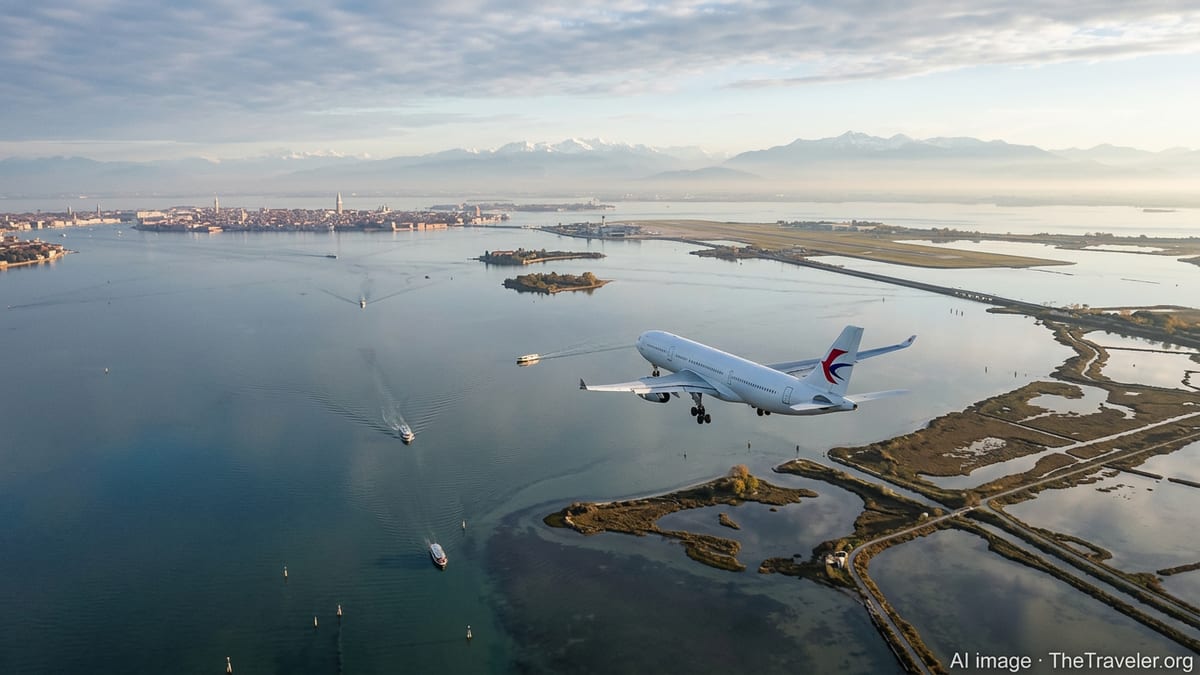
Regular Non-stop Link Between Shanghai and Venice
China Eastern Airlines operates a direct route between Shanghai Pudong International Airport and Venice Marco Polo Airport, providing one of the most convenient air connections between China and northeastern Italy. Publicly available schedule data indicates that the service is year-round and currently the only non-stop option on this city pair, cutting travel time and eliminating European hub transfers for many passengers.
The route, which first entered regular service in late September 2024, typically uses Airbus A330 aircraft configured with economy and business cabins. Flight information platforms show that flying time averages around 13 hours, with multiple weekly frequencies that have gradually increased from the initial three-per-week pattern as demand has grown. The non-stop link offers a consistent gateway for Chinese leisure and business travelers bound for Venice and nearby regions.
Information published by Shanghai airport and airline sources highlights this Shanghai–Venice connection as part of a broader expansion of long-haul services into Europe. The route now sits within a wider China Eastern network that also serves major European cities such as Paris, Rome, Amsterdam and Madrid, reinforcing Shanghai’s role as a key Asian hub feeding traffic into Italy.
According to route-tracking services, China Eastern remains the sole operator of direct flights on the Shanghai–Venice sector, which simplifies booking choices for travelers while signaling a focused bet on the long-term viability of the corridor. The consistency of operations since launch suggests that the route has established itself as a stable component of capacity between China and Italy.
Strategic Gateway to the Dolomites and Veneto
The introduction of non-stop Shanghai–Venice flights has significant implications for tourism in the Dolomites and across the Veneto region. Venice Marco Polo Airport is one of the closest major international gateways to the Dolomites, with many mountain resorts reachable by road or coach transfer in roughly three hours. This positioning makes Venice an attractive arrival point for international visitors planning itineraries that combine city stays with time in the Alps.
Regional tourism bodies and travel planners increasingly present Venice and the Dolomites as a paired destination, with itineraries that move from the canals and lagoon islands to alpine lakes and hiking areas. The direct Shanghai–Venice route shortens the journey for Chinese travelers who previously needed at least one connection through hubs such as Paris, Frankfurt or Rome before reaching northeastern Italy.
Publicly available tourism data and promotional materials from the Veneto region describe the Dolomites as a high-value destination for nature, outdoor sports and summer and winter holidays. Easier air access from China via Venice is expected to encourage longer stays that combine cultural visits in Venice, Verona or Padua with trekking, skiing or wellness tourism in mountain resorts.
Venice Marco Polo Airport itself functions as a regional hub, linked by rail and highway networks to other Veneto cities and to South Tyrol and Trentino. With the addition of non-stop services from Shanghai, local tourism stakeholders gain a more predictable long-haul influx, which can support investment in multilingual services, tailored tour products and infrastructure geared to Asian visitors.
Growing Chinese Visitor Interest in Northern Italy
Published coverage from Italian and Chinese outlets indicates that authorities and tourism organizations view the Shanghai–Venice route as an important channel for attracting more visitors from China to northern Italy. Before the pandemic, Chinese tourists were among the fastest-growing source markets for Italy, often including Venice on multi-city European itineraries that also featured Paris and other capitals.
In recent years, travel industry reports have highlighted a shift toward more thematic and regional exploration by Chinese travelers, including interest in smaller cities, countryside experiences and mountain landscapes. The Dolomites, with their UNESCO-listed peaks, scenic driving routes and extensive skiing infrastructure, align closely with this trend toward nature- and experience-focused travel.
Veneto promotional campaigns frequently emphasize gastronomy, wine regions such as Valpolicella and Prosecco, and historic towns including Verona and Vicenza. Direct flights from Shanghai lower the barrier for organized groups and independent travelers from China to explore these areas beyond the traditional day trip to Venice, potentially spreading tourism benefits more evenly across the region.
Travel agencies and tour operators that cater to the Chinese market are increasingly incorporating the Dolomites and wider Veneto region into multi-day programs routed through Venice. The existence of a reliable non-stop air link helps them schedule departures with greater certainty and design itineraries that reduce internal travel time once in Europe.
Economic and Connectivity Impact for Venice and Shanghai
The Shanghai–Venice air corridor carries significance beyond tourism, reinforcing commercial and cultural connections between two historically trading-oriented cities. Shanghai’s status as a major financial and logistics center and Venice’s role as a gateway to northeastern Italy create opportunities for business travel, events and academic exchanges alongside leisure demand.
Information shared by airport operators in Shanghai and Venice notes that long-haul routes from China contribute to passenger growth and route diversification, supporting airport revenues and justifying investments in terminal facilities and ground transport links. The Venice route in particular broadens the Italian network available from Shanghai, complementing existing services to Rome and other European cities and enhancing competitive positioning against rival hubs.
From the airline perspective, the Shanghai–Venice service is part of a strategy to expand connectivity between China and secondary European gateways, rather than focusing solely on the largest capitals. Industry analysis suggests that such routes can capture both point-to-point traffic and connecting passengers who transfer in Shanghai from other Chinese or Asian cities, spreading demand across the network and strengthening load factors.
For Venice and the Veneto region, increased air capacity from China provides a platform to court higher-spending long-haul travelers, encourage visits outside peak summer months and develop niche segments such as cultural tourism, luxury shopping and alpine sports. Over time, sustained operation of the direct flight can support greater familiarity with northern Italy among Chinese travelers and help balance tourist flows between Venice’s historic center and less crowded inland areas.
Infrastructure, Seasonality and Future Prospects
The viability of the Shanghai–Venice route is closely linked to how well ground infrastructure connects Venice Marco Polo Airport to the Dolomites and the Veneto hinterland. Existing bus and private transfer services already serve key resort areas, and Italian tourism planning documents point to continuing improvements in road links and multimodal connections between airports, railway stations and alpine valleys.
Seasonality will likely play a central role in shaping travel patterns on this corridor. Winter brings demand tied to skiing and snow activities in the Dolomites, while summer attracts hikers, cyclists and families seeking cooler mountain climates, alongside year-round interest in Venice’s cultural attractions and events. The direct flight provides a flexible backbone for packaging these distinct seasons to the Chinese market.
Industry commentary suggests that the outlook for China–Italy air connectivity is one of gradual growth, contingent on broader trends in international travel, visa facilitation and economic conditions. The success of the Shanghai–Venice service could encourage adjustments in frequency, aircraft type or partnerships with European carriers feeding into the Venetian and alpine catchment areas.
As long-haul travel from China continues to normalize, the route’s role as a bridge between Shanghai, Venice, the Dolomites and the Veneto region positions it as a key asset in regional tourism strategies. Its continued operation will be watched closely by airports, airlines and destination managers seeking to capture a share of resurgent Chinese outbound tourism focused on culture, nature and distinctive regional experiences.