

More news on this day
Air Arabia has expanded its weather-related travel advisory to include Sharjah alongside Abu Dhabi and Ras Al Khaimah, warning of continued flight delays, diversions and cancellations as unstable regional conditions affect airspace and airport operations across parts of the United Arab Emirates.
Get the latest news straight to your inbox!
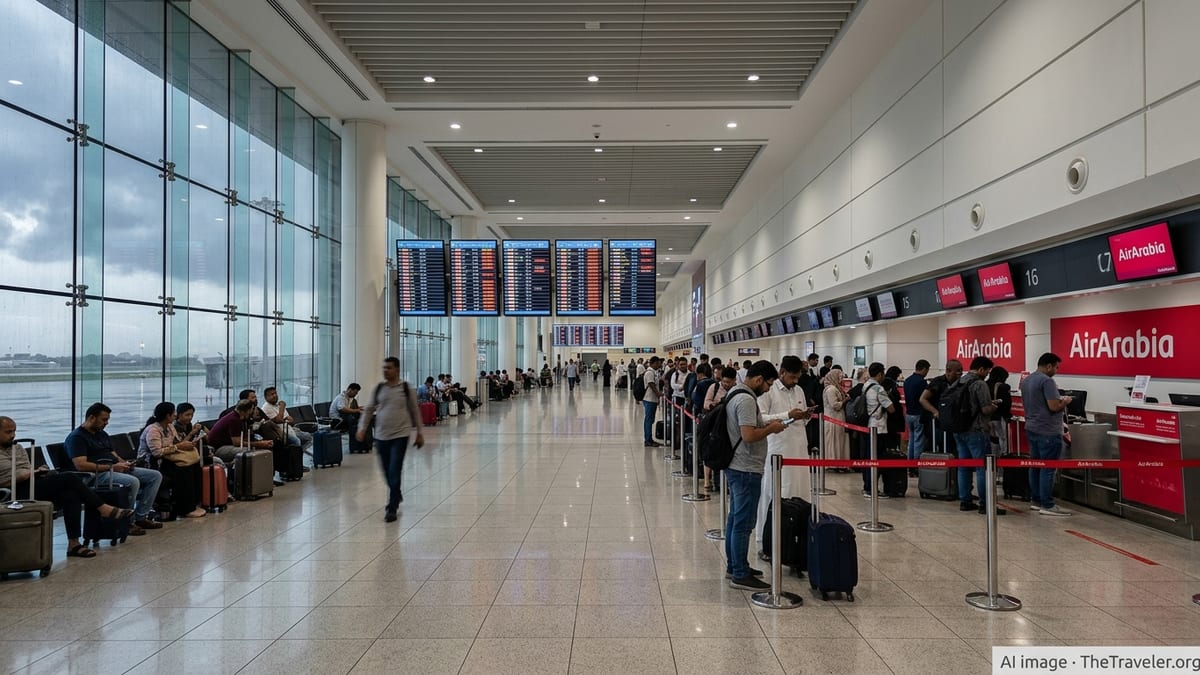
Expanded Advisory Now Covers Three Key UAE Gateways
Publicly available travel alerts show that Air Arabia has moved to group Sharjah with Abu Dhabi and Ras Al Khaimah in its latest advisory, signalling a broader impact on its core United Arab Emirates network. The low-cost carrier, which is based at Sharjah International Airport, had already highlighted disruption to services touching Abu Dhabi and Ras Al Khaimah before extending caution to passengers traveling via its main hub.
The airline’s advisory reflects a period of heightened operational uncertainty across the region, where changing conditions have periodically constrained airspace and limited the number of available flight slots. Reports from passengers and regional travel forums in March 2026 describe rolling schedule changes, route suspensions and last-minute cancellations affecting itineraries that would typically rely on Sharjah, Abu Dhabi and Ras Al Khaimah as alternative gateways.
By explicitly listing all three airports in a single travel alert, Air Arabia is signaling to travelers that disruption is not isolated to one corner of the country but may ripple across multiple emirates at short notice. This approach mirrors earlier advisories issued by carriers and risk consultancies when regional instability or severe weather has affected air traffic flows in the Gulf.
Severe and Unstable Conditions Disrupt Flight Operations
The broadened advisory comes amid a spell of severe and unstable conditions over parts of the Gulf region, where airspace restrictions, safety considerations and volatile weather patterns have combined to complicate flight planning. While the specific triggers can vary from day to day, aviation bulletins and risk assessments released in early March 2026 point to intermittent disruptions to normal flight corridors and temporary suspensions of services on selected routes.
In such circumstances, even when airports in the UAE technically remain open, operations can be curtailed by restrictions on how many flights may depart or arrive within a given time window. Public comments from travelers attempting to reach Sharjah in recent weeks describe situations where flights were repeatedly pushed back, ultimately cancelled, or rescheduled days later as airlines reshuffled aircraft and crews around airspace and weather constraints.
These operational pressures are magnified for point-to-point carriers such as Air Arabia that rely heavily on high aircraft utilization and tight turnarounds. Any prolonged closure of a route segment or reduction in available airspace forces rapid changes to rotation plans, with knock-on effects across the broader network, including Abu Dhabi and Ras Al Khaimah services.
What Passengers Flying via Sharjah, Abu Dhabi and Ras Al Khaimah Can Expect
For travelers, the inclusion of Sharjah alongside Abu Dhabi and Ras Al Khaimah in Air Arabia’s advisory translates into a higher likelihood of disruption on both outbound and inbound journeys. Publicly available information and recent traveler accounts indicate that some routes have seen repeated schedule adjustments, while others have been temporarily suspended or consolidated onto fewer operating days.
Passengers using these airports during the advisory period are being encouraged, via published guidance, to treat departure times as subject to change until close to travel. Common themes in traveler reports include same-day schedule updates, rebookings to alternative dates or airports, and longer dwell times in terminals while airlines seek operational clearance to depart.
The advisory also implies that connecting trips built around separate tickets or tight transfer windows carry additional risk. With delays and cancellations affecting different parts of the network on different days, travelers relying on onward flights or time-sensitive ground connections from Sharjah, Abu Dhabi or Ras Al Khaimah may face heightened uncertainty and should factor in potential contingencies.
Regional Context: A Network Under Strain
The latest advisory sits against a broader backdrop of strain on aviation in and around the Gulf. Recent months have seen periods where airspace closures, regional security concerns and episodes of adverse weather have interrupted normal traffic flows, prompting some airlines to reroute, truncate or pause services to and from the United Arab Emirates and neighboring states.
Travel risk assessments and port advisories issued in early March 2026 describe a patchwork of conditions across Middle Eastern airspace, with some routes operating normally while others face intermittent restrictions or heightened caution. In that environment, carriers like Air Arabia that operate dense schedules in and out of Sharjah, Abu Dhabi and Ras Al Khaimah must continuously adapt to shifting operational parameters.
The United Arab Emirates has experience managing weather extremes, including episodes of intense rainfall and flooding in recent years that have tested transport infrastructure in Dubai, Sharjah and Ras Al Khaimah. Although the current advisory is tied to a broader mix of regional factors, it again highlights how quickly conditions can change for airlines and airports in the Gulf.
Advice and Next Steps for Affected Travelers
According to publicly available guidance, passengers scheduled to fly with Air Arabia from Sharjah, Abu Dhabi or Ras Al Khaimah during the advisory period are urged to monitor their booking status frequently and to arrive at the airport earlier than usual in case of additional screening or congestion. Many travelers are turning to airline apps and social media channels, which tend to reflect schedule changes before airport display boards and third-party booking platforms are updated.
Where flights have been cancelled or heavily delayed, information published by airlines and shared in traveler forums suggests that options typically include rebooking on the next available service, accepting credit for future travel, or, in some cases, seeking refunds subject to fare conditions. Availability can fluctuate quickly, particularly on routes that have had frequencies reduced, so passengers are advised to act promptly once options appear.
For those yet to book, the advisory serves as a reminder to build flexibility into itineraries involving Sharjah, Abu Dhabi and Ras Al Khaimah in the short term. Allowing greater buffer times, considering travel insurance that includes disruption cover, and staying informed about evolving regional conditions can help mitigate the impact of sudden schedule changes as Air Arabia and other carriers navigate this challenging period.