

More news on this day
Philippine maritime and disaster officials have ordered the suspension of sea travel across parts of Northeastern Mindanao and Eastern Visayas, citing dangerous conditions from a persistent shear line that is drenching the region with moderate to heavy rains and whipping up rough seas.
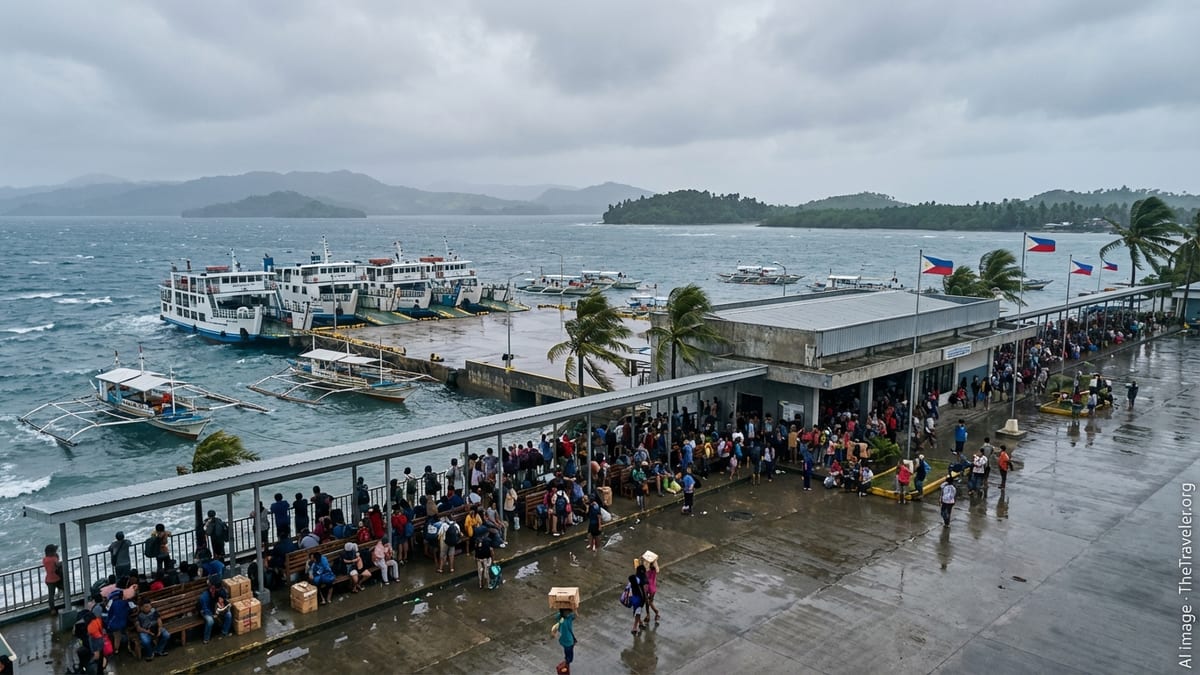
Shear Line System Triggers Wide-Ranging Maritime Alert
The latest advisory from the state weather bureau describes a robust shear line stretching across the eastern seaboard of the central and southern Philippines, where cool northeasterly winds collide with warm, moist air from the Pacific. This interaction is generating bands of heavy rainfall and unsettled seas along the coasts of Northeastern Mindanao and Eastern Visayas, key gateways for inter-island travel and cargo.
Forecasters warn that rainfall totals over a 24-hour period may reach levels capable of triggering flash floods and landslides, particularly in low-lying communities, river basins, and mountain slopes in and around Eastern Samar, Leyte, Southern Leyte, Dinagat Islands, Surigao del Norte, Surigao del Sur, and Agusan del Sur. The same weather pattern is feeding scattered showers and thunderstorms further into the Visayas and Mindanao interior, reinforcing the need for localized vigilance even away from the coasts.
Although no tropical cyclone is currently inside the Philippine Area of Responsibility, the sustained influence of the shear line and the northeast monsoon has proven enough to disrupt sea conditions. Maritime officials say the combination of poor visibility, strong winds in exposed waters, and the risk of rapidly changing wave heights is incompatible with safe passenger and small-vessel operations.
While large oceangoing ships are structurally more capable of handling rougher seas, authorities emphasize that the current suspension applies broadly to passenger and smaller cargo movements across the affected corridors. The aim, they stress, is to prevent any repeat of recent maritime incidents that have put a spotlight on safety lapses during adverse weather.
Coast Guard Freezes Passenger Routes in High-Risk Corridors
In line with established heavy-weather protocols, the Philippine Coast Guard has ordered a halt to the departure of passenger vessels and smaller cargo craft operating between ports in Northeastern Mindanao and Eastern Visayas. This covers popular routes linking Surigao City, Siargao, Dinagat Islands, and neighboring provinces with key ports across Leyte and Samar, as well as numerous municipal roll-on roll-off crossings that serve smaller islands.
Coast Guard district commanders have directed station heads to enforce the suspension at port gates, preventing ticketed passengers from boarding and instructing shipping firms to delay trips until conditions improve. The advisory follows the standard national guidelines that restrict vessel movements once weather bulletins indicate potentially dangerous sea states, even in the absence of an active storm warning.
Shipping operators and local officials report that many trips were halted or cancelled hours before scheduled departures, as updated weather briefings showed the shear line’s rain bands consolidating over the eastern seaboard. Boarding ramps were raised, cargo loading was suspended, and passengers were informed of postponements through public address systems and social media advisories.
Authorities note that fishing communities and operators of small motorized bancas are among the most directly affected. Barangay leaders along exposed coastlines have been instructed to discourage any attempts at informal or unregistered crossings while the suspension remains in place, reminding residents that quick-building squalls and strong nearshore currents can be lethal in seemingly routine trips.
Ports, Island Communities and Travelers Bear the Brunt
The immediate impact of the suspension is already being felt in busy inter-island hubs across the Caraga Region and Eastern Visayas. At ports in Surigao del Norte and Southern Leyte, passengers arriving with luggage and boxes of cargo have found boarding areas closed and ticketing counters issuing rebooking slips instead of boarding passes. Some travelers have opted to stay overnight at terminals, while others are scrambling to secure land-based alternatives where road networks allow.
Island economies that depend on a constant flow of goods and visitors are particularly vulnerable. Residents in small island municipalities off the coasts of Surigao and Leyte report empty market stalls and delayed deliveries of fresh produce, fuel, and construction materials. Tourism-facing communities, many of which only recently recovered from previous weather disruptions and pandemic-related slowdowns, are once again grappling with cancelled bookings and guests unable to arrive or depart.
Land transport operators that link ports to inland cities are also adjusting to the disruption. Bus companies and van-for-hire services are coordinating with shipping lines to re-time their trips, while local governments are opening covered courts and municipal halls to stranded passengers who cannot secure lodging. Officials stress that these measures are temporary but necessary as long as heavy rainfall and unsettled seas remain in the forecast.
For overseas Filipino workers and long-distance domestic travelers using multi-leg routes through Cebu, Leyte, or Northern Mindanao, the halt in sea travel adds another layer of uncertainty. Travel agencies and airlines are advising customers with connecting itineraries to monitor advisories closely and to expect potential knock-on delays, particularly where ferry transfers form the final leg of journeys to more remote hometowns.
Rainfall, Flooding and Landslide Risks Drive Precautionary Stance
Meteorologists say that while the shear line does not pack the concentrated winds of a typhoon, it can be just as disruptive because of the sheer volume and persistence of rainfall. Over the next day or two, swaths of Eastern Visayas and Northeastern Mindanao are expected to see moderate to heavy rain, occasionally intense, that may overwhelm drainage systems, rivers, and saturated hillsides.
Provincial and municipal disaster offices have been issuing localized alerts, warning residents in flood-prone neighborhoods and landslide-susceptible upland villages to stay alert for changes in river water levels, slope cracks, and soil movement. Preemptive evacuations are on standby in some communities where floodwaters have yet to fully recede from earlier weather systems, and where even an additional day of heavy rain could push conditions into dangerous territory.
Authorities highlight that coastal and riverine flooding can indirectly complicate maritime safety even when seas appear manageable from a distance. Strong river outflows, floating debris, and rapidly shifting shoals near harbor entrances can hamper navigation, while reduced visibility and localized thunderstorms increase the risk of collisions or groundings for smaller craft operating without sophisticated radar and navigation aids.
The interplay between rainfall on land and conditions at sea means that maritime decisions cannot be based solely on wind or wave forecasts. By synchronizing advisories from the weather bureau with real-time observations from port stations and coastal communities, the Coast Guard and local governments aim to reduce the chances of vessels being caught in unexpected squalls or operating near poorly marked hazards carried seaward by swollen rivers.
Heightened Caution After Recent Maritime Tragedies
The current suspension of sea travel is unfolding in the shadow of a series of high-profile maritime incidents that have raised hard questions about safety practices in the Philippine domestic shipping industry. Investigations into recent ferry sinkings and weather-related mishaps have cited overloading, gaps in enforcement of safety rules, and decisions to sail despite deteriorating conditions as factors that amplified the human toll.
In response, transport regulators have ordered sweeping safety audits of passenger shipping operators, along with a nationwide review of enforcement protocols at the port level. Coast Guard officers have been reminded that the default stance in uncertain weather should favor caution, with early travel suspensions and strict compliance with passenger and cargo limits prioritized over commercial pressures.
This broader context helps explain the assertive tone of the latest maritime advisories in Northeastern Mindanao and Eastern Visayas. Even in the absence of a named storm or gale warning, officials stress that continuous rains, moderately rough seas, and patchy visibility justify a temporary halt in sea travel. The message to shipping lines, local officials, and passengers is that the cost of erring on the side of caution is far lower than the potential consequences of another major sea accident.
Maritime agencies are also making a concerted effort to communicate their decisions more transparently to the public. Regular media briefings, social media posts, and coordination with local radio stations are being used to explain why vessels are grounded and what indicators authorities are monitoring before any resumption of service. This, they hope, will build public understanding and patience as communities absorb yet another weather-related disruption.
Local Governments Mobilize Emergency and Social Support
Across affected provinces, local disaster risk reduction offices, social welfare units, and health departments have shifted into heightened readiness, deploying teams to critical ports, low-lying barangays, and landslide-prone uplands. Volunteers and staff are distributing food packs, blankets, and hygiene kits to stranded passengers, while medical personnel conduct basic health checks in crowded terminals and temporary shelters.
In municipalities dependent on daily inter-island travel for commerce and employment, mayors and barangay captains are working with cooperatives and private businesses to ensure that essential commodities remain available. Some localities have activated community-based stockpiles of rice and canned goods to cushion the impact of delayed shipments, particularly in island barangays that have limited storage capacity and few alternative supply routes.
Education and health services are likewise adjusting to the conditions brought on by the shear line. School heads in flood-prone or coastal communities have been authorized to suspend in-person classes if access roads become unsafe, while health centers are checking contingency supplies of medicines for waterborne diseases and respiratory infections that often rise following extended periods of wet weather.
The mobilization underscores how routine weather systems can still strain local capacities when they coincide with fragile infrastructure and heavily maritime-dependent economies. Officials emphasize that even as sea travel is suspended, coordination between ports, local governments, and national agencies is ongoing to ensure that once conditions improve, both vessels and passengers can move quickly but safely.
Uncertain Timeline for Resumption of Trips
As of the latest advisories, no firm timetable has been given for the full resumption of sea travel across Northeastern Mindanao and Eastern Visayas. Weather specialists caution that the behavior of shear lines can be difficult to predict beyond a day or two, as shifting wind patterns in both the northeast monsoon and the easterlies can either weaken or reinvigorate the convergence zone affecting the region.
Maritime authorities are therefore tying any decision to lift the suspension to updated weather bulletins and on-the-ground assessments from port captains and coastal communities. They will be looking not only at rainfall intensity but also at trends in wind speeds, wave heights, and visibility over several successive observation periods before authorizing vessels to resume normal operations.
Shipping companies, for their part, are drawing up rolling contingency plans. Many have advised passengers to retain their tickets for revalidation, while offering fee-free rebooking windows where possible. Some are coordinating with local governments to prioritize essential cargo, such as food, fuel, and medical supplies, on the first available sailings once the suspension is eased, recognizing that backlogs can quickly build in isolated island communities.
Travelers with flexible schedules are being urged to delay discretionary trips to the affected regions, while those with urgent travel needs are advised to stay in close contact with carriers and to build in additional time for potential delays. Tourism stakeholders in popular island destinations say their immediate priority is to ensure the safety of guests already on-site, while planning to rebuild confidence with travelers once seas calm and regular services resume.
Travelers Urged to Monitor Advisories and Prioritize Safety
With weather conditions still evolving, authorities are appealing to the public to treat official advisories as the primary basis for travel decisions. Residents and visitors in Northeastern Mindanao and Eastern Visayas are encouraged to monitor updates from the weather bureau, the Coast Guard, and local disaster offices, and to avoid relying on outdated or informal reports about reopened routes or alleged “special trips.”
Maritime officials stress that attempts to bypass the suspension, such as hiring unregistered boats or pressuring operators to sail despite warnings, significantly increase the risk of accidents. They point out that even experienced boat crews can misjudge the intensity and duration of squalls associated with shear line conditions, and that small errors in navigation can be magnified when currents are strong and visibility is low.
For travelers currently stranded in ports or inland cities, the most practical course of action is often to coordinate with transport providers and local authorities, who can provide updated schedules, shelter options, and, where available, referrals to financial or social assistance programs. Hotels, guesthouses, and homestays in affected areas are also being encouraged to offer flexible rebooking policies and, where feasible, discounted extension rates for guests whose onward journeys have been delayed.
As the shear line continues to influence weather across a broad swath of the central and southern Philippines, the overarching guidance from both weather and maritime authorities remains consistent. Caution at sea and patience on land, they say, are the twin pillars of a safer passage through this latest bout of unsettled conditions in one of the world’s most climate-exposed archipelagos.