

More news on this day
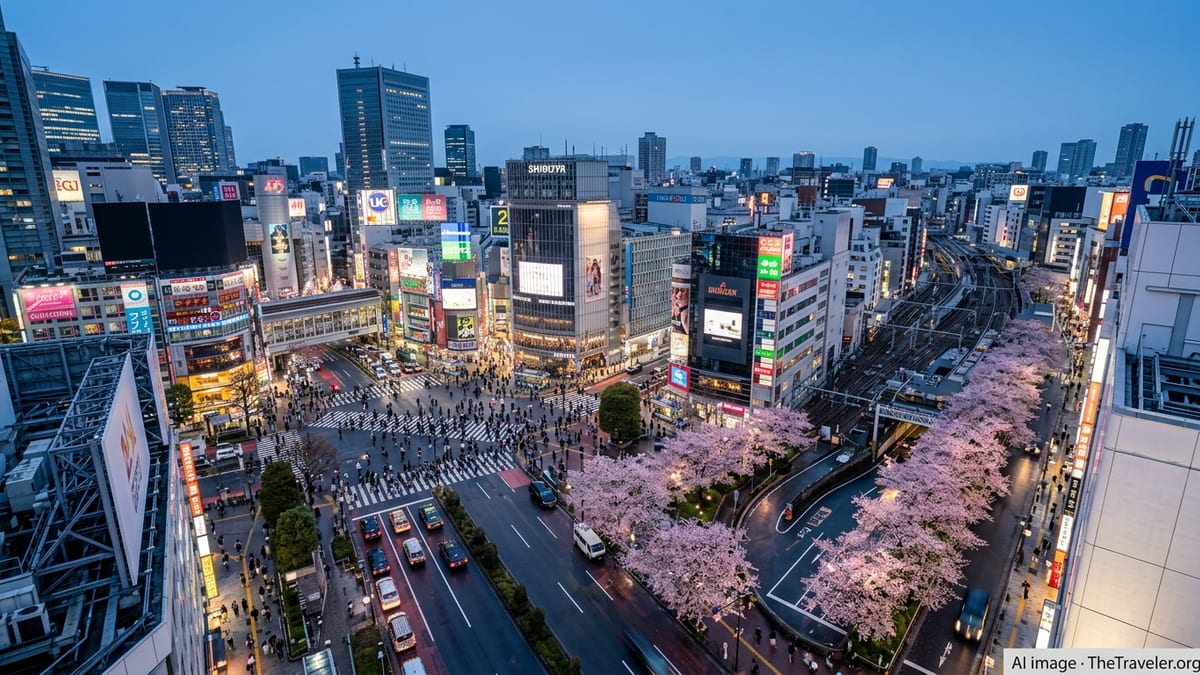
As Tokyo’s 2026 cherry blossom season approaches, Shibuya is preparing for a striking contrast: soft pink sakura lining redeveloped streets in Sakuragaoka while crowds gather high above the scramble at Shibuya Sky for dusk-to-night hanami views over Japan’s largest city.
Get the latest news straight to your inbox!
Tokyo’s 2026 Sakura Timing: What Travelers Can Expect
Weather forecasts for 2026 indicate that Tokyo’s cherry blossoms should open around March 19 to 21, with full bloom expected roughly from March 27 to March 31. Various travel and weather guides suggest that the best viewing window in the capital this year is likely to fall between late March and the first days of April, giving visitors a relatively narrow but promising period to experience the city at peak pink.
Reports from the Japan Weather Association and other forecast summaries indicate that 2026 is shaping up to be an earlier-than-average year for many parts of eastern Japan, including Tokyo. For travelers using Shibuya as a base, that means late March itineraries are likely to align with some of the most photogenic conditions, especially in compact urban viewing spots where petals tend to emerge and fall quickly.
Publicly available guidance from tourism organizations highlights that once the blossoms open, they typically remain in good condition for about a week, depending on wind and rain. Visitors planning Shibuya-focused hanami are being encouraged in recent coverage to build in some flexibility within this late March window, especially if they hope to combine street-level viewing in Sakuragaoka with a timed sunset or night visit to Shibuya Sky.
Sakuragaoka: A Hillside Street Where Stations Meet Sakura
Immediately southwest of Shibuya Station, the Sakuragaoka district has become one of the area’s most notable examples of transit-oriented redevelopment. Urban planning material and corporate releases describe how offices, hotels and residences have risen on terraced land that once felt removed from the main crossing, reshaping the route that many commuters and visitors take as they walk away from the station.
Within this zone, local promotional information points to a short but atmospheric cherry tree corridor often referred to in English as Sakuragaoka-zaka or Sakura Street. Around 30 trees line the slope and adjoining streets, creating a tunnel of pale blossoms that typically reach full bloom in late March. During peak season, the contrast is striking: commuter trains arrive at nearby platforms while just a few minutes’ walk away, petals are drifting across sidewalks and café terraces.
Hotel and neighborhood campaign pages suggest that in 2026, the Sakuragaoka area will again lean into spring with events bundled into broader “Shibuya Cherry Blossom Festival” programming. While formats change year to year, recent examples have included sakura-themed lighting, seasonal menus and limited-time spring packages at properties clustered around the hill, reinforcing Sakuragaoka’s identity as a compact hanami enclave on the edge of central Shibuya.
Urban redevelopment documents for the wider Shibuya Station area indicate that projects branded under names such as Shibuya Sakura Stage are tying the hillside’s cherry-blossom image to new towers and plazas. For visitors, the practical result is more accessible sidewalks, clearer wayfinding and a growing concentration of shops and dining rooms where it is possible to pause under the blossoms without straying far from the station hub.
Neon Meets Petals: Nighttime Atmosphere on Sakuragaoka’s Streets
Shibuya’s reputation is rooted in its neon signage, dense foot traffic and late-night energy. In sakura season, the Sakuragaoka slope adds a softer layer to that image. As sunset falls in late March, commuters crossing the station’s southern exits find that pink canopies overhead blend with electronic billboards, train headlights and office windows, creating a characteristic mix of natural and urban light.
Visitor reports and local travel guides frequently describe this part of Shibuya as a popular spot for casual evening strolls rather than formal sit-down hanami. There are fewer large lawns or open park spaces than in locations such as Yoyogi Park, but the proximity of cafés, izakaya and hotel lounges means that many people choose to take short walks under the trees before retreating indoors for seasonal drinks or desserts featuring sakura flavors.
Weekend evenings during full bloom can become especially busy, as office workers, residents and tourists all converge on the same narrow sidewalks for photographs. Recent traveler accounts suggest that late-night hours, after the post-dinner rush, often provide a calmer atmosphere while the blossoms remain illuminated by surrounding buildings and streetlights. For photographers, that later window can offer clearer compositions of the slope without dense crowds in every frame.
Local promotional materials also indicate that spring campaigns in Sakuragaoka increasingly use lighting and projections to tie the district’s cherry blossoms to Shibuya’s wider image as a digital and creative hub. While individual installations vary each year, the shared effect is to make the hillside feel like an extension of Shibuya’s famous scramble streets, only filtered through a canopy of pale petals.
Shibuya Sky: Rooftop Hanami Above the Scramble
High above the city, the Shibuya Sky observation facility crowns the Shibuya Scramble Square tower directly connected to Shibuya Station. Opened in 2019 as part of long-term station-area redevelopment, the rooftop deck has become one of Tokyo’s most in-demand vantage points, particularly at sunset and into the evening, when the scramble crossing and surrounding signage glow far below.
During sakura season, publicly available marketing material and media coverage highlight Shibuya Sky’s role as a different kind of hanami spot. Rather than walking beneath trees, visitors look out across a broad panorama in which lines of cherry blossoms trace riverbanks, parks and residential neighborhoods. On clear days in late March, this can include views toward other well-known sakura sites in central Tokyo, framed by high-rise clusters and rail corridors.
Advance ticketing has become standard for Shibuya Sky, and travel forums consistently advise securing time slots as early as possible for peak season. Sunset entries are among the most sought-after, as they allow visitors to watch daylight fade over the city’s developing patches of pink before night lights take over. For 2026, general guidance from ticketing pages indicates that timed reservations continue to be required, with day-of-entry availability likely to be limited when weather and bloom conditions align.
Facility information for Shibuya Scramble Square notes that the rooftop’s design emphasizes open-air decks, glass balustrades and 360-degree views rather than enclosed indoor exhibits. During the often cool evenings of late March, that layout can mean chilly conditions even when the city below feels mild, so many travel advisories recommend bringing an extra layer when planning a hanami-themed visit to Shibuya Sky.
Planning a Shibuya Sakura Day: Practical Tips for 2026
Recent cherry blossom forecasts suggest that travelers targeting both Sakuragaoka and Shibuya Sky in 2026 should focus on the period from roughly March 27 to April 2 for the highest chance of full bloom in central Tokyo. Within that range, weekday visits may offer more manageable foot traffic than weekends, particularly on the narrow hillside streets and at peak observation-deck times.
Travel planning resources advise building Shibuya’s viewing spots into a broader central Tokyo hanami circuit. For example, visitors might begin with morning or midday walks through larger parks such as Yoyogi Park or Meiji Jingu Gaien, then transition to the denser urban scenery of Shibuya by late afternoon. From there, an early evening stroll through Sakuragaoka’s cherry-lined streets can naturally lead into a timed entry at Shibuya Sky for sunset and night views.
Public transport guidance indicates that Shibuya Station remains one of Tokyo’s busiest interchanges, served by multiple JR, Tokyo Metro and private railway lines. Despite ongoing construction related to long-range redevelopment, signage and staff support in 2026 are expected to continue directing visitors toward both the Sakuragaoka exits on the south side and the Shibuya Scramble Square connection for rooftop access. As with other central districts, using rechargeable IC cards and avoiding the tightest rush-hour windows can make transfers smoother during the busy sakura period.
Accommodation trends around Shibuya show a growing mix of high-end hotels, lifestyle properties and serviced apartments, many of which promote easy access to both nightlife and seasonal attractions. For visitors prioritizing sakura, booking rooms facing south or west may increase the odds of catching glimpses of pink-lined streets or distant parks from upper floors. Regardless of viewpoint, the combination of hillside blossoms in Sakuragaoka and aerial panoramas from Shibuya Sky is expected to make the district one of Tokyo’s most photogenic urban hanami stages in the 2026 season.