

More news on this day
A migrating sand dune along Lake Michigan has buried a popular beach parking lot and forced a closure, disrupting visitor access and underscoring how quickly the region’s shoreline can transform.
Get the latest news straight to your inbox!
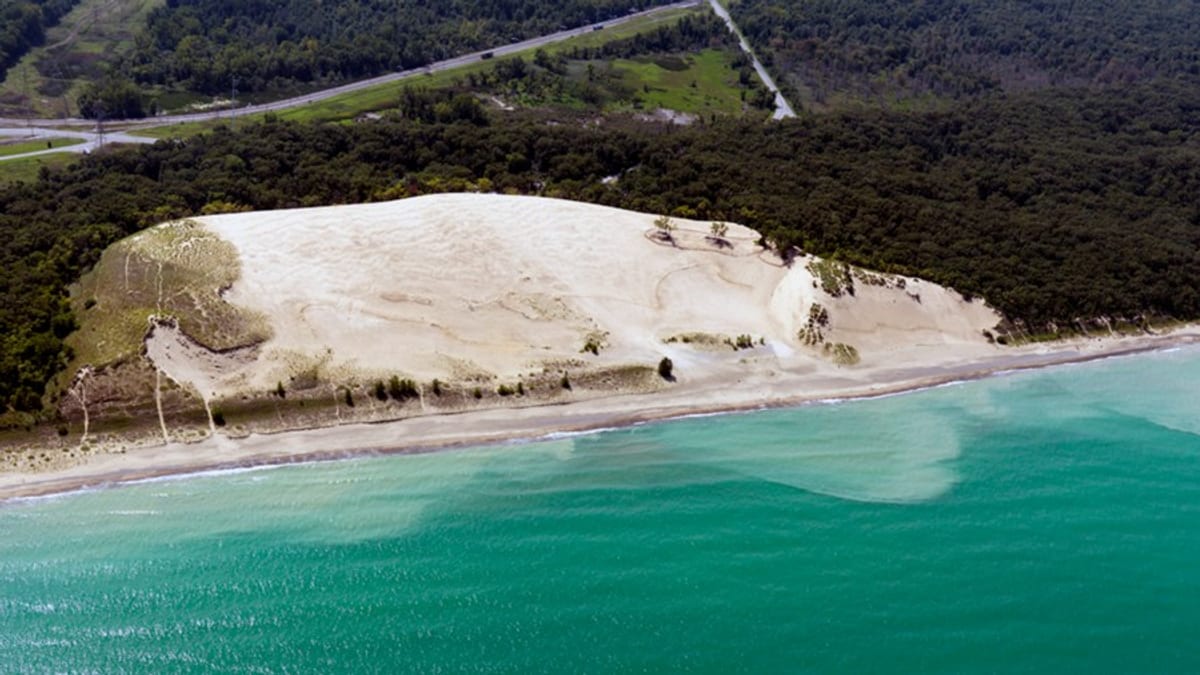
Image by yahoo.com
Dune Movement Buries Lakeside Parking Area
Recent reports from the southern Lake Michigan shoreline describe a large, wind driven dune advancing inland to the point that it has effectively overrun an established beach parking lot. The build up of sand has rendered portions of the lot unusable, prompting a closure while managers assess safety and access conditions.
Publicly available information indicates that shifting dunes on this stretch of coast have been creeping landward for years, gradually encroaching on paved areas, access roads and vegetation. The latest surge of wind blown sand appears to have accelerated that trend, piling high enough to block vehicle circulation and obscure curbs, signage and drainage structures.
Images and local coverage show mounds of sand where painted parking spaces once stood, with drifts sloping directly off the face of the dune. Vehicles are being kept out of the immediate area while crews evaluate whether the sand can be cleared or if the lot will need to be partially relocated or redesigned to account for the dune’s ongoing migration.
The adjacent Lake Michigan beach itself remains a central draw, but the loss of convenient parking is already influencing how and when people can reach the shoreline. Visitors are being directed to alternative lots farther from the water, adding extra walking distance over soft sand and uneven terrain.
Natural Forces Behind a “Living” Dune
The incident reflects a broader coastal process that scientists often describe as a “living” or migrating dune system. Along Lake Michigan, prevailing winds blow inland across wide, open beaches, lifting dry sand and depositing it higher up the slope of existing dunes. Over time, this repeated movement can cause entire dune ridges to slowly shift, inching toward inland infrastructure such as roads, parking areas and buildings.
Researchers studying similar features along the lake have documented that vegetation plays a critical role in stabilizing dune faces. When native grasses are trampled or removed, the sand surface becomes looser and more easily mobilized, increasing the speed at which the dune advances. Past case studies on the southern shore of Lake Michigan have noted that heavy foot traffic, combined with fluctuating lake levels and strong storm events, can intensify erosion on one side of a dune while building it up on another.
Publicly accessible analyses also point to the influence of offshore and coastal structures that can alter sand transport along the shoreline. Piers, jetties and harbor works have, in some locations, changed how sediment drifts parallel to the coast, creating zones of accelerated erosion and deposition. Where the balance tilts toward deposition, dunes can grow and shift more rapidly, potentially overwhelming nearby amenities.
Experts frequently emphasize that these processes are natural expressions of a dynamic coast rather than isolated anomalies. For communities that have built parking lots and access roads close to the lake, however, the pace of recent change can still come as a surprise, especially after seasons of high water or intense storms that reshape the beach profile.
Access Disruptions for Beachgoers and Local Tourism
The closure of a parking lot directly behind a Lake Michigan beach has immediate implications for visitors, particularly during warm weather periods when coastal parks see their highest use. With prime spaces buried under sand, people hoping to swim, hike the dunes or simply sit along the water’s edge face longer walks from secondary parking areas and potential congestion at remaining lots.
Regional tourism organizations consistently highlight Lake Michigan’s beaches as cornerstone attractions for nearby communities. When a primary access point is disrupted, beachgoers may shift to other parks or towns with more convenient parking and clear routes to the shoreline. That ripple effect can influence seasonal business for lodging, restaurants and outfitters that depend on predictable visitor patterns.
Reports indicate that managers are working within existing trail and parking networks to keep some routes open while the affected lot is closed. Temporary wayfinding signs, digital updates and visitor advisories are being used to steer drivers to alternative facilities and to discourage parking along narrow approach roads or in residential areas not designed for heavy traffic.
For people with limited mobility, the loss of a close in lot can be especially challenging. Coastal planners in the Great Lakes region have increasingly focused on providing accessible routes from designated parking spaces to the waterline; when dune movement compromises those connections, it can take time and investment to restore accessible paths that meet current standards.
Balancing Shoreline Protection With Visitor Use
The parking lot closure has renewed attention on how close human infrastructure can reasonably sit to active dunes. According to published coverage and planning documents from other Lake Michigan parks, managers have experimented with a range of strategies, from rerouting trails and fencing off unstable slopes to planting dune grass and relocating paved surfaces farther inland.
Some coastal park plans call for phased retreat of parking lots and roads that are repeatedly threatened by sand encroachment or erosion. In practice, this can mean converting the most vulnerable spaces into vegetated buffers, shifting vehicle areas to higher ground and designing new access routes that work with, rather than against, the natural movement of sand.
Restoration projects on comparable dunes along the lake often begin with reestablishing native vegetation and closing informal paths that cut directly up steep faces. Over time, healthy plant cover can help anchor the sand and slow migration, although it rarely stops it entirely. Managers also weigh the need for overlooks, stairways and boardwalks that allow people to enjoy the views while concentrating foot traffic in more sustainable corridors.
The latest burial of a parking lot by a dune reinforces the notion that long term solutions may require rethinking where and how infrastructure meets the shoreline. As conditions evolve, park systems and local governments are likely to revisit design standards for coastal facilities to reduce the risk of repeated closures and emergency repairs.
What Visitors Should Expect in the Near Term
For now, people planning trips to affected sections of the Lake Michigan coast are being encouraged, through public advisories and regional visitor information, to check the latest access details before they travel. Beachgoers may find barricades, signage or staff presence at former parking entrances, along with detours to alternate lots or trailheads.
Additional walking time from more distant parking areas is likely, and some routes may involve climbing over low dunes or following temporary paths across sand that has recently shifted. Visitors are also being reminded through public messaging to avoid climbing steep, fenced off dune faces or creating new footpaths, actions that can destabilize the slope further and contribute to future encroachment.
Travel information platforms for the region note that, despite the disruption, many stretches of Lake Michigan shoreline remain open with expansive beaches and established access points. The buried parking lot serves as a visible example of how quickly the landscape can change, but it does not signal a wider closure of the lakefront.
As assessments continue, local planners and park managers will be weighing whether to excavate the existing lot, redesign it in place or move parking and access farther from the active dune. Whatever long term approach is chosen, the episode is likely to become a reference point in broader conversations about adapting visitor infrastructure to an ever shifting Great Lakes coast.