

More news on this day
Japan’s Shinkansen network is entering a new phase that blends high speed passenger services with emerging freight operations and experience driven travel, reshaping how visitors move, spend and explore in one of the world’s fastest growing tourism markets.
Get the latest news straight to your inbox!
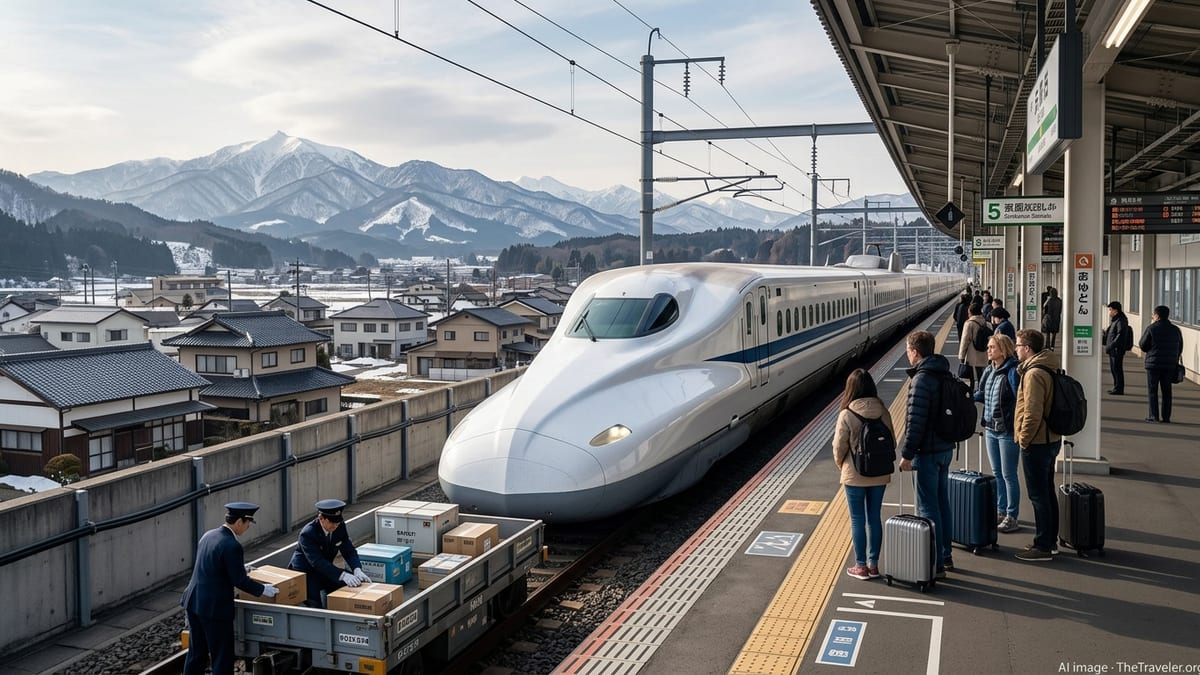
Record Tourism Meets High Speed Rail Innovation
Japan’s tourism industry has surged to new heights, with 2025 visitor arrivals reported at around 42.7 million, surpassing the previous peak set in 2024. Publicly available data from national tourism statistics indicates that Japan has crossed the long discussed 40 million visitor threshold earlier than many analysts had anticipated, supported by the weak yen and expanded international flight capacity.
The Shinkansen system, stretching across the main islands and linking major cities with regional hubs, sits at the center of this growth. Long viewed as a symbol of punctuality and precision, the network is increasingly being framed in policy papers, transport plans and tourism marketing as critical infrastructure for dispersing visitors beyond the crowded Tokyo Kyoto Osaka corridor.
Rail operators and regional authorities are promoting multi city itineraries that rely on high speed connections to reach secondary destinations in Tohoku, Hokuriku and Kyushu. Published coverage from industry observers suggests that convenient, fast rail links are helping first time visitors add smaller cities and rural hot spring towns to trips that once focused almost entirely on a handful of iconic sites.
The result is a feedback loop between tourism and transport. Rising foreign arrivals are boosting Shinkansen ridership, while the rail network’s reliability and reach make it easier to sell Japan as a seamless, rail based adventure where travelers can cross entire regions in a few hours.
Freight Shinkansen: Cargo Joins the High Speed Network
Alongside passenger growth, East Japan Railway is opening a new chapter by deploying dedicated freight services on Shinkansen tracks. Reports indicate that a modified E3 series train, stripped of passenger seating and outfitted for cargo, is scheduled to begin service in March 2026 between Morioka and Tokyo, handling around 1,500 small parcel boxes per day.
Earlier trials and limited scale operations used reserved cars on regular services for express parcels, but the latest plans represent Japan’s first cargo focused Shinkansen operation. Industry and specialist rail outlets describe the move as an attempt to meet rising logistics demand for fast, long distance delivery while anticipating a gradual decline in domestic passenger numbers as the population ages and shrinks.
For tourism, the freight initiative has several implications. Enhanced parcel capacity along tourist heavy corridors could support same day delivery of luggage and purchases, making it easier for visitors to travel light while moving frequently between cities. Travel companies are already promoting baggage forwarding as a value add for long distance itineraries, and high speed cargo capacity could expand those offerings to more regional destinations.
There is also a resilience dimension. By diversifying how Shinkansen assets are used, operators may be able to stabilize revenues and maintain high service levels even if domestic commuter traffic softens, indirectly supporting the reliability that makes the system attractive to international visitors.
Adventure by Rail: From Golden Route to Regional Experiences
As Japan looks beyond its classic sightseeing circuit, the Shinkansen is being reframed as a gateway to adventure tourism. Government strategy documents and regional development plans identify high speed rail as a key tool for encouraging travelers to venture into ski areas, coastal towns and rural cultural sites that sit a short ride away from major hubs.
On the Tohoku Shinkansen, for example, stations act as entry points to powder snow resorts, backcountry hiking, cycling routes and hot spring villages. Travel media coverage highlights itineraries in which visitors land in Tokyo in the morning, board a northbound bullet train and arrive at mountain destinations in time for an afternoon on the slopes or trails, enabled by journey times of just a few hours.
In Kyushu and Hokuriku, tourism boards are collaborating with rail operators to brand sections of the network as corridors to culinary tours, craft towns and coastal scenery. Packages marketed through tour operators often combine Shinkansen segments with local rail, buses and guided activities, emphasizing the ease of reaching lesser known areas without driving.
Adventure focused visitors are also leaning on the network’s predictability. Fixed timetables, frequent departures and straightforward station layouts make it feasible to plan complex, multi stop trips that link urban culture with outdoor experiences, reinforcing Japan’s image as a destination where spontaneity is compatible with precise logistics.
Digital Services, Convenience and Visitor Spending
To match swelling visitor numbers, rail companies are rolling out new digital tools aimed at foreign travelers. Public information from JR East shows that the company extended a mobile ticketing service in October 2025, linking a visitor focused payment app with its online seat reservation platform for Shinkansen and the Narita Express airport link.
These systems allow international tourists to purchase and store reservations digitally, reducing the need to navigate ticket machines after arrival. Travel industry analysis suggests that such tools are particularly attractive for younger travelers and repeat visitors who increasingly expect mobile based, ticketless travel on long distance rail in the same way they already use smartphone apps for city transit.
At the same time, the design of rail passes and dynamic fare products is influencing how and where money is spent. While some long standing passes have become more expensive, operators have introduced area specific passes and flexible discount products tied to particular Shinkansen corridors, encouraging visitors to stay longer in targeted regions and allocate more of their budget to local accommodation, dining and activities.
Tourism economics studies indicate that these strategies can increase per capita spending by nudging travelers to explore outside a single metropolitan center. High speed rail, in this view, functions not only as transport but also as a pricing and marketing platform that steers tourism flows.
Balancing Overtourism, Sustainability and Speed
The intersection of record tourism and expanding Shinkansen usage is sharpening debate about sustainability and crowd management. Academic and policy research has documented how visitor numbers have strained popular districts in Kyoto, Tokyo and other cities, prompting calls to spread demand both geographically and seasonally.
High speed rail is increasingly cited in that discussion as a practical mechanism to disperse crowds by making alternative destinations competitive in travel time. Authorities at national and local level are endorsing campaigns that advertise off peak travel, shoulder seasons and lesser known stops along Shinkansen lines as ways to avoid congestion while still enjoying easy mobility.
Environmental considerations are also in focus. Life cycle analyses generally show that electrified high speed rail has lower emissions per passenger kilometer than short haul flights, particularly when trains run at high occupancy. As Japan promotes itself to long haul visitors from North America and Europe, routing domestic legs onto Shinkansen services is presented in many tourism campaigns as a lower impact way to see the country.
The addition of freight services strengthens this narrative by demonstrating more intensive use of existing rail corridors rather than expanding road based logistics. For visitors, the combination of fast passenger connections, streamlined luggage handling and access to remote experiences signals a tourism landscape in which speed, convenience and sustainability increasingly move in the same direction.