

More news on this day
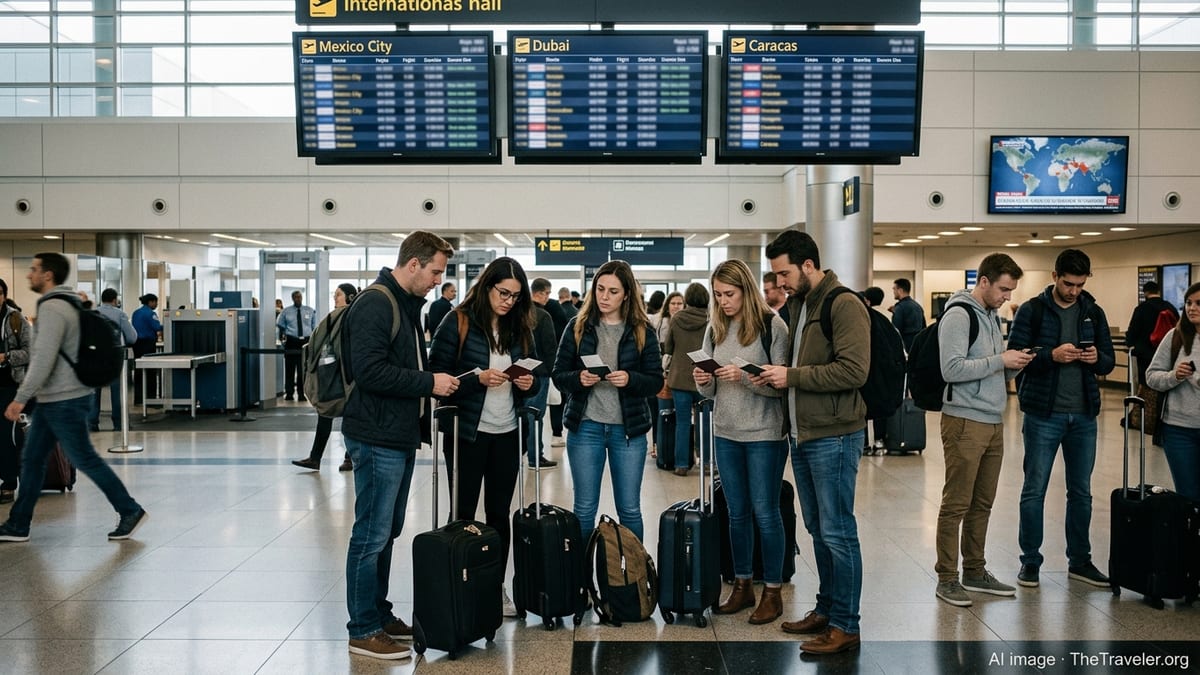
Escalating security concerns and rapidly shifting U.S. State Department advisories are reshaping travel decisions for Americans considering trips to Mexico, the United Arab Emirates and Venezuela in 2026.
Get the latest news straight to your inbox!
How the State Department Advisory System Works
Before weighing specific destinations, it helps to understand how U.S. government guidance is structured. The State Department issues four advisory levels for each country, from Level 1, "Exercise Normal Precautions," up to Level 4, "Do Not Travel." These advisories reflect risks such as crime, terrorism, civil unrest, wrongful detention, health system limitations and the government’s ability to assist citizens on the ground.
Advisories can change quickly in response to conflict, natural disasters or major criminal incidents. In late February and early March 2026, for example, a worldwide caution and a series of updated alerts were issued as hostilities expanded across the Middle East, affecting guidance for the UAE and neighboring states. Separate regional security alerts in February targeted parts of Mexico after cartel violence and military operations flared in several popular tourist regions.
Level 4 advisories, now in effect for both Venezuela and the UAE, are reserved for the highest-risk destinations. Mexico remains at a lower overall level, but with explicit state-by-state restrictions and fresh security alerts. For travelers, the key takeaway is that the advisory level is not a ban on travel, but it does shape insurance coverage, airline policies and the practical risks of getting stranded or needing emergency help abroad.
Mexico: Popular Beaches, Patchy Security
Mexico remains one of the most visited destinations for U.S. travelers, with beach hubs such as Cancun, Los Cabos and Puerto Vallarta drawing millions of visitors each year. The overarching advisory level is lower than for Venezuela or the UAE, and commercial flights, cruises and resort operations are running. Yet the picture is far from uniform, and recent events have underscored how quickly conditions can deteriorate in specific states.
In February 2026, a series of security alerts from the U.S. mission in Mexico cited widespread unrest tied to cartel activity, prompting instructions for U.S. government staff in parts of Baja California, Jalisco, Quintana Roo, Guanajuato, Guerrero, Michoacan and other areas to shelter in place or observe strict nighttime curfews. Local media and social posts from coastal cities in Jalisco showed smoke from burning vehicles and reports of blocked roads, while tourists at some resorts were urged to remain on property as authorities responded to clashes.
These developments build on several years of elevated homicide and kidnapping rates in certain Mexican states, along with highly publicized attacks on bars, festivals and roadside travelers in regions such as Guanajuato. While major resort zones often maintain heavy security, risks increase when travelers venture off property, drive at night, or visit rural or cartel-contested areas. Travel insurance policies may exclude coverage for incidents tied to civil unrest or known high-risk zones, making it essential to review fine print before departure.
For Americans still choosing to visit Mexico, experts recommend enrolling in the Smart Traveler Enrollment Program, monitoring local news and embassy alerts daily, and being prepared to change plans quickly if curfews or roadblocks are imposed. Sticking to well-established tourist corridors, booking reputable transportation, and avoiding spontaneous road trips can meaningfully reduce exposure, but travelers need to recognize that the security picture is fluid and can shift with little warning.
United Arab Emirates: From Safe Hub to Conflict Zone
Until recently, the United Arab Emirates was widely regarded as one of the safest gateways in the Middle East, with Dubai and Abu Dhabi serving as major aviation hubs and stopover cities. That perception changed dramatically after late February 2026, when Iranian missile and drone strikes hit targets in the UAE in response to coordinated U.S. and Israeli operations in the region.
Following those attacks, publicly available government notices show that the State Department raised its advisory for the UAE to Level 4 and ordered non-emergency U.S. government personnel and family members to leave the country. A broader regional alert urged American citizens across multiple Middle Eastern states to depart using available commercial options, warning of serious safety risks and the potential for sudden escalation.
The conflict has disrupted airspace, constrained flight schedules and led to spikes in last-minute ticket prices, even as some carriers resume limited services. Hotels in major UAE cities are still operating, but regional travel coverage notes that tourism has dipped, with some properties discounting heavily to attract local staycation guests as international demand softens.
Travelers considering the UAE now face multiple layers of risk: the possibility of renewed strikes, the chance that airspace or airports could close with little notice, and the reality that consular assistance could be limited in a fast-moving conflict scenario. Even if day-to-day life in parts of Dubai looks relatively normal, the Level 4 advisory signals that the security environment is volatile. Anyone still choosing to go is advised to have flexible tickets, a clear plan for rapid departure and sufficient funds to rebook or reroute if commercial options suddenly change.
Venezuela: Long-Term Crisis and Heightened Warnings
Venezuela has been under some form of "Do Not Travel" guidance for years, and that position has only hardened. Recent advisories and media coverage highlight what U.S. officials describe as severe risks, including wrongful detention, kidnapping, torture in custody, pervasive violent crime, political instability and a fragile health care system. The U.S. government has limited consular presence in the country, which further complicates assistance to citizens in distress.
In early 2026, news outlets reported that the State Department again urged Americans to leave Venezuela immediately amid a fresh wave of unrest and security incidents. Analysts note that Venezuela has become one of the countries with the highest number of U.S. nationals considered wrongfully detained, a pattern that significantly raises the stakes for business travelers, dual nationals and tourists alike.
At the same time, the aviation landscape is slowly shifting. U.S. media reports in March described federal approval for an American carrier to resume flights between the United States and Venezuela, after several years of suspended direct service. While this reconnects Venezuelan and U.S. cities commercially, it does not signal a relaxation of risk assessments. Travel advisories remain at Level 4, and guidance continues to urge travelers to avoid the country and for those already present to depart when feasible.
For would-be visitors, the combination of limited consular support, potential for arbitrary detention, shortages of basic goods and services, and the possibility of sudden border or airport closures means that travel to Venezuela is broadly considered inadvisable at present, regardless of the availability of flights.
How Travelers Can Weigh Risk and Responsibility
For Mexico, the UAE and Venezuela alike, the central question for travelers is not only "Can I go?" but "Should I go now?" State Department advisories are warnings, not legal prohibitions, and individuals remain free to travel. However, choosing to visit a Level 3 or Level 4 destination can affect evacuation options, travel insurance coverage and even the willingness of tour operators and airlines to assist if conditions deteriorate.
Travel risk consultants emphasize that personal risk tolerance, travel purpose and on-the-ground flexibility all matter. A brief leisure trip with fixed dates to a region facing shelling, cartel clashes or political crackdowns carries different implications than essential travel with robust local support and contingency plans. Travelers should also consider the impact their presence may have on local communities already grappling with conflict, displacement or strained services.
Practical steps for anyone traveling despite elevated advisories include registering itineraries with official traveler enrollment programs, maintaining redundant communication methods, keeping copies of key documents offline, and budgeting for unexpected hotel nights or emergency tickets. Monitoring reputable news outlets, airline alerts and embassy messages daily, rather than relying on pre-trip research alone, is now essential for higher-risk destinations.
As 2026 unfolds, the situation in Mexico’s conflict-affected states, the UAE’s war-exposed cities and crisis-hit Venezuela remains fluid. Travelers weighing journeys to any of these destinations should treat the current advisories as dynamic, check for updates just before departure and be prepared to change course if the security picture shifts again.