

More news on this day
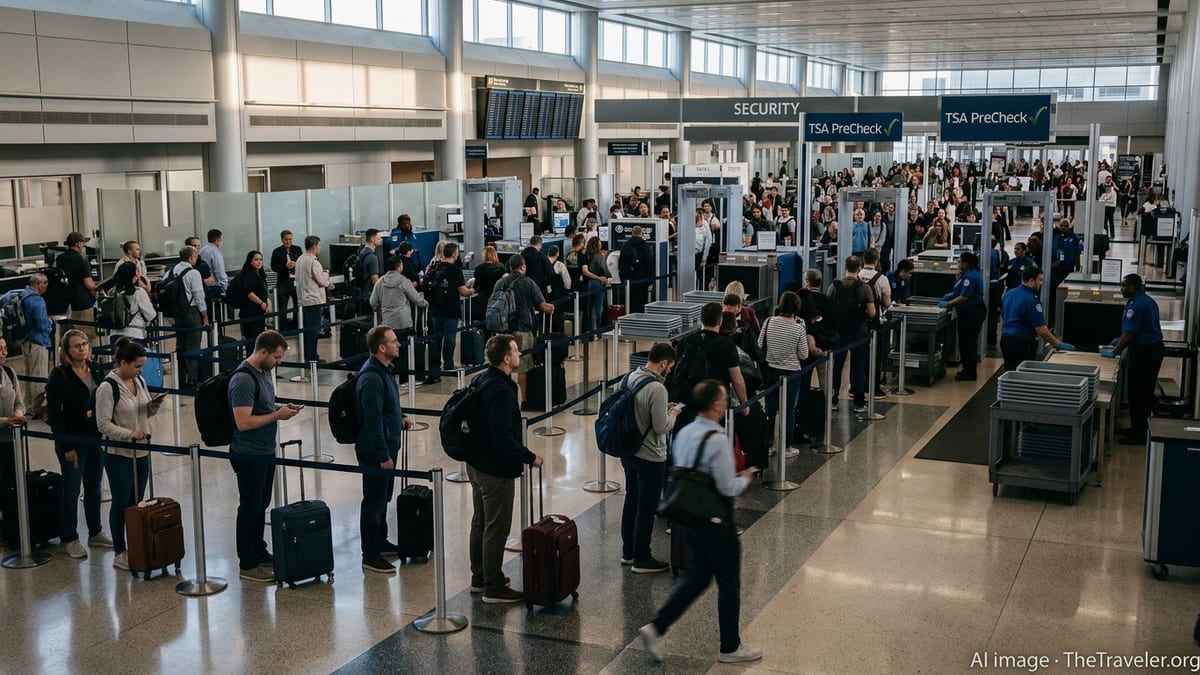
Hours long security lines, missed flights and terminal crowding are gripping some of the United States busiest airports as a prolonged Department of Homeland Security funding lapse ripples through Transportation Security Administration staffing, creating some of the longest TSA wait times reported since the pandemic era.
Get the latest news straight to your inbox!
Chicago, New York and Houston Emerge as Flashpoints
In recent days, publicly available data and media images have highlighted Chicago, New York and Houston as among the hardest hit metros, with security bottlenecks at O Hare International, New York area airports such as John F. Kennedy and LaGuardia, and George Bush Intercontinental in Houston. These hubs handle enormous volumes of domestic and international traffic, magnifying the impact of even modest staffing shortfalls at TSA checkpoints.
Coverage from national outlets indicates that wait times in Chicago and New York have stretched well beyond the 30 minute window that U.S. aviation planners typically treat as a benchmark for stable operations. At peak times, some terminals have reported lines snaking deep into ticketing halls, with passengers arriving the usual two hours before departure and still struggling to clear security in time.
In Houston, local news and airport focused forums describe some of the steepest delays, with reports earlier in the shutdown of nearly four hour lines at Bush Intercontinental and multiple checkpoints closed for parts of the day. More recent social media and community updates suggest that conditions fluctuate sharply by terminal and time of day, underscoring how fragile the staffing situation remains.
These choke points in three major markets have knock on effects across the domestic network. When travelers miss flights because they are stuck in security queues, airlines must rebook passengers, reposition crews and, in some cases, delay departures to accommodate those still trapped in line, compounding congestion throughout the day.
Partial DHS Shutdown Drives Staffing Strain
The current turmoil stems from a lapse in funding for the Department of Homeland Security that began on February 14, 2026, after Congress failed to agree on an appropriations bill for the agency. TSA screeners are classified as essential employees, so they have been required to report to work without normal pay, a dynamic that past shutdowns have shown can quickly erode morale and increase unscheduled absences.
According to published coverage summarizing internal figures, TSA saw a rising share of workers calling out over the past two weeks, culminating in what has been described as record levels of unscheduled absences on some days. At the same time, hundreds of officers have reportedly resigned since the shutdown began, further shrinking the staffing pool just as spring travel demand begins to ramp up.
Aviation and labor analysts cited in recent reports note that even when pay is restored, there is no immediate fix for these shortages. New hires typically require several months of training and certification before they can work at checkpoints, and the experience of earlier national shutdowns shows that recovering from a wave of resignations can take many months, not weeks.
Industry groups representing airlines, airports, and travel businesses have warned in open letters and public statements that prolonged disruption at security checkpoints risks suppressing demand, especially for discretionary leisure trips. They argue that repeated shutdown related slowdowns could dampen the broader travel recovery and strain airport communities that depend heavily on visitor spending.
ICE Deployment and Executive Action Add New Uncertainty
As wait times climbed and public frustration grew, the federal response has unfolded on several fronts. Over the past week, Immigration and Customs Enforcement personnel began supplementing airport security operations at a number of large hubs, including facilities in Houston and Phoenix, with national broadcasters and regional outlets reporting similar deployments at other airports.
The decision to bring in ICE officers, who normally focus on immigration enforcement rather than passenger screening, has drawn sharp reactions from civil liberties advocates and some lawmakers, who question both the optics and the practical implications for security procedures. Publicly available information indicates that ICE staff are being used primarily to support non screening tasks and to free trained TSA officers for checkpoint duty, but the move underscores how stretched the system has become.
Separately, on Friday President Donald Trump signed an executive action intended to resume pay for TSA employees despite the broader funding impasse. Associated Press coverage notes that workers could begin to see paychecks as early as Monday if administrative and payroll systems adjust quickly. The order does not immediately resolve the overall Department of Homeland Security shutdown, but it is designed to relieve some financial pressure on front line officers.
Analysts caution, however, that the gesture may not translate into instant operational relief. Many TSA employees have already taken on debt, second jobs, or left the agency during the weeks without full pay. Reversing those decisions and rebuilding rosters, particularly at high cost airports in major metropolitan areas, is likely to prove difficult even if back pay arrives promptly.
Travelers Confront Long Lines and Patchy Information
For travelers, the most visible impact of the shutdown has been the unpredictability of security wait times. Reports from passenger forums, airline community channels and local news segments show a patchwork picture: while some early morning flyers report breezing through PreCheck lanes in under 20 minutes, others share images of crowds backed up toward terminal entrances, especially in Chicago, New York and Houston.
Officials have repeatedly emphasized in public statements that safety standards at checkpoints remain in place, but they also acknowledge through public communications that screening times can spike with little warning when staffing falls below planned levels. The TSA s own digital tools, including its app and website, have carried banners warning that real time updates may be limited during the shutdown, making it harder for passengers to rely on official estimates.
Travel advisers quoted in broadcast segments and travel industry coverage suggest that passengers leaving from the most affected hubs consider arriving at the airport three hours before domestic flights and even earlier for international departures, particularly during morning and late afternoon peaks. They also recommend carrying snacks and water, as concession access beyond checkpoints may be limited if security queues push deep into the dwell time many travelers typically spend in retail and dining areas.
Airlines have responded with a mix of fee waivers and flexible rebooking options in some cases, though policies vary by carrier and are subject to change. Some have used social media channels to direct passengers to less crowded security lanes or alternate terminals when available. Nonetheless, images of young families, elderly passengers and business travelers stuck in serpentine lines have become a defining visual of the shutdown for many viewers.
Airports and Industry Brace for Extended Disruption
Airport operators in Chicago, New York and Houston are working within tight constraints, as they do not control federal staffing decisions but must manage terminal crowding, passenger communications and spillover effects on concessions and ground transport. Publicly available statements from airport authorities over recent shutdown related events highlight measures such as additional signage, staff deployed for crowd management and expanded use of stanchions to keep queues organized and emergency exits clear.
Some airports are also revisiting contingency plans drawn up after earlier shutdowns and during the pandemic, when staffing disruptions and health protocols similarly slowed throughput. These plans can include temporarily consolidating security checkpoints, shifting some flights between terminals, or coordinating more closely with airlines on boarding times so that gate agents can better anticipate when large groups of passengers are likely to arrive from screening areas.
Aviation economists point to research showing that security delays at a handful of large hubs can ripple through the broader network by increasing missed connections and complicating crew scheduling. In the current environment, that means problems in Chicago, New York and Houston can quickly show up as delays at smaller regional airports hundreds or thousands of miles away, even if local TSA operations at those outstations are functioning relatively smoothly.
With no immediate resolution to the Department of Homeland Security funding standoff in sight, travel organizations are warning of a difficult start to the spring and early summer travel seasons if long lines persist. For now, the picture at security checkpoints remains highly variable, but for many travelers passing through the country s largest gateways, historic TSA wait times have turned routine journeys into an exercise in patience and contingency planning.