

More news on this day
A deepening U.S. government shutdown is rippling through the travel sector, with major airlines warning of mounting delays at security checkpoints just as a sharp slump in visitors from Canada, the United Kingdom and Germany begins to weigh on hotel demand for giants such as Hyatt, Marriott, IHG and Hilton.
Get the latest news straight to your inbox!
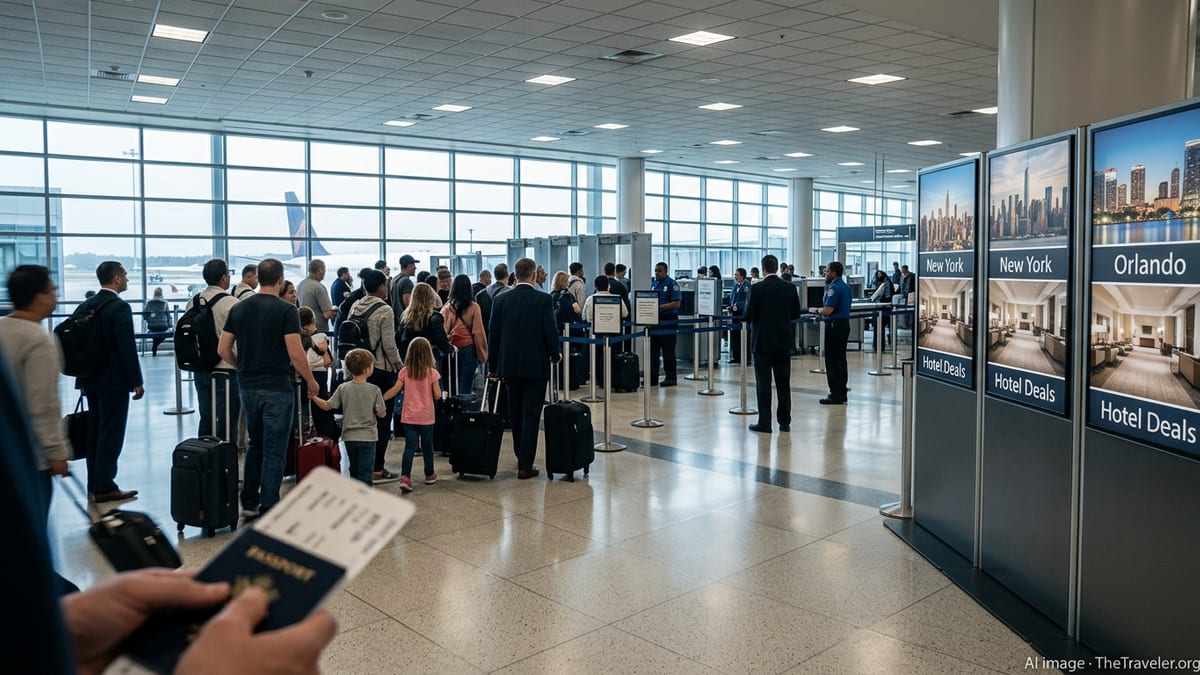
Airlines Warn of Mounting Delays as Shutdown Hits TSA and ATC
United Airlines, Delta Air Lines, American Airlines and Southwest Airlines are bracing travelers for significant disruption as the latest U.S. government shutdown strains airport security and air traffic control staffing during one of the busiest travel periods of the year. With the Department of Homeland Security operating on limited funding, Transportation Security Administration officers and air traffic controllers are required to work without pay, a situation that has already led to staffing gaps and growing lines at major hubs.
In recent days, passengers at airports including Houston’s George Bush Intercontinental and William P. Hobby, as well as New Orleans, have reported waits stretching to several hours, with terminal operators urging travelers to arrive up to five hours before departure for standard screening. Some TSA lanes have been closed outright and others are operating at reduced capacity, creating a patchwork of bottlenecks that carriers say will translate into rolling delays and missed connections if the shutdown persists.
Industry executives privately acknowledge that the situation evokes comparisons to previous funding lapses, when a wave of unscheduled absences among unpaid security officers and controllers forced airlines to pare schedules and consolidate flights. The risk is particularly acute as spring break peaks and business travel slowly recovers, leaving little slack in the system to absorb prolonged security slowdowns or traffic management initiatives intended to cope with thinner staffing in control towers and regional centers.
While federal law requires essential aviation staff to remain on duty, the uncertainty around paychecks is undermining morale and making it harder to maintain normal service levels. Airline planners are already modeling contingencies that could see selective schedule trims, temporary ground stops during peak hours and the rebooking of passengers onto less congested routes if queues continue to spill into parking garages and baggage halls.
Travelers Face Longer Queues, Missed Flights and Patchy Service
For travelers, the most visible impact of the shutdown is the security line. Reports from multiple airports this week describe queues snaking well beyond checkpoint areas, with some passengers missing flights despite arriving more than two hours early. Families heading to sun destinations for spring break and international visitors connecting through U.S. hubs are particularly vulnerable, as heightened document checks and suspended expedited screening programs add minutes to every interaction.
With TSA PreCheck and Global Entry enrollment and renewal services curtailed during the funding lapse, many travelers accustomed to fast-track lanes are being funneled into standard lines, further compounding congestion. Airlines are using apps and social media feeds to push real-time wait time estimates and urging passengers to build in extra buffer, but warn that unpredictable shift-by-shift staffing levels mean conditions can deteriorate quickly.
Inside terminals, the knock-on effects are multiplying. Gate agents are juggling last-minute rebookings for those stranded at security, while crew scheduling teams work to keep pilots and flight attendants within legal duty limits as departure banks back up. In some cases, aircraft are departing with unfilled seats because connecting passengers are trapped in screening queues, a costly outcome during a period when demand for remaining seats is high and operational resilience is fragile.
Airport operators, meanwhile, are deploying customer service staff and volunteers into checkpoints and queues to manage tempers and answer questions, but stress that they cannot directly control federal staffing. Several large airport systems have warned that if the shutdown continues into the heart of the spring and early summer travel season, they may face pressure to reconsider their operating hours, concession staffing and capital plans as revenue forecasts are revised downward.
Inbound Tourism From Canada, UK and Germany Drops Sharply
Even before the latest shutdown, the U.S. tourism industry was grappling with a pronounced slowdown in arrivals from key international markets. Travel data for 2025 showed a marked decline in visitors from Canada, the United Kingdom and Germany, driven by a combination of political tension, tighter border controls, elevated airfares and weaker foreign currencies against the dollar. Analysts warn that the current airport turmoil risks hardening perceptions among overseas travelers that trips to the United States are stressful and unpredictable.
Canadian travel to the U.S., historically the country’s single largest inbound market, has been sliding for months amid boycotts and a shift toward alternative destinations in Mexico, the Caribbean and Europe. Tourism forecasters estimate that Canadian road and air trips south of the border have fallen by double digits compared with last year, eroding visitor spending in states such as Florida, New York and border regions that rely heavily on cross border traffic for weekend getaways and shopping trips.
From Europe, the picture is similarly concerning. Travel companies and hotel groups report that bookings from the UK and Germany have weakened significantly, with some surveys showing declines of more than 20 percent in planned U.S. visits compared with pre pandemic levels. Prospective visitors cite long border queues, stories of stricter immigration interviews and a perception that travel to the United States has become both more expensive and less welcoming than competing long haul destinations.
These shifts are not occurring in a vacuum. Industry economists note that while global travel demand remains robust, especially within Europe and between Europe and Asia, the U.S. is underperforming its peers and risks ceding long term market share if structural issues ranging from visa processing backlogs to airport congestion and political rhetoric are not addressed.
Hotel Giants See Softer Demand and Thinner Forward Bookings
The decline in visitors from Canada, the UK and Germany is filtering directly into the balance sheets of major hotel operators. Hyatt, Marriott, IHG and Hilton have all reported softer than expected demand at U.S. properties that traditionally cater to international travelers, including urban hotels in New York, San Francisco, Los Angeles, Orlando and Las Vegas, as well as resort destinations in Florida, California and Hawaii.
Revenue managers at these chains describe a noticeable pullback in bookings from Canadian and European tour operators, group segments and higher spending independent travelers. Some report that forward bookings from these markets for the coming summer are down by double digit percentages, even as domestic leisure demand stabilizes. To protect occupancy, hotels are increasingly turning to promotions targeting U.S. residents, loyalty members and regional drive markets, often at the cost of lower average daily rates.
Luxury and upper upscale properties are feeling the strain most acutely. These hotels rely heavily on transatlantic travelers and long haul guests who tend to stay longer and spend more on dining, spa services and entertainment. A thinning pipeline of such guests can weigh disproportionately on profitability. Analysts warn that sustained weakness from Canada, the UK and Germany could delay renovation plans, pressure staffing levels and, in some heavily indebted markets, raise questions about asset valuations.
Smaller independent hotels and regional brands, particularly in gateway cities and border communities, lack the scale and loyalty ecosystems of global chains and may find it harder to replace lost foreign demand. Some local tourism boards are responding with emergency marketing campaigns aimed at nearby states and domestic travelers, but acknowledge that reversing international sentiment will require broader changes in national policy and messaging.
Travel Industry Urges Policy Fixes as Peak Season Looms
Across the travel ecosystem, airlines, hotels, airports and tourism bodies are stepping up lobbying efforts in Washington, pressing lawmakers to resolve the shutdown quickly and to insulate critical aviation and border functions from future funding standoffs. Trade associations argue that repeated lapses in appropriations undermine confidence in the reliability of U.S. infrastructure and risk doing lasting damage to the country’s reputation as a premier destination for both business and leisure travel.
Executives are also calling for targeted measures to rebuild demand from Canada, the UK and Germany, including increased tourism marketing budgets, streamlined visa processing where applicable, and clearer, more welcoming communication about entry procedures. Some hotel and airline leaders have floated the idea of bilateral tourism initiatives and promotional campaigns with key partners in Toronto, London and Frankfurt to counter the perception that the United States has become a difficult place to visit.
In the near term, however, the focus remains on managing through the shutdown. Airlines are refining contingency plans, airports are adjusting staffing and wayfinding to handle overflow queues, and hotel operators are bracing for potential cancellations if travelers decide to postpone or reroute trips to avoid disruption. With the busy summer peak and major events such as the expanded World Cup calendar on the horizon, the stakes are high for an industry that is still recovering from the pandemic shock and now faces a new test of resilience.
For travelers already booked to visit the United States in the coming weeks, the message from carriers and hotels is to stay informed, allow extra time and remain flexible. For policymakers, the warning is starker: unless the political stalemate is resolved and a clearer path to stable funding and friendlier travel policies is established, the combined shock of operational disruption and weakening international demand could reshape the U.S. tourism landscape for years to come.