

More news on this day
Confusion and frustration rippled through U.S. airports this weekend as the federal government’s latest funding crisis spilled into the travel system, with the Department of Homeland Security moving to shut down Global Entry and briefly threatening to halt TSA PreCheck before reversing course under intense backlash.
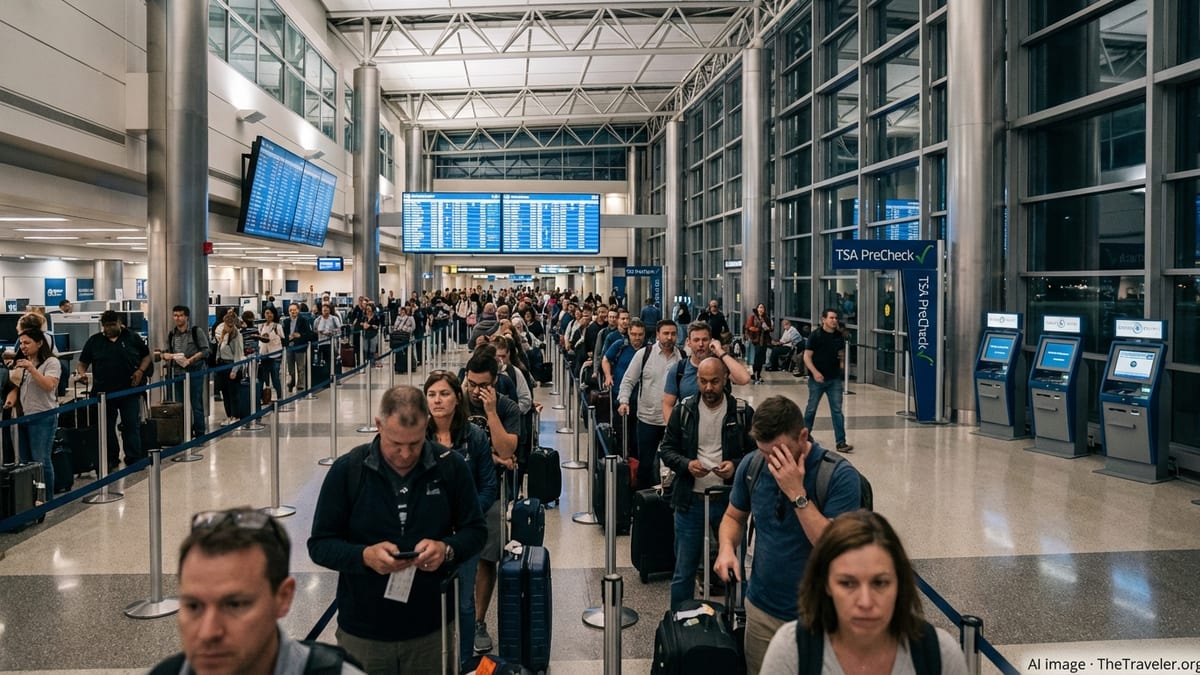
A Sudden Policy Whiplash Confuses Millions of Travelers
The disruption began late Saturday, February 22, when Homeland Security officials announced that both TSA PreCheck and Global Entry would be suspended as part of emergency measures to conserve funds during a partial shutdown of the Department of Homeland Security. The shutdown, which started on February 14 after Congress and the White House failed to agree on a DHS funding bill, had already forced thousands of security and customs officers to work without pay while others were sidelined as nonessential.
Within hours of the suspension notice, however, the picture began to shift. On Sunday, TSA spokespeople said that PreCheck lanes would in fact remain open at most airports and that the agency would adjust operations case by case as staffing allowed. That clarification calmed some fears but left travelers and airline industry officials grappling with a patchwork reality in which a marquee trusted-traveler program, Global Entry, was ordered offline while PreCheck limped ahead under the cloud of the ongoing shutdown.
For travelers who depend on predictable, expedited processing, the rapid turnaround in policy messaging has been almost as disruptive as the operational changes themselves. Airport social media channels and airline call centers were flooded with questions from passengers trying to determine whether their trusted-traveler benefits still applied and how much extra time they now needed at already congested hubs.
The episode underscores how vulnerable the nation’s vast air travel system remains to political brinkmanship in Washington, where disputes over immigration enforcement and border policy have once again spilled into airport security and customs operations relied upon by tens of millions of passengers each year.
Global Entry Shut Down While PreCheck Stays on Life Support
As of Monday, February 23, the clearest operational change is at the border. U.S. Customs and Border Protection has moved to suspend Global Entry for the duration of the DHS funding lapse, shutting down the automated kiosks and dedicated lanes that allow preapproved, low-risk travelers to clear immigration in minutes on arrival from abroad. Officers who normally staff Global Entry and other trusted-traveler queues are being reassigned to standard passport control lines in an effort to keep overall processing times manageable with fewer paid personnel.
Global Entry members arriving at major international gateways such as New York’s John F. Kennedy, Los Angeles International, Dallas Fort Worth and Miami are now being funneled into general arrivals halls alongside all other passengers. Early reports from airlines and airport authorities describe lengthening lines at peak evening arrival banks, with some international passengers facing waits of an hour or more at facilities that had grown accustomed to siphoning off a sizeable share of frequent flyers into expedited channels.
Inside the terminal, TSA PreCheck remains officially open, but even here the situation is fragile. Although DHS walked back its plan to outright shut the program, TSA officials have warned that PreCheck operations may be scaled back or temporarily closed at certain checkpoints if staffing falls below critical thresholds. That leaves open the possibility that a traveler with a PreCheck designation on their boarding pass could still be redirected to standard screening lines in some locations, especially during early morning and late afternoon rush periods.
The net effect is a bifurcated system in which domestic frequent flyers largely retain access to expedited security screening, while international travelers who previously sailed through customs now find themselves back in the main flow. Travel groups argue that such a split undercuts the very logic of trusted-traveler programs, which were designed as integrated tools to both enhance security and ease congestion across the entire journey.
Major Hubs Bear the Brunt of Disruptions
The operational strain is most visible at the country’s largest and busiest hubs, where even minor changes in passenger flow can cascade into delays and missed connections. At New York’s airports, where a powerful winter storm has already prompted widespread flight cancellations, the loss of Global Entry has added another layer of congestion in crowded arrivals halls. Airline agents report that some international passengers with tight domestic connections have missed onward flights after unexpectedly long waits at immigration.
In Chicago, where hundreds of flights were canceled over the weekend due to a major storm system sweeping the Midwest and Northeast, the combination of weather and policy uncertainty led to confusion over which lanes were open to trusted-traveler members. At O’Hare, airlines advised passengers to arrive earlier than usual and to watch airport messaging boards closely, as TSA adjusted the mix of standard and expedited lanes based on real-time staffing.
On the West Coast, major gateways such as Los Angeles International and San Francisco International experienced a more uneven picture. Some terminals kept PreCheck lanes open and moving, while others briefly routed all travelers through standard screening before restoring expedited lines. International arrivals facilities, however, reported a clear uptick in wait times after Global Entry kiosks went dark, particularly during late afternoon arrival banks from Asia and Europe when customs halls were already stretched.
Secondary hubs and popular leisure destinations have not been spared. Airports in Orlando, Miami, Atlanta and Houston, all of which handle heavy volumes of international visitors and cruise traffic, have seen trusted-traveler members funneled back into general customs lines. Local tourism boards worry that if the shutdown persists, long waits at these gateways could dampen the peak winter and spring-break travel seasons that are crucial to regional economies.
Travelers Face Longer Lines, Higher Stress and Uncertain Waits
For individual travelers, the suspension of Global Entry and the precarious status of PreCheck translate most directly into time and stress. Trusted-traveler programs were marketed as a way to trade upfront fees, background checks and biometric enrollment for a more predictable, less stressful airport experience. With kiosks shuttered and expedited lanes potentially subject to day-by-day staffing decisions, that promise has been abruptly weakened.
Business travelers returning from overseas trips report factoring in an additional hour or more on arrival for immigration and customs, particularly at congested evening peaks. Some have shifted to earlier flights or added overnight layovers to hedge against the risk of missing morning meetings. Families and leisure travelers, especially those with young children or tight cruise departures, describe packing extra snacks, planning for long waits and bracing for an experience they thought their memberships were designed to avoid.
The uncertainty is compounded by inconsistent information. Airline apps and boarding passes may still display PreCheck indicators even when local TSA supervisors temporarily suspend expedited lanes. Meanwhile, official government messaging has evolved rapidly over a matter of hours, leaving many passengers skeptical that the situation will remain stable for the duration of the shutdown. Travel advisers and corporate travel managers say they are fielding a surge of questions from clients trying to understand whether their investments in trusted-traveler memberships still make sense.
Psychologically, the turmoil has added another layer of anxiety to an already fraught travel environment marked by crowded flights, frequent weather disruptions and lingering operational challenges in the post-pandemic era. For some travelers, the trusted-traveler lane was one of the few remaining elements of control in an otherwise unpredictable journey. Its partial removal, even temporarily, has amplified the sense that broader political battles are now reaching directly into the travel experience.
Industry and Labor Warn of Mounting Economic Costs
Airlines, airport operators and travel industry groups have reacted sharply to the DHS moves, arguing that suspending Global Entry and even threatening to halt PreCheck during a shutdown is counterproductive on both security and economic grounds. Trade associations representing carriers and airports have warned that delays and missed connections triggered by longer lines could ripple across the network, adding to operational costs and eroding consumer confidence in air travel.
Executives point out that trusted-traveler programs are largely funded by user fees rather than general tax dollars, and they question why services that generate their own revenue streams are being curtailed in the name of conserving appropriated funds. Industry analysts note that previous federal shutdowns, which primarily affected air traffic control staffing and basic security operations, were estimated to have cost airlines, hotels and related businesses billions of dollars in lost revenue and added expenses.
Labor representatives for TSA officers and customs agents, many of whom are now working without pay, have also voiced concern. On one hand, the suspension of Global Entry reduces the number of distinct processing streams to staff, potentially allowing stretched teams to focus on core security and screening tasks. On the other, longer lines and frustrated passengers can increase the risk of confrontations at checkpoints and booths, adding emotional strain to an already difficult working environment.
Airport concession operators, rideshare drivers and nearby hotels are watching closely as well. Longer processing times can extend the overall dwell period inside terminals, but they can also prompt some travelers to avoid discretionary trips altogether. If the shutdown drags on and disruption at major hubs becomes a defining feature of the travel experience, local economies that depend heavily on tourism and business travel could begin to feel the impact in lower occupancy, reduced spending and wavering corporate event bookings.
Political Blame Game Over Security and Shutdown Strategy
Behind the scenes, the suspension of Global Entry and the near-suspension of PreCheck have quickly become flash points in the broader political battle over the DHS funding impasse. The shutdown itself is rooted in a fight between the Trump administration and congressional Democrats over immigration enforcement powers and oversight of recent high-profile incidents involving federal immigration agents.
Administration officials frame the suspension of trusted-traveler programs as a reluctant but necessary step to prioritize limited resources for the general traveling public and core security missions. They argue that with thousands of officers either furloughed or working unpaid shifts, the department must concentrate on maintaining baseline screening and border control first, even if it means temporarily sacrificing convenience services for frequent travelers and elites.
Democratic lawmakers and some Republican critics counter that the moves appear designed to maximize public discomfort and shift blame for the shutdown’s consequences. They point to the rapid about-face on PreCheck as evidence that the initial plan to close those lanes was politically untenable once airlines, airports and travelers began to push back. Several members of Congress have demanded detailed explanations of the cost savings, if any, generated by shutting down Global Entry kiosks relative to the disruption caused.
The result is that airport security and customs operations, normally technocratic domains managed far from the public spotlight, are now at the center of a partisan messaging war. That visibility may help accelerate negotiations toward restoring DHS funding, but in the meantime it leaves front-line officers and ordinary travelers to absorb the immediate fallout of decisions taken in Washington.
What Travelers Should Expect in the Days Ahead
With no clear timeline for resolving the shutdown, travel experts say passengers should plan for the current conditions to persist at least through the coming week. That means Global Entry members should not expect to use kiosks or dedicated lanes when arriving in the United States and should instead budget extra time for standard immigration and customs queues. Travelers with tight domestic connections after long-haul flights may want to consider rebooking to longer layovers or earlier arrivals where possible.
For those relying on TSA PreCheck, the situation is more variable but still manageable with planning. At many major airports, expedited security lanes are continuing to operate much as before, though lines may be somewhat longer as TSA juggles staffing. However, because local supervisors can cut or consolidate lanes in response to staffing shortages or sudden surges in passenger volume, travelers are being urged to arrive earlier than usual and to be prepared to go through standard screening even if their boarding pass indicates PreCheck.
Travel advisers recommend that all passengers monitor airport and airline communications closely on the day of travel, particularly in the morning and late afternoon peaks when staffing pressures tend to be most acute. They also advise packing with flexibility in mind, keeping carry-ons organized to speed screening if PreCheck lanes are unavailable and allowing generous connection times for itineraries that involve clearing U.S. immigration.
In the longer term, the shutdown standoff and the abrupt suspension of Global Entry may prompt a broader reevaluation of how trusted-traveler programs are insulated from political turbulence. For now, though, the practical message for travelers is clear: in the nation’s largest economy, where air corridors are among the busiest in the world, even a partial pause in fast lanes at the border is enough to send shock waves through a system already operating near capacity.