

More news on this day
Siem Reap is experiencing a fresh tourism surge as a new Cambodia China international street art performance transforms the gateway city to Angkor into an open air cultural stage, drawing rising numbers of regional and long haul travelers who are eager to pair temple visits with urban creative experiences.
Get the latest news straight to your inbox!
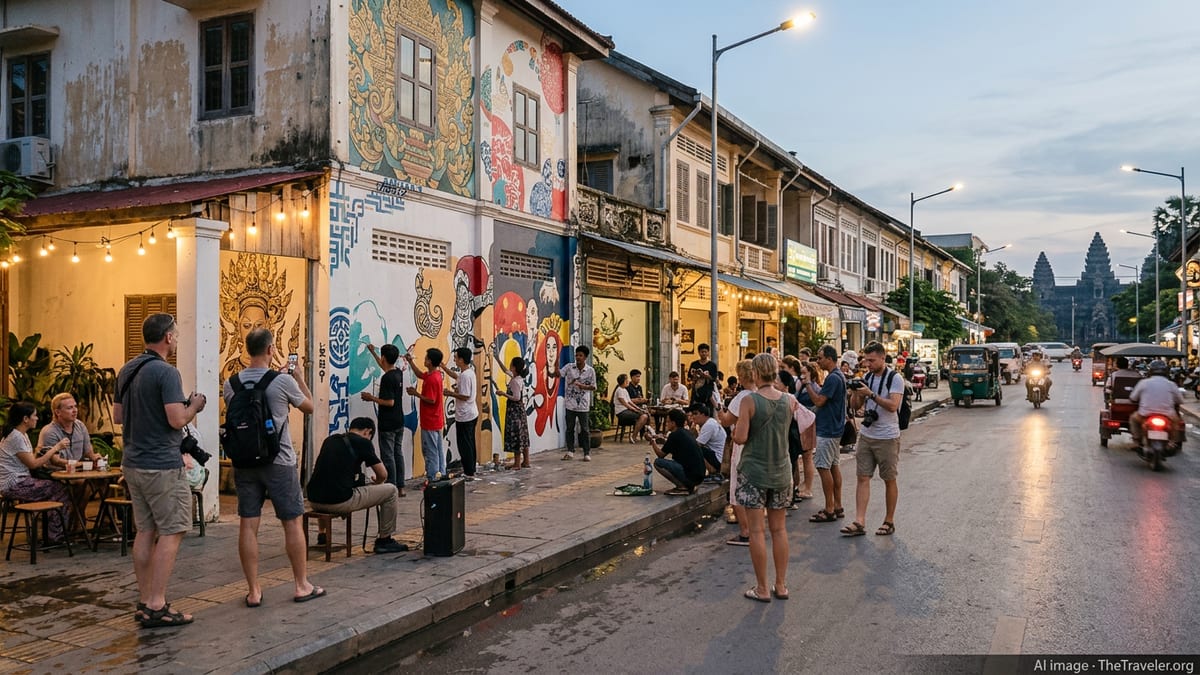
Street Art Performance Puts Siem Reap Back in the Spotlight
The Cambodia China international street art performance is emerging as one of Siem Reap’s most eye catching new draws, layering bold contemporary visuals and live performance over the historic streets that funnel visitors toward the Angkor Archaeological Park. According to published coverage in regional tourism and culture outlets, the program brings together Cambodian and Chinese artists for mural painting, light based installations and live street shows positioned as a bridge between Angkor era heritage and modern Asian creativity.
The event is timed to ride a broader rebound in visitor numbers. Publicly available tourism data indicate that Cambodia welcomed about 6.7 million international tourists in 2024, a jump of more than 20 percent compared with the previous year, with Siem Reap and Angkor at the core of this recovery. Recent reports on Angkor ticket sales show double digit year on year growth, confirming that the world heritage complex remains the country’s marquee attraction even as new experiences emerge in the surrounding city.
Local reporting on Siem Reap’s urban renewal highlights how art focused activations are helping to spread visitor spending beyond the temple moat. The new street art performance is part of a wave of creative programming that positions central neighborhoods as evening destinations in their own right, encouraging travelers to stay longer, explore on foot and engage with local businesses clustered around the routes.
Cambodia China Tourism Year Boosts Cross Border Flows
The street art initiative dovetails with the broader Cambodia China Tourism Year campaign in 2025, which aims to deepen bilateral travel and cultural exchange. Government communications and news agency coverage describe a coordinated calendar of events, including travel fairs, music festivals and promotional campaigns that specifically target Chinese travelers while also appealing to wider Asian and global audiences.
Recent analyses of arrivals to Angkor highlight a steady rise in Chinese visitors. Sector reports referencing Angkor Enterprise figures note that Chinese travelers accounted for a growing share of ticket sales in 2025, supported by policy measures such as visa facilitation and expanded air links. Trade media focused on Angkor Wat have documented mid single digit to high single digit percentage increases in Chinese arrivals over the first ten or eleven months of 2025, a trend that industry observers see as a key driver of Siem Reap’s renewed momentum.
Within this context, the Cambodia China international street art performance serves both as a cultural showcase and as soft promotion for the destination. Coverage in tourism newsletters and regional business media emphasizes that collaborative events tied to the bilateral tourism year are designed to highlight Cambodia’s creative industries, urban culture and hospitality sector alongside its ancient monuments, with Siem Reap positioned as a flagship example.
New Angkor Gateway Airport Underpins Visitor Growth
The success of Siem Reap’s new cultural programming is closely tied to improved connectivity. The Chinese financed Siem Reap Angkor International Airport, which began commercial operations in November 2023, has been cited in tourism and aviation reports as a major facilitator of renewed growth. The facility sits about 40 kilometers from Angkor Wat and was developed to handle larger aircraft and higher passenger volumes than the former town side airport.
Data compiled by real estate and infrastructure analysts show that the new airport welcomed hundreds of thousands of international passengers in 2025, with year on year growth in arrivals to Siem Reap outpacing national averages. Sector commentary links this expansion directly to added routes from Chinese cities and regional hubs, making it easier for group tours and independent travelers to access the Angkor region and combine temple visits with time in the city.
The upgraded air gateway also supports the logistics of large scale cultural events. Organizers of tourism year activities have emphasized in public statements that reliable airlift and modern facilities are essential to hosting multi day festivals and international performance programs. With Siem Reap Angkor International Airport in full swing, the city is now better equipped to welcome visitors drawn by the Cambodia China street art performance and similar happenings expected in upcoming seasons.
Creative Districts Turn Evenings Into Cultural Attractions
Parallel to the headline street art performance, Siem Reap’s inner districts are steadily repositioning themselves as creative neighborhoods that complement daytime temple excursions. Travel industry briefings and lifestyle features describe how boulevards and side streets around Wat Bo, the riverside and the former backpacker quarter now host a mix of galleries, design shops, small performance spaces and food focused pop ups.
Projects supported by cultural development organizations and local businesses have introduced curated walking routes that spotlight murals, heritage shop houses and contemporary craft studios. Earlier initiatives to activate streets with festivals and food fairs laid the groundwork for today’s street art programming, which uses temporary installations and performances to draw both residents and visitors into the same public spaces.
This urban energy is reshaping visitor behavior. Instead of retreating to hotels after a day at Angkor, more travelers are venturing back into town for evening shows, photography walks and casual exploration of the revamped riverfront. Operators interviewed in trade media note that such experiences are particularly attractive to younger travelers and repeat visitors who are looking for something new beyond the classic sunrise over Angkor Wat.
Global Travelers Seek Culture Beyond the Temples
While the Angkor temples remain the defining symbol of Siem Reap, the city’s evolving cultural map is playing a growing role in how the destination is perceived internationally. Travel features in regional and global outlets increasingly frame Siem Reap as a dual experience that pairs archaeological wonders with street level creativity, dining and nightlife. The Cambodia China international street art performance slots neatly into this narrative, offering visually striking content that is easily shared on social media and travel platforms.
Industry reports describe a broadening of Siem Reap’s visitor base, with rising numbers of American, European and regional Asian travelers returning as flight options expand and new experiences are promoted. The combination of Angkor’s timeless appeal, an upgraded airport and a calendar of modern cultural events is seen as central to the province’s tourism strategy for 2025 and 2026.
For now, the Cambodia China international street art performance stands out as a symbol of this new chapter. By turning streets near the Angkor gateway into a canvas for cross cultural collaboration, the initiative is helping to ensure that Siem Reap’s tourism boom is not only about higher arrival numbers, but also about richer, more varied experiences that keep visitors exploring long after they have left the temple walls.