

Siem Reap is no longer just a gateway town to Angkor Wat. It has matured into a destination where travelers can layer ancient temples with floating villages, ethical wildlife encounters, contemporary circus, and food tours that go far beyond pub street.
The challenge now is not finding things to do, but deciding which Siem Reap tours and Angkor experiences are genuinely worth booking, and which are better tackled independently. This guide looks at the most worthwhile options, when to go with a guide or organized tour, and how to spend your limited time and budget without shortchanging the reason you came: the temples of Angkor.
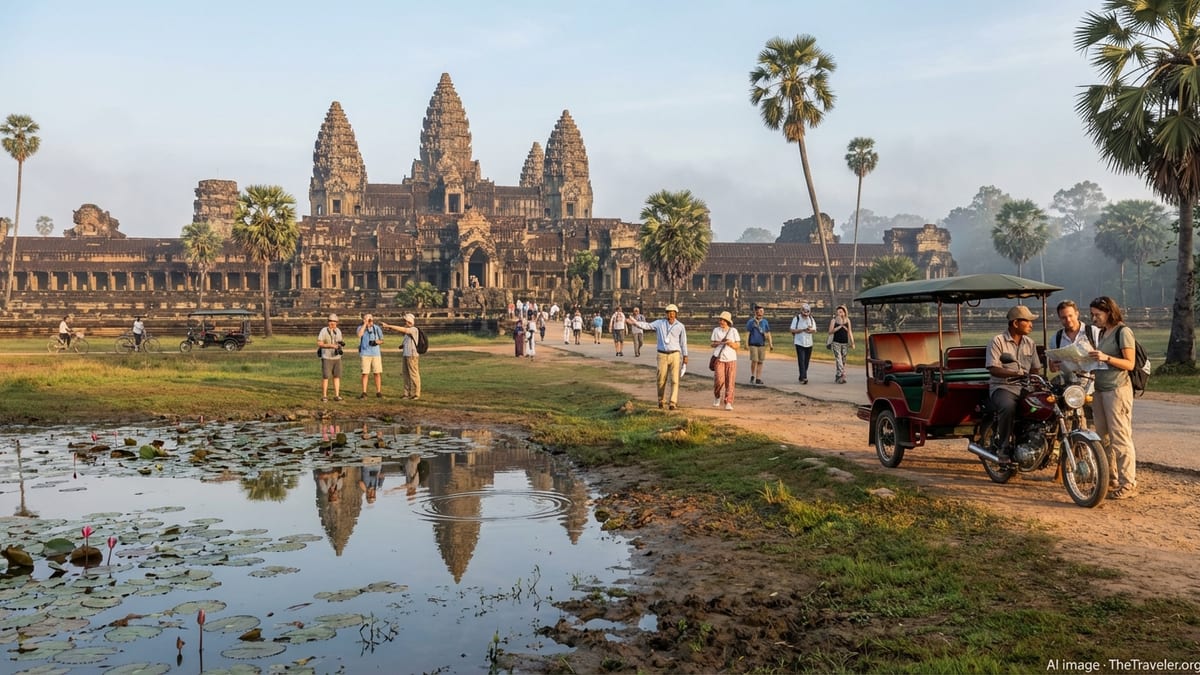
Planning Your Angkor Experience: Tours vs Independent Exploration
Angkor Archaeological Park covers more than 400 square kilometers of forest and rice fields, with dozens of significant temples spread across it. While independent exploration by tuk-tuk or bicycle remains entirely possible, structured tours help first-time visitors make sense of the history and avoid common pitfalls such as heat exhaustion and temple fatigue. The best approach often blends one or two guided days with time to roam at your own pace.
The key decision points are how many days you have, how deep you want to go into the archaeology and symbolism, and how comfortable you are negotiating with local drivers. From there, you can decide which Angkor tours are worth locking in ahead of time and which experiences are better booked in town or left flexible.
Understanding Angkor Passes and Time Frames
Before you think about tours, you need to understand the Angkor pass system and how it shapes your options. The national authority offers one-day, three-day, and seven-day passes that can be used across a fixed period, and every visit to the archaeological park requires one. Most travelers find that three non-consecutive days inside the park strikes a good balance between depth and fatigue, especially in the dry season when midday heat is intense.
If your time in Siem Reap is limited to two or three days total, a one-day pass combined with a focused guided tour of the essential temples is usually the most efficient choice. Those with a week in town can build in early starts, long lunch breaks, and a mix of iconic sights and quieter, more atmospheric ruins reached by longer drives.
When a Guided Angkor Tour Makes Sense
Guided tours at Angkor are most valuable on your first full day in the temples. A knowledgeable local guide can anchor the story of the Khmer Empire, the shift from Hinduism to Buddhism, and the narratives carved into bas-reliefs so that later visits feel more meaningful. If you book only one structured tour, make it an introductory circuit that combines the big three: Angkor Wat, Bayon, and Ta Prohm.
Guides also come into their own for sunrise and sunset visits, when navigating crowds, viewpoints, and timing becomes more complex. Professional guides and reputable tour companies stay up to date on crowd patterns and seasonal conditions such as water levels at reflection pools, which can make the difference between a memorable sunrise and a frustrating one.
When to Go Independent
Once you have the basics, hiring a tuk-tuk driver for a half day or day to revisit favorite temples can be more relaxed and cost effective than additional fully guided tours. Armed with a good map or offline app, you can choose quieter corners, linger over details, or simply sit and absorb the atmosphere at less visited shrines without watching the clock.
Independent exploration is also ideal if you are primarily interested in photography and already know the angles and sites you want to prioritize. In this case, you may still want a driver who is familiar with the park’s lesser-known access roads and willing to start very early, but you will not necessarily need formal guiding services at each site.
Core Angkor Temple Tours Worth Booking
Certain temple itineraries are so well established that they have become shorthand among tuk-tuk drivers and tour desks: the small circuit, the big circuit, and various sunrise and sunset combinations. While you can string these together independently, booking a structured version of at least one of them is often worthwhile for first-time visitors, especially in the high season when logistics and crowd management matter.
Classic Small Circuit with Angkor Wat, Bayon, and Ta Prohm
The classic small circuit is the single most popular tour in Siem Reap, and for good reason. It links the three headline temples into an efficient loop that starts and ends near town, typically running from dawn or early morning into early afternoon. For most visitors with only one Angkor day, this is the essential tour to book in advance.
A typical small circuit tour starts at Angkor Wat, ideally at or soon after sunrise, then continues to Angkor Thom and its central Bayon temple, with its famous towers of serene, smiling faces. After exploring the terraces and gates of Angkor Thom, you finish at Ta Prohm, the so-called Tomb Raider temple, where enormous tree roots cascade over stone galleries. A good guide will pace the visits to avoid the worst of the crowds, explain the meaning of the carvings, and point out vantage points that most group tours hurry past.
Big Circuit and Less Visited Temples
The big circuit extends farther into the Angkor park and is worth booking if you have at least a second temple day. This route usually includes Preah Khan, Neak Pean, Ta Som, East Mebon, and Pre Rup, each offering a slightly different architectural style and atmosphere. While you can hire a tuk-tuk driver for this route, joining a small-group or private tour adds historical context that brings these lesser-known temples to life.
Preah Khan, for example, is a sprawling monastic complex with collapsed halls and shaded courtyards that feel more exploratory than Angkor Wat’s formal layout. Neak Pean sits on an island reached by a long causeway and was once part of an ancient healing complex, while Pre Rup offers wide stone staircases and broad views that tempt photographers in the golden late-afternoon light. A curated tour balances these stops and prevents the day from dissolving into a blur of similar ruins.
Angkor Wat Sunrise Tours
Angkor Wat at sunrise remains one of Southeast Asia’s most coveted travel photos, but it is also one of the most crowded experiences in the region. Booking a reputable sunrise tour helps you manage expectations and logistics. Good operators time arrival before the main surge, steer you to less congested reflection ponds when one side is packed, and schedule a temple walk after the initial dawn crowds have thinned.
Many sunrise tours now pair Angkor Wat with other small-circuit highlights, wrapping up by late morning to escape the heat. If you are serious about photography, it is worth paying for a small group or private option that allows you to linger after the main groups depart. Be wary of the cheapest mass-market bus tours, which can involve long pick-up runs and rushed temple visits that feel more like box ticking than genuine exploration.
Angkor Wat Sunset and Phnom Bakheng Considerations
Sunset tours often focus on Phnom Bakheng, a hilltop temple with wide views over the forest canopy and distant Angkor Wat. The experience can be atmospheric when the light cooperates, but recent visitor caps and queuing systems mean that going independently without understanding the timing can lead to disappointment.
If you want to watch sunset from Phnom Bakheng, a structured tour that includes early arrival and clear guidance on the queuing process is advisable. Otherwise, some guides now suggest quieter alternatives such as Pre Rup for soft evening light on the brick towers or simply staying longer at a favorite temple as the late afternoon crowds melt away. Booking a flexible private driver or guide who knows the current policies at viewpoint temples will help you avoid surprises.
Beyond the Big Three: Outlying Angkor Temples Worth the Trip
Once you have met Angkor Wat, Bayon, and Ta Prohm, the temptation is strong to venture farther afield. Several outlying temples and sacred sites justify the extra driving time and, in many cases, the cost of a dedicated tour. These excursions are where a knowledgeable guide and good vehicle make a substantial difference to your comfort and understanding.
Banteay Srei: The Citadel of Women
Banteay Srei lies around 30 kilometers from Siem Reap, beyond the main Angkor cluster. Often visited as a half-day or combined with countryside stops, it earns its detour through intricate pink sandstone carvings that many experts consider the finest in Angkorian art. The temple’s smaller scale, refined reliefs, and rural backdrop create a contrasting experience to the monumental grandeur of Angkor Wat.
Because Banteay Srei’s details reward close inspection and its history touches on later periods of the Khmer Empire, a guided tour is particularly worthwhile here. Reputable operators will also pair the temple with visits to nearby craft centers, sugar palm producers, or rural communities, turning the outing into a deeper look at life beyond Siem Reap’s hotel corridors.
Beng Mealea: Jungle Temple Adventure
Beng Mealea is often marketed as a true jungle temple: a largely unrestored complex of collapsed galleries, encroaching trees, and mossy stones that give a strong sense of discovery. Located roughly 60 kilometers east of Siem Reap by road, it is best visited as part of a full-day tour with a driver experienced on rural roads.
Some tours combine Beng Mealea with the first temples encountered on the way to the even more remote Koh Ker group, while others focus solely on Beng Mealea and the countryside. The value in booking a tour lies partly in safe, comfortable transport and partly in navigating the site’s maze-like layout, elevated walkways, and photo spots. If you enjoyed Ta Prohm and want a wilder counterpart with fewer crowds, this is one of the most rewarding experiences to add.
Kulen Mountain: Sacred Springs and Waterfalls
Phnom Kulen National Park lies northeast of Siem Reap and is revered by Cambodians as a sacred mountain, associated with early Angkorian kings and religious pilgrimages. Full-day tours to Kulen typically include the riverbed carvings of Kbal Spean or the thousand lingas, hilltop pagodas, reclining Buddha statues, and a waterfall where local families picnic and swim on weekends.
Booking an organized Kulen tour is advisable because access roads are steep and can be muddy in the wet season, and visitor numbers are managed through checkpoints. Mahout-style elephant rides are no longer offered in the Angkor area, and responsible operators now emphasize natural and cultural encounters on Kulen rather than animal performances. Travelers who want a mix of religion, forest scenery, and local life will find Kulen a worthwhile addition after at least one or two core Angkor days.
Siem Reap’s Best Non-Temple Tours and Experiences
What you do when you are not at the temples can shape your impression of Siem Reap as much as Angkor itself. In recent years, local entrepreneurs and social enterprises have built a roster of tours that showcase Cambodian contemporary culture, food, and rural life. Some of these are now widely regarded as essential Siem Reap experiences in their own right and are worth booking ahead during busier months.
Phare, The Cambodian Circus
Phare, The Cambodian Circus has become one of Siem Reap’s signature evening experiences, combining acrobatics, live music, theater, and visual storytelling in a big top on the town’s edge. Performances run nightly, with different shows rotating through the schedule, and the atmosphere is both family friendly and genuinely moving. Beyond entertainment, Phare operates as a social enterprise supporting graduates of an arts school in Battambang, providing stable careers in the performing arts.
This is one evening activity that consistently earns top billing from travelers and guidebooks. Booking tickets in advance is recommended in the cool dry season and holiday periods, especially if you prefer central seats with an unobstructed view. Many travelers schedule Phare on the same day as a lighter temple program or a pool afternoon, using the show as a colorful, air-conditioned end to a day that began before dawn at Angkor Wat.
Tonle Sap Floating Village Tours
Day trips to the floating villages on the Tonle Sap Lake remain popular, but they demand careful selection. Water levels vary dramatically between the wet and dry seasons, affecting navigation and the appearance of stilted or floating settlements. In the dry season, some areas can feel more like stranded structures on muddy ground than villages afloat, while in the wet months, boat tours may access mangroves and broader channels.
Ethical considerations are just as important as logistics. Reputable operators frame the visit as a way to understand lake ecology and community adaptation, avoiding exploitative practices such as intrusive photo stops or visits to wildlife displays that keep animals in poor conditions. Look for smaller-group tours that employ local guides, stop at community-run projects, and are upfront about how your tour fee is distributed. Among the various Tonle Sap destinations, Kompong Khleang often receives praise for its relative authenticity and the sheer scale of its stilted houses, while closer options near Chong Kneas have drawn criticism for overly commercial experiences.
Siem Reap Food Tours and Cooking Classes
Cambodian cuisine has been overshadowed internationally by its Thai and Vietnamese neighbors, but Siem Reap’s food tours and cooking classes are changing this perception. Evening food tours introduce travelers to family-run eateries, street snacks, and dishes such as fish amok, num banh chok rice noodles, and grilled skewers in local markets beyond the tourist mainstays. For many visitors, these guided walks provide a safer and more structured way to try new foods than heading out alone on the first night.
Cooking classes typically combine a market visit with a hands-on session in a countryside or town kitchen, culminating in a shared meal. These experiences are particularly worthwhile if you enjoy bringing home more than souvenirs; recipes and techniques extend the memories of the trip and provide a framework for understanding Cambodian ingredients and flavors. Booking a class on a non-temple morning or afternoon offers a gentler day between more strenuous temple circuits.
Bike and Countryside Tours
Guided cycling tours have flourished around Siem Reap, offering everything from leisurely countryside loops along rice paddies to more ambitious rides that skirt the outer walls of Angkor Thom. While confident cyclists can rent bikes independently, organized small-group rides add value by selecting quieter paths, arranging bike transport where needed, and including refreshment stops in local villages.
These tours are particularly rewarding in the cooler hours of early morning or late afternoon and offer a glimpse of rural life that many travelers miss when shuttling between hotel and temples by vehicle. Some operators now offer e-bike options, making longer distances and light hills accessible to a wider range of fitness levels. Booking in advance is advisable in the high season if you have specific dates or bike types in mind.
Ethical Wildlife and Nature Experiences Around Siem Reap
As interest in animal encounters grows, so does concern over welfare and conservation. In the Angkor region, elephant rides have been phased out, and a new generation of tours is emerging that focuses on observation rather than interaction. Travelers who care about responsible tourism should choose experiences that prioritize habitat protection, scientific research, and local community benefits over photo opportunities.
Kulen Elephant Forest
Kulen Elephant Forest, located in the Bos Thom Community Forest at the foot of Kulen Mountain, has taken in former Angkor working elephants and now offers half-day visits that emphasize education and welfare. Guests join small groups to walk alongside the elephants in a forest environment, observe their natural behaviors, and learn about the challenges facing Cambodia’s remaining captive and wild populations.
The reserve positions itself as a retirement sanctuary rather than an entertainment venue. Visitors do not ride the elephants and are encouraged to view them at a respectful distance, sometimes assisting with feeding or observing bath time when conditions permit. Tours depart from central Siem Reap by shuttle, and numbers are capped, making advance booking essential in the peak dry season. For travelers seeking a responsible elephant experience in Cambodia, this is currently one of the strongest options near Siem Reap.
Birding and Flooded Forest Excursions
The Tonle Sap’s seasonally flooded forests and surrounding wetlands support a range of birdlife, including storks, pelicans, and herons at certain colonies. Specialist birding tours and nature-focused boat trips head for protected areas and colonies when conditions are right, particularly during and just after the wet season when water levels are high and nesting sites are active.
These tours are worth booking if you have a strong interest in wildlife or photography and are traveling in the appropriate months. They are usually longer and more expensive than standard floating village trips, as they involve smaller boats, park fees, and specialist guides. Check that operators work with local conservation groups and adhere to no-disturbance guidelines around nesting sites.
Specialist Angkor Experiences: Photography, Sunrise Strategies, and Private Guides
For some travelers, a standard group tour is not enough. Whether you are a serious photographer, a history enthusiast, or simply someone who wants to avoid crowds, Siem Reap’s tour market now offers highly specialized Angkor experiences. These can be among the most rewarding options, particularly if this is a once-in-a-lifetime trip.
Angkor Photography Tours
Photographers often find that dedicated Angkor photography tours justify their premium pricing. These small-group or private outings are led by photographers who know the park’s angles, light patterns, and crowd flows. Rather than racing through a checklist of temples, you may spend longer at fewer sites, focusing on composition, changing light, and technical tips tailored to your camera and skill level.
Many photography tours start well before sunrise and run through the morning, with optional afternoon or multi-day extensions. Booking ahead is essential, as there are only so many experienced photo guides, and they tend to fill their calendars during the cooler months when conditions are best. If sharp, well-composed temple images are a personal priority, this is one of the most worthwhile splurges.
Private Guiding for Deep Historical Context
Travelers with a strong interest in archaeology, religious history, or architecture will benefit from private guides who can adapt pacing and content on the fly. Instead of a standard script, these specialists can dwell on particular bas-reliefs, explain inscriptions, or connect what you are seeing to broader regional history, including the rise and fall of different Angkorian capitals.
Booking a private guide is particularly useful if you are traveling in a family group with mixed interests, as the guide can keep younger members engaged while still offering depth to those who want it. It also allows for flexibility in case of heat, mobility issues, or sudden downpours. Seeking recommendations from trusted hotels or established travel companies and confirming language skills and licensing beforehand helps ensure a quality experience.
Sunrise and Sunset Strategies for Crowd Avoidance
A growing number of tours now explicitly promise crowd avoidance by reversing classic circuits or shifting sunrise and sunset viewpoints away from the most overrun spots. For example, some sunrise tours start near the back entrance of Angkor Wat or at lesser-known reservoirs, then circle back once the main crowd has dispersed. Others steer sunset-seekers toward quieter embankments or outer-baray viewpoints.
While no tour can guarantee solitude at a World Heritage site, the best operators monitor daily conditions and adjust in real time. Booking with companies that emphasize small group sizes, early departures, and flexible itineraries can meaningfully improve your experience, particularly in the December to February high season when visitor numbers peak.
How to Choose a Reputable Tour Operator in Siem Reap
With Siem Reap’s tour market more crowded than ever, choosing the right operator matters. Prices for seemingly similar tours can vary widely, and not all experiences respect local communities or the archaeological park. A little research and a few pointed questions before you book can help you avoid disappointments and support companies committed to long-term sustainability.
Key Questions to Ask Before Booking
Before you commit to a tour, it is worth clarifying a few basics. Ask about group size caps, pick-up and drop-off logistics, what is included in the price, and whether national-park entry fees and Angkor passes are covered or must be purchased separately. For longer day trips, confirm whether drinking water, lunch, and snacks are provided, and whether dietary requirements can be accommodated.
It is also sensible to ask about guide qualifications and language skills. Licensed Angkor guides must pass examinations covering history and preservation rules; reputable operators work exclusively with such professionals. For village, food, or nature tours, consider asking how the company engages with local communities and whether any portion of your fee goes to community projects or conservation fees.
Red Flags and What to Avoid
Certain warning signs suggest that a tour may not align with ethical or safety standards. Be wary of operators that heavily promote close-up animal interactions, such as handling wildlife or posing with chained animals, or that still market elephant rides around Angkor or Tonle Sap. Similarly, tours that encourage intrusive photography of local people, particularly children, in villages or schools without clear community consent should be avoided.
Ultra-low prices far below the general market range may indicate unsustainably low wages, overcrowded buses, or aggressive commission structures that push you toward certain shops and restaurants. In Siem Reap, as elsewhere, paying a fair rate to a transparent operator is one of the most direct ways travelers can support better practices across the tourism sector.
When to Book in Advance and When to Wait
High-demand experiences such as Phare, The Cambodian Circus, premium Angkor sunrise tours, photography guiding, and ethical elephant visits can sell out in peak months. For these, pre-booking from home or early in your stay is advisable, especially if you are rigid on dates. Conversely, standard small- and big-circuit temple tours, basic floating village trips, and many food tours can often be arranged a day or two in advance through hotels or reputable local agencies.
Leaving some flexibility in your schedule allows you to adapt to weather, jet lag, or simple temple overload. Many travelers appreciate having one or two anchor experiences booked before arrival, then filling remaining days based on how they feel after their first encounter with Angkor.
The Takeaway
Siem Reap and Angkor reward both planning and spontaneity. Certain experiences clearly merit advance booking and investment: an introductory small circuit guided tour, a thoughtful outlying temple or Kulen excursion, an evening at Phare, and, for many, a carefully chosen floating village, food, or countryside tour. These build a framework that turns a list of ruins into a coherent story and a name on a map into a place with faces, flavors, and voices.
At the same time, some of the most memorable Angkor moments arrive unscripted: a quiet corner of a temple glimpsed between tour groups, a tuk-tuk ride through dust and shade at dusk, or a bowl of noodles at a roadside stall after a sunrise you booked only the night before. By blending a few standout tours with space to wander, asking the right questions of operators, and giving ethical, community-focused experiences priority, you can turn a visit to Siem Reap from a simple box tick into a layered journey through Cambodia’s past and present.
FAQ
Q1. How many days of Angkor temple touring should I book in advance?
Most travelers find that booking one full-day guided tour in advance, usually the classic small circuit, is enough before arrival. If you have three or more days, you can then decide on additional tours such as the big circuit or an outlying temple excursion once you have a feel for the heat, crowds, and your own energy levels.
Q2. Is a sunrise tour at Angkor Wat really worth it given the crowds?
Yes, provided you go in with realistic expectations and choose a reputable small-group or private tour. The iconic view is crowded, but experienced guides can help you find better vantage points and manage timing so that you enjoy the atmosphere rather than just the crush.
Q3. Can I visit Angkor temples without a tour guide or organized tour?
Yes, you can buy an Angkor pass independently and hire a tuk-tuk or bicycle to explore on your own. Many visitors do one guided day to understand the history and layout, then return independently to favorite sites. Just remember that a valid pass is required for every visit to the park, guided or not.
Q4. Which non-temple experience in Siem Reap should I prioritize if I am short on time?
If you have only one free evening, Phare, The Cambodian Circus is widely regarded as the standout experience thanks to its combination of performance quality and social impact. If you have a free half day, a well-reviewed food tour or cooking class offers an excellent introduction to Cambodian cuisine.
Q5. Are Tonle Sap floating village tours ethical and worthwhile?
They can be, but careful operator choice is critical. Look for tours that emphasize ecology and community partnerships, avoid exploitative photo stops, and are transparent about how money is shared. Water levels and village conditions also change with the seasons, so be sure to check what you can realistically expect at the time of your visit.
Q6. What is the most ethical way to see elephants near Siem Reap?
The most responsible option currently is to visit a sanctuary-style project where elephants are not ridden and visitors primarily observe rather than handle them. Experiences such as those at Kulen Elephant Forest focus on walking with elephants in a forest setting and learning about conservation, making them a more ethical choice than traditional elephant rides, which are no longer offered in the Angkor area.
Q7. Do I need to book bike or countryside tours ahead of time?
In the cooler dry months, popular cycling and countryside tours can fill up, especially for morning departures and small group sizes. If you know your preferred date, booking at least a few days in advance is wise. In shoulder seasons, you often have more flexibility to book once in Siem Reap.
Q8. How far in advance should I buy tickets for Phare, The Cambodian Circus?
For peak travel periods, buying tickets a few days to a week ahead ensures better seat selection, particularly in the central sections. Outside of holidays and high season, you can often secure seats closer to the performance date, but advance booking still reduces stress and lets you plan your evenings around temple days.
Q9. Is it better to book tours online or through my hotel in Siem Reap?
Both can work well. Booking online in advance is helpful for high-demand experiences and when you want to compare detailed itineraries. Hotel tour desks can be useful once you arrive, especially for filling gaps in your schedule or arranging standard temple circuits and transfers at short notice.
Q10. What should I look for to ensure a tour operator is reputable and responsible?
Look for clear information on group sizes, inclusions, and pricing, licensed guides for temple visits, and an explicit commitment to community or conservation where relevant. Avoid tours that heavily promote animal performances, intrusive village photography, or extremely low prices that suggest corners are being cut on wages, safety, or environmental practices.