

More news on this day
Portugal has stepped in to keep cruise itineraries on track after Silversea’s new ultra-luxury ship Silver Ray bypassed Madeira because of adverse Atlantic weather, adding the mainland port of Leixões near Porto as an alternative stop for guests.
Get the latest news straight to your inbox!
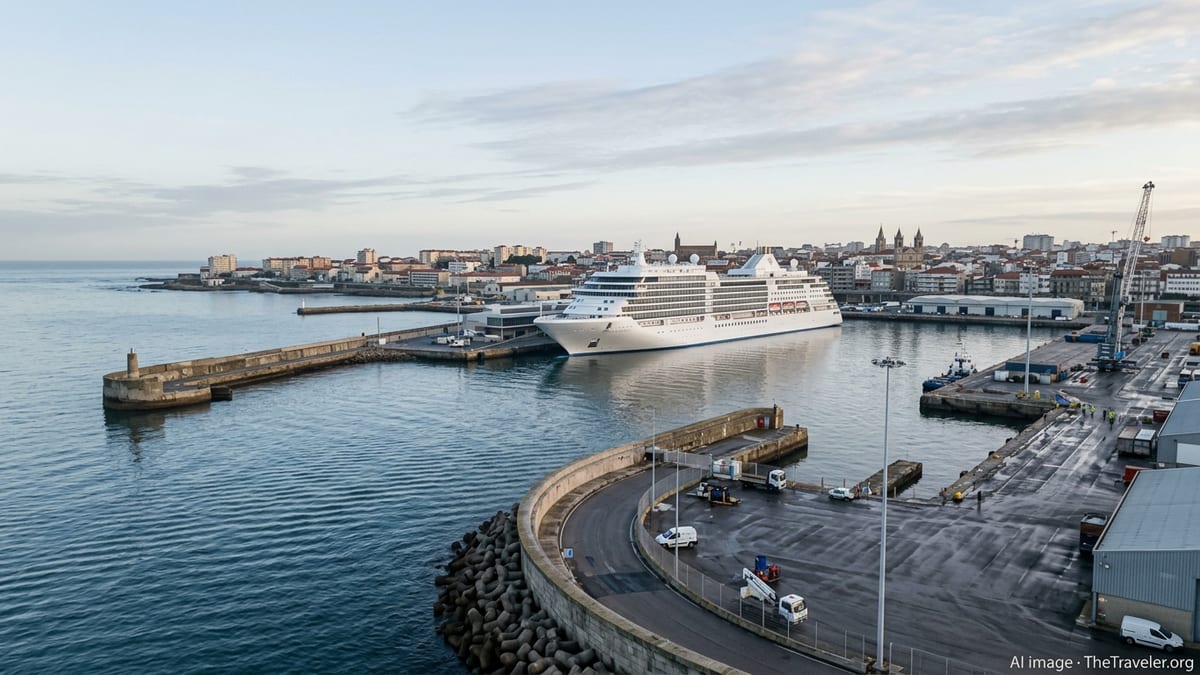
Weather Forces Change on Silver Ray’s Atlantic Crossing
According to published voyage information and recent itinerary tracking, Silver Ray was scheduled to feature Madeira’s capital Funchal on a transatlantic routing linking North America with Lisbon. Strong winds and deteriorating sea and swell conditions in the eastern Atlantic prompted navigational adjustments, with the call at Madeira withdrawn on safety grounds and schedule reliability considerations.
Rough seas around the archipelago are not uncommon during late winter and early spring, when Atlantic weather systems can generate high swells and gusty winds that complicate port approaches. Publicly available marine forecasts for the wider region have recently highlighted changeable conditions and elevated wave heights, reinforcing the operational challenges for cruise ships attempting precise arrival windows.
Reports indicate that, instead of attempting a potentially difficult approach into Madeira, Silver Ray’s bridge team opted for a more sheltered and logistically straightforward course toward mainland Portugal. The decision allowed the vessel to maintain a comfortable on board experience while preserving a full day in port for guests, albeit in a different destination.
Such diversions underscore how modern cruise itineraries, particularly open-ocean segments, remain at the mercy of weather patterns despite advanced routing tools. While ships of Silver Ray’s class are engineered for stability and comfort, port calls still depend on local sea state, wind direction, and berth access, all of which can change rapidly.
Leixões Emerges as a Strategic Alternative to Island Ports
With Madeira off the schedule, the port of Leixões, serving the city of Porto in northern Portugal, was added as a replacement call. Publicly available cruise schedules for the country show Leixões increasingly positioned as a flexible gateway for cruise operators, thanks to its modern cruise terminal, deep-water access, and proximity to major air and rail links.
Leixões lies just northwest of central Porto and has been investing in infrastructure aimed at both ocean liners and contemporary cruise vessels. The terminal’s sheltered location on the Atlantic coast, combined with Portugal’s well-developed maritime services, makes it an appealing contingency port when island destinations experience weather-related disruption.
Regional marine forecasts around Leixões have recently indicated more manageable wind speeds and swell heights than those affecting parts of the Madeira archipelago, supporting the decision to divert. These conditions allow for smoother pilotage and docking, reducing the risk of last-minute cancellations that can frustrate travelers.
Through this adjustment, Portugal effectively kept Silver Ray’s guests within the country’s tourism offering, shifting focus from a mid-Atlantic island experience to a historic mainland city without lengthening the overall voyage.
From Volcanic Landscapes to Urban Riverfronts
The removal of Madeira from Silver Ray’s itinerary replaced the island’s volcanic scenery and subtropical gardens with the urban and cultural charms of Porto. While the two destinations differ markedly, both are prominent components of Portugal’s tourism identity and offer cruise passengers a strong sense of place.
Funchal is often marketed to cruise travelers for its dramatic mountain backdrops, cable car viewpoints, and reputation for mild year-round climate. A missed call can disappoint guests who planned specific excursions, from levada walks to wine lodges, but diversions toward Porto offer a contrasting and equally distinctive experience focused on architecture, gastronomy, and riverfront ambience.
Leixões provides direct access to Porto’s historic core, where tiled facades, baroque churches, and the Douro River waterfront form a classic northern Portuguese tableau. Passengers stepping off Silver Ray in Leixões can reach the city in a short transfer, trading planned island hikes for strolls through atmospheric neighborhoods, port wine cellars, and riverside cafes.
For Portugal, the shift from Madeira to Porto also spreads tourism benefits between regions. While Madeira temporarily loses a high-spend cruise call, the diversion channels visitor spending toward hotels, restaurants, guides, and attractions in and around Porto at a time of year when international arrivals are building toward the main summer season.
Implications for Cruise Planning in the Eastern Atlantic
Industry observers note that weather-driven changes such as Silver Ray’s recent diversion highlight the importance of flexibility in cruise planning, particularly along the eastern Atlantic approaches to Europe. Itineraries featuring island ports like Madeira, the Azores, or the Canaries must account for open-ocean conditions that can differ sharply from sheltered Mediterranean routes.
For travelers, the episode is a reminder that all cruise itineraries are described in terms that anticipate possible changes due to weather or operational reasons. Guests booking spring transatlantic voyages are advised, in publicly available travel guidance, to expect a degree of variability in exact port calls, even on newly built ships with advanced stabilization systems.
Portuguese ports, for their part, appear to be capitalizing on this evolving landscape by positioning multiple gateways along the Atlantic coast. Lisbon, Leixões, and other mainland ports offer redundancy when island calls are not viable, allowing cruise lines to preserve a Portuguese stop and maintain passenger satisfaction even when nature intervenes.
As Silver Ray continues its early years of service, the ship’s adjustments around Madeira and Leixões illustrate how cruise operators blend safety, comfort, and destination appeal. For Portugal, the episode reinforces its role as a resilient, cruise-friendly nation able to adapt quickly when Atlantic weather reshapes the map.