

More news on this day
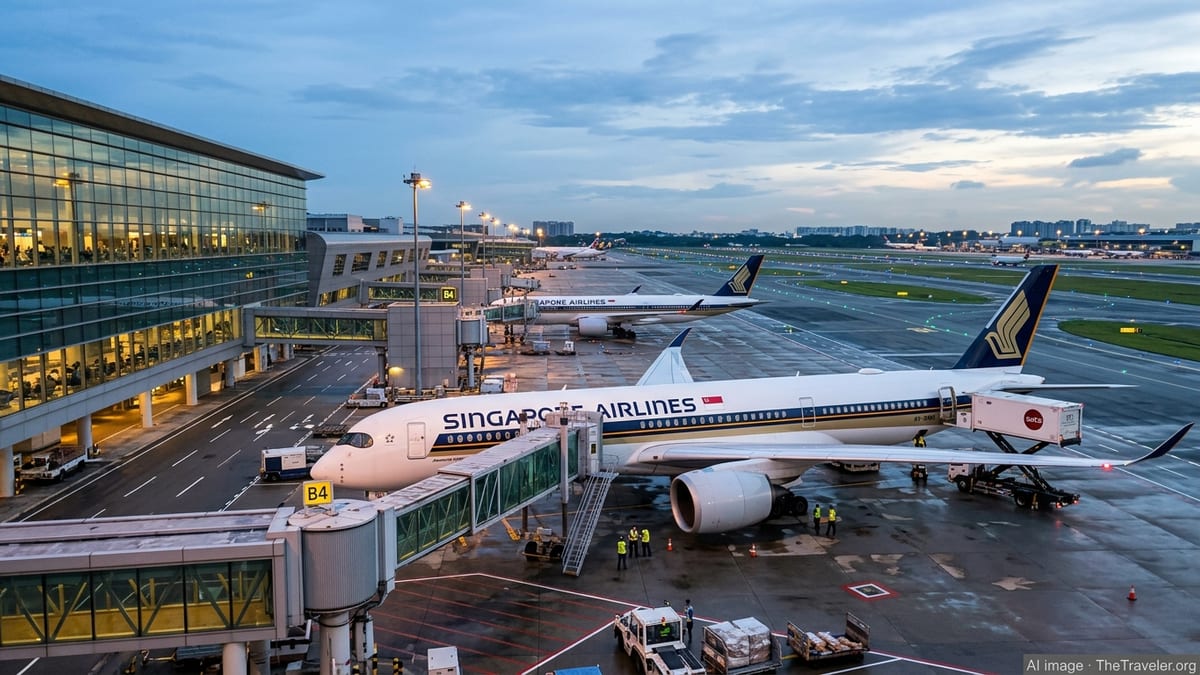
Singapore Airlines is set to deepen its presence in mainland China with the launch of daily flights between Singapore and Hangzhou, a move that enhances regional connectivity while positioning the carrier to serve rising business and leisure demand in one of China’s fastest-growing technology and manufacturing hubs.
Get the latest news straight to your inbox!
Stronger Links Between Singapore and Eastern China
The decision to operate daily services to Hangzhou adds another major city in the Yangtze River Delta to Singapore Airlines’ China network, reinforcing Singapore’s role as a key Southeast Asian gateway for global traffic into and out of the mainland. Publicly available information indicates that the route is being framed as a response to sustained demand for travel between Singapore and eastern China, following a broader recovery in international passenger volumes.
Hangzhou, capital of Zhejiang province, sits at the heart of one of China’s richest coastal regions. The new daily flights are expected to provide more consistent options for travelers connecting from Europe, North America, Australia, and Southeast Asia through Singapore’s Changi Airport into China’s eastern seaboard. Aviation observers note that increased frequency, rather than ad hoc or seasonal services, tends to be more attractive to corporate travel planners and high-yield segments.
The connection also supports Singapore’s strategy of remaining a competitive long-haul hub as rival airports in the region pursue their own China-focused expansions. Additional China frequencies, including to secondary but economically important cities like Hangzhou, are seen by industry analysts as a way for Singapore Airlines to diversify beyond ultra-competitive trunk routes.
Hangzhou’s Rise as a Tech and Innovation Powerhouse
Hangzhou’s growing profile as a technology and innovation center provides a strong economic backdrop for the route. The city is widely recognized as a base for large internet, fintech, and e commerce companies, and the wider Zhejiang region has evolved into a cluster for cloud computing, digital payments, and logistics technology. According to recent economic coverage, the province continues to attract both domestic and foreign investment in advanced manufacturing, green industries, and digital services.
The daily Singapore Hangzhou link is expected to make it easier for international investors, entrepreneurs, and technical specialists to access the city’s innovation ecosystem. With more predictable schedules and one-stop connectivity via Changi to major global financial centers, the service supports short, high-frequency trips that are typical of cross-border project work, tech partnerships, and venture capital activity.
For Hangzhou’s own outbound travelers, enhanced access to Singapore also opens smoother connections to emerging markets across Southeast Asia and South Asia, regions that many Chinese technology and consumer brands are targeting for international growth. Network planners generally see these multi-directional flows as key to sustaining year-round demand on China routes beyond pure tourism peaks.
Boost for Leisure Travel and Multi-City Itineraries
The daily schedule to Hangzhou is also likely to benefit leisure travelers on both sides of the route. Hangzhou is promoted in regional tourism campaigns for its combination of traditional scenery, such as West Lake and nearby tea-growing areas, and modern waterfront districts, museums, and shopping zones. Easier access from Singapore and beyond could encourage more long-haul visitors to add Zhejiang to established China itineraries focused on Shanghai, Beijing, or the Great Wall.
For travelers from China, Singapore remains a popular short-break destination for family trips, shopping, and events, as well as a starting point for broader Southeast Asian tours that include Indonesia, Malaysia, Thailand, or Vietnam. Daily capacity from Hangzhou means travelers can schedule departures more flexibly around school holidays, festival periods, or connecting flights to resort destinations, rather than being restricted to certain days of the week.
Industry commentary suggests that this type of schedule regularity supports the growth of packaged and semi-independent travel products, as tour operators and online platforms prefer routes with daily operations when designing multi-city and multicountry itineraries. In turn, that can stimulate demand beyond traditional peak seasons and help smooth load factors over the year.
Changi Airport’s Role in Regional Connectivity
Singapore’s Changi Airport has consistently positioned itself as a hub where passengers can transfer quickly between long-haul and regional flights, supported by a large portfolio of partner airlines. The addition of daily Hangzhou services fits into this hub model, creating more options for travelers from China to access destinations across Europe, Oceania, and Southeast Asia on a single connecting ticket.
Publicly available information on Changi’s traffic trends shows that routes to and from China have been a major driver of the airport’s recovery and subsequent growth, with capacity steadily restored and expanded as border measures eased. Airlines serving the hub have increasingly focused on second tier Chinese cities with strong commercial profiles, aiming to capture demand that previously required multiple domestic connections within China.
For Singapore Airlines, Hangzhou adds further depth to its China coverage and allows the carrier to balance flows across multiple points rather than relying solely on traditional gateways such as Beijing and Shanghai. This network structure can improve resilience by spreading risk and aligning capacity with regional economic shifts, especially as different Chinese provinces grow at varying speeds.
Implications for Business Travel and Trade
The daily Hangzhou link is expected to carry a significant proportion of business travelers involved in trade, supply chain management, and corporate services. Zhejiang province is known as a major base for exporters of electronics, textiles, machinery, and light industrial goods, many of which flow through integrated logistics corridors that connect manufacturing centers to global ports and airports.
Direct, daily air connectivity between Hangzhou and Singapore is likely to support this trade ecosystem by enabling faster face to face engagement between suppliers, buyers, and service providers. According to trade and investment commentary, companies increasingly seek reliable point to point links that can accommodate quick visits for contract negotiations, factory inspections, and regional management meetings.
The route also has potential to support sectors such as education, medical travel, and professional services. Singapore hosts a range of universities, research institutions, and specialist healthcare providers that attract Chinese students and patients, while Hangzhou’s universities and research parks could benefit from easier collaboration with partners in Southeast Asia. A daily flight pattern provides the frequency and flexibility needed for these segments to grow over time.