

More news on this day
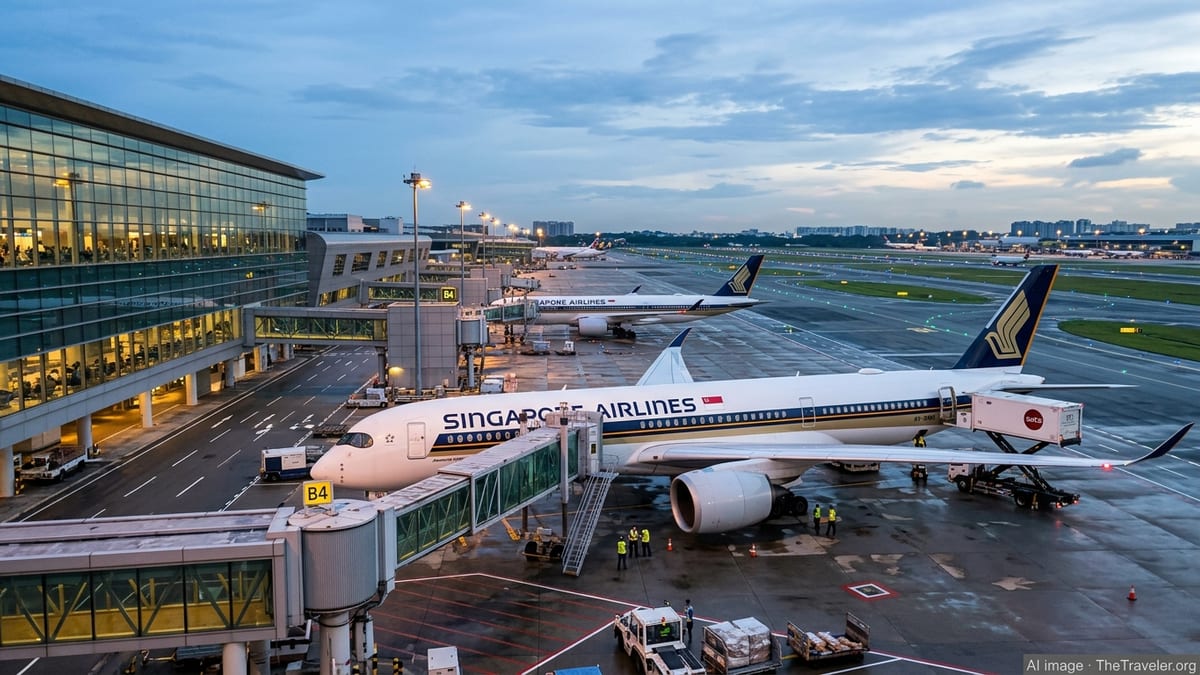
Singapore Airlines is set to deepen its China network with the launch of daily flights between Singapore and Hangzhou from June 2026, a move that strengthens regional connectivity and offers global business and leisure travelers a new gateway into one of China’s most dynamic technology and tourism centers.
Get the latest news straight to your inbox!
Daily Singapore–Hangzhou Service Returns to the Network
Publicly available flight schedule data indicates that Singapore Airlines plans to restart non stop services between Singapore Changi Airport and Hangzhou Xiaoshan International Airport in June 2026, operating on a daily basis. Aviation route trackers show the carrier had previously served the route, with earlier schedules listing Singapore Airlines flight SQ 8316 on the sector up to early May 2025, before the connection was paused.
The resumed service will restore a full service, premium option on a route that has more recently been covered primarily by low cost and mainland Chinese carriers. Industry observers note that Singapore Airlines has been gradually rebuilding and recalibrating its China network as travel demand recovers, focusing on cities with strong economic profiles and growing outbound and inbound traffic.
Operating daily flights gives travelers more flexibility in planning trips and improves connectivity for those using Singapore as a transit hub. It also aligns with Changi Airport’s broader strategy of expanding links to secondary and emerging Chinese cities, reflecting China’s diversification beyond the traditional coastal gateways of Beijing, Shanghai and Guangzhou.
Hangzhou’s Rise as a Tech and Innovation Powerhouse
Hangzhou has evolved into one of China’s leading digital economy hubs, home to major technology firms and a thriving start up ecosystem. The city, capital of Zhejiang province, has built its reputation on strengths in e commerce, fintech, cloud computing and artificial intelligence, drawing both domestic and international investors.
Government backed initiatives have positioned Hangzhou as a key testing ground for smart city solutions and digital public services. Business media coverage highlights the city’s role as a base for some of China’s best known internet companies and as a magnet for tech talent, supported by local universities and research institutes focused on information technology and advanced manufacturing.
This economic profile underpins growing demand for reliable international air links. For corporate travelers, a daily full service flight between Singapore and Hangzhou reduces the need for time consuming connections via other Chinese hubs. For small and medium sized enterprises in Southeast Asia and beyond, the route provides a more direct way to explore partnerships, supply chain opportunities and market access in eastern China.
New Opportunities for Global Business and Leisure Travel
Singapore’s position as a major transit hub means the revived Hangzhou route is expected to serve far more than point to point traffic. Changi Airport connects to extensive networks across Southeast Asia, South Asia, Australia, Europe and North America, allowing travelers from multiple regions to reach Hangzhou with a single stop via Singapore.
Travel industry analysis suggests that this pattern has become increasingly important for access to Chinese cities where non stop services from long haul markets are limited. With daily frequencies, itineraries can be timed to support efficient same day or overnight connections, which is particularly valuable for business travelers seeking to maximize time on the ground.
Leisure demand is likely to benefit as well. Hangzhou is known for West Lake, tea plantations and historic temples, and it has featured prominently in domestic tourism campaigns as a showcase of classical Chinese scenery. Combined with its modern skyline and shopping districts, the city offers a blend of heritage and contemporary urban experiences that appeals to international visitors looking beyond China’s largest metropolises.
Strengthening Singapore’s Role in China–Southeast Asia Connectivity
Reports on passenger trends indicate that China has re emerged as one of Changi Airport’s largest source markets, with tens of millions of travelers moving between Singapore and Chinese cities each year. Airlines based in both markets have been steadily adding or resuming routes as border restrictions have eased and demand has recovered.
Singapore Airlines and its low cost subsidiary Scoot collectively operate a wide China network, serving major gateways and a growing number of secondary cities. The Hangzhou service reinforces Singapore’s function as a neutral, well connected hub linking China with Southeast Asia, South Asia and Oceania, supporting trade, tourism and people to people exchanges.
At the same time, Singapore’s aviation sector is moving ahead with sustainable aviation fuel initiatives and airport infrastructure upgrades designed to handle growing traffic. This environment positions the new Hangzhou service to tap into long term growth rather than short term demand spikes, as businesses and travelers adjust to a more stable post pandemic travel landscape.
Implications for Competition and Passenger Choice
The return of a daily Singapore Airlines service on the Singapore–Hangzhou route is expected to increase competition on fares and schedules, particularly against low cost operators and Chinese carriers serving eastern China. Market watchers point out that full service offerings such as premium cabins, through check in, and integrated frequent flyer programs can be decisive for corporate travelers and higher yielding segments.
For passengers from Europe, North America and Australia, a one stop itinerary via Singapore to Hangzhou may provide an alternative to routing through Beijing, Shanghai or Guangzhou, potentially easing congestion at those larger hubs and offering more tailored connection times. In some cases, the new option could shorten overall journey duration when combined with well timed long haul departures from Changi.
Travel agents and online booking platforms are likely to feature the daily flights as part of broader China itineraries, bundling Hangzhou with other destinations in the Yangtze River Delta and nearby cities accessible by high speed rail. As international interest in China’s regional innovation centers grows, the enhanced air link is expected to feature prominently in both business travel planning and high end leisure packages.