

More news on this day
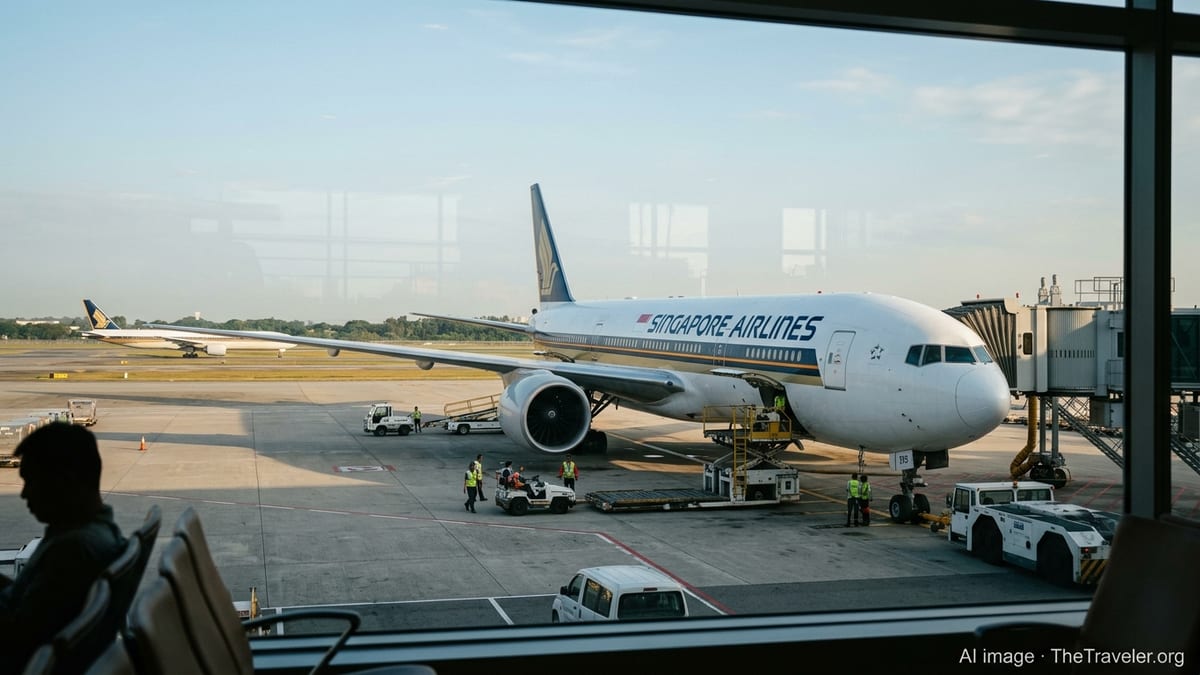
Singapore Airlines is set to restart nonstop flights between Singapore and Hangzhou in June 2026, adding a new daily link into China’s fast-growing Yangtze River Delta and giving both leisure and business travelers a smoother gateway to one of the country’s most dynamic regions.
Get the latest news straight to your inbox!
A Strategic Return to a Key Chinese Gateway
Publicly available schedule data and industry discussions indicate that Singapore Airlines is preparing to restore its Singapore–Hangzhou service as a daily nonstop route from June 2026. The move marks a renewed focus on secondary Chinese cities with strong economic fundamentals and rising tourism demand, complementing the carrier’s existing network to major hubs such as Beijing, Shanghai and Guangzhou.
This will not be the first time Singapore has had a direct link to Hangzhou, but its return as a full-service, daily operation by Singapore’s flag carrier is notable. It reflects a broader recovery in China-bound travel and the airline’s ongoing strategy of rebuilding and refining its mainland China footprint with a mix of primary and high-potential secondary cities.
The timing in mid-2026 aligns with a period when airlines across the region are deploying additional capacity to China as travel normalizes and demand from both sides of the route strengthens. For Singapore Airlines, a Hangzhou relaunch also diversifies its China portfolio beyond the heavily trafficked Shanghai and Beijing corridors.
For travelers, daily frequency is a key advantage. It makes the route more reliable for business trips, conferences and last-minute itineraries, while also giving leisure passengers more choice on departure days and connection options via Changi Airport.
Why Hangzhou Matters for Business and Innovation
Hangzhou, the capital of Zhejiang province, has become one of China’s most important technology and innovation hubs. The city is home to a dense cluster of digital economy firms, start-ups and advanced manufacturing operations, and has attracted both domestic and international investors over the past decade. A nonstop link from Singapore, one of Asia’s leading financial and services centers, helps tie together two complementary economies.
Corporate travelers based in Singapore and Southeast Asia gain more direct access to Zhejiang’s fast-growing private sector, which spans e-commerce, fintech, artificial intelligence, green technologies and smart manufacturing. At the same time, companies in Hangzhou and surrounding cities benefit from a premium connection into Singapore’s financial markets, professional services ecosystem and broader Southeast Asian network.
Changi Airport’s role as a regional hub adds further weight. A daily Hangzhou service plugs the Yangtze River Delta directly into Singapore Airlines’ long-haul network serving Europe, Australia, North America and South Asia. This makes it easier for international investors, partners and talent to reach Hangzhou with a single connection through Changi, rather than relying solely on Shanghai or other Chinese gateways.
For small and medium-sized enterprises, especially those expanding across borders for the first time, a reliable, full-service option between Singapore and Hangzhou can reduce travel friction, shorten journey times and support more frequent face-to-face engagement.
A New Nonstop Gateway for Tourism and Culture
Beyond business, Hangzhou has long been one of China’s most celebrated leisure destinations. West Lake, a UNESCO World Heritage site, draws visitors with its classical gardens, willow-lined causeways and historic temples. The wider region offers tea plantations, canal towns and a growing number of design-forward hotels and resorts that appeal to independent travelers and families looking for slower-paced itineraries.
A daily nonstop Singapore–Hangzhou service places this landscape within roughly a five-hour flight of Southeast Asia. Travelers who might previously have routed through Shanghai and then taken a high-speed train can instead arrive directly in Hangzhou, saving time and simplifying trip planning, especially for shorter holidays.
The route also opens fresh possibilities for twin-center itineraries. Visitors can pair the urban dynamism of Singapore with a few days around West Lake, or combine Hangzhou with nearby destinations in Zhejiang using China’s extensive high-speed rail network. With more predictable flight timings and a premium onboard product, Singapore Airlines is positioned to attract travelers seeking comfort and reliability along with cultural discovery.
Inbound tourism flows are likely to move in both directions. Residents of Hangzhou and neighboring cities gain a straightforward gateway to Singapore’s food scene, cultural festivals and family attractions, as well as onward access to beach destinations in Southeast Asia via Changi.
Leveraging Changi’s Hub Strength and Network Connectivity
Singapore’s Changi Airport remains one of Asia’s most connected hubs, and a new Hangzhou service is expected to slot into Singapore Airlines’ bank of regional and long-haul departures and arrivals. That connectivity is central to the route’s appeal. Passengers from Australia, Europe or South Asia can connect in Singapore and continue to Hangzhou on a single ticket, with coordinated transfers and baggage handling.
For travelers based in secondary cities served by regional affiliates and partners, Hangzhou becomes another one-stop option into eastern China. This is especially relevant for corporate traffic from markets without nonstop China services, where a well-timed connection through Changi can make the difference between a same-day arrival or an extra night on the road.
On the return leg, travelers from Hangzhou will be able to tap into Singapore Airlines’ long-haul network to destinations such as London, Frankfurt, Sydney and New York via Changi. For many, this can mean fewer connections compared with itineraries that require backtracking through multiple Chinese hubs.
The airline’s premium positioning, including lie-flat business class, curated inflight dining and a strong reputation for reliability, is also a draw for long-haul passengers using the Singapore–Hangzhou leg as part of a wider multi-stop journey.
What Travelers Should Watch for as Launch Nears
As June 2026 approaches, travelers can expect more concrete details on timetables, aircraft type, cabin configuration and introductory fares through publicly available channels. These factors will shape how attractive the new route is for different traveler segments, from cost-conscious holidaymakers to premium corporate flyers.
Schedule timing will be especially important. A departure pattern that allows morning arrivals into Hangzhou and evening returns to Singapore can maximize productivity for business trips and give leisure travelers fuller days on the ground. Connectivity with key long-haul banks at Changi will further enhance the route’s utility for international transfer passengers.
Travelers planning ahead may also want to monitor how the Hangzhou route is integrated into frequent-flyer earning and redemption opportunities. New or reinstated routes sometimes feature promotional mileage rates or enhanced accrual, which can make early bookings more appealing to loyal customers.
For now, the planned restart of daily nonstop Singapore–Hangzhou flights in June 2026 is an encouraging sign for those watching the continued rebuilding of air links between Southeast Asia and China. It underscores both markets’ confidence in long-term travel demand and offers passengers a more seamless way to move between two of Asia’s most dynamic urban regions.