

More news on this day
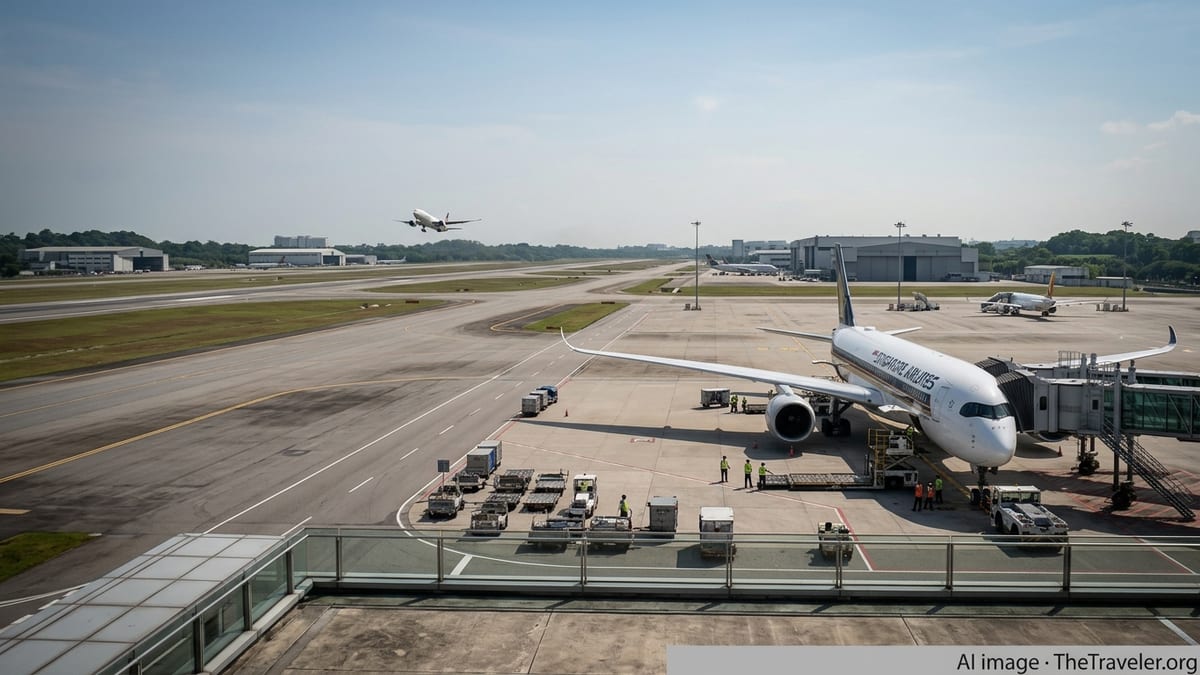
Singapore Airlines is set to deepen its presence in mainland China with new daily flights between Singapore and Hangzhou starting in June 2026, reinforcing air links between Changi Airport and one of the Yangtze River Delta’s most dynamic economic centers.
Get the latest news straight to your inbox!
Strategic Expansion Into China’s Yangtze River Delta
The introduction of daily Singapore to Hangzhou services from June 2026 aligns with Singapore Airlines’ broader strategy of rebuilding and expanding its China network as travel demand continues to normalise. Publicly available information on the airline’s 2026 schedules indicates a steady ramp-up of capacity into key Chinese cities, positioning Hangzhou as a core gateway alongside larger hubs such as Shanghai and Guangzhou.
Hangzhou, the capital of Zhejiang province, is widely regarded as one of China’s most dynamic innovation and technology hubs, home to leading digital economy and manufacturing clusters. The new daily service is expected to strengthen travel links between Singapore’s role as a Southeast Asian financial and aviation hub and Hangzhou’s growing influence within the Yangtze River Delta region.
Travel industry data shows that Singapore is already connected to dozens of destinations in mainland China, with airlines gradually restoring and increasing frequencies after pandemic-era reductions. By introducing a dedicated daily service on the Singapore–Hangzhou route, Singapore Airlines is positioning itself to capture a larger share of premium and connecting traffic on one of the fastest-growing intra-Asia corridors.
The additional capacity is also expected to complement existing services by other carriers on the Singapore–Hangzhou route, adding more choice across timings, products, and fare types for leisure and business travellers.
Enhanced Connectivity for Business, Technology and Trade
The new daily flights arrive at a time when trade and investment ties between Singapore and Zhejiang province continue to expand. Hangzhou has become a focal point for China’s digital economy, advanced manufacturing, and private enterprise, while Singapore remains a key base for regional headquarters, financial services, and logistics operations serving Asia-Pacific.
Stronger air connectivity is expected to support executive travel, project teams, and cross-border collaboration between technology companies, manufacturers, and service providers in both cities. Corporate travel managers and regional planners are likely to benefit from the predictability of a daily schedule, which simplifies itinerary planning for multi-city trips across Asia.
The new flights also provide added options for investors and entrepreneurs visiting industrial zones and innovation parks in and around Hangzhou. The Yangtze River Delta is one of China’s most important economic belts, and improved access via Singapore’s hub allows travellers from Europe, North America, and Southeast Asia to connect efficiently to the region.
According to aviation market analysis, increased frequencies on city-pairs such as Singapore–Hangzhou typically help stimulate demand by offering more flexible departure times, smoother connections, and competitive fares. This in turn can encourage more frequent short business trips and facilitate larger-scale conferences, exhibitions, and corporate events.
Seamless One-Stop Links via Changi’s Global Network
The daily service is expected to integrate closely with Singapore Airlines’ extensive long-haul and regional network, allowing passengers from Hangzhou to connect via Changi Airport to destinations across Southeast Asia, Australia, Europe, and North America with a single stop. Changi is consistently ranked among the world’s leading hubs, with efficient transfer facilities and coordinated schedules that minimise connection times.
From Singapore, travellers will be able to link onward to major cities such as Sydney, Melbourne, Jakarta, Bangkok, London, Frankfurt, and New York on the same ticket, with through check-in for baggage and coordinated minimum connection times. This hub-and-spoke model is designed to make Hangzhou more accessible to a wider range of source markets beyond the immediate region.
For outbound passengers from Singapore and neighbouring countries, the daily flight provides a direct and predictable route into Zhejiang province, avoiding the need for domestic connections within China. This is particularly attractive for time-sensitive business travellers and for leisure visitors planning itineraries that combine Hangzhou with nearby destinations such as Shanghai, Suzhou, or the ancient canal towns of the Yangtze River Delta.
Travel platforms already highlight the Singapore–Hangzhou corridor as an important link for both point-to-point and connecting traffic. The addition of daily services by a full-service carrier strengthens Changi’s role as a preferred transit point for passengers bound for eastern China.
Tourism, Culture and Leisure Travel Opportunities
Beyond trade and investment, the new flights are set to support two-way tourism flows between Singapore and Zhejiang. Hangzhou is renowned for its scenic West Lake, tea plantations, and heritage districts, while Singapore is a popular short-break destination for Chinese travellers seeking urban attractions, dining, and family-friendly experiences.
Tourism authorities and travel operators have increasingly promoted multi-day itineraries that pair city stays with cultural and nature-based experiences. A reliable daily air link allows tour designers to offer more flexible departures, shorter stays, and tailored packages for independent travellers and small groups.
Leisure travellers from Singapore and the wider Southeast Asian region will benefit from more convenient access to Hangzhou’s cultural sites, as well as to nearby destinations reachable by China’s high-speed rail network. Conversely, residents of Hangzhou and surrounding cities gain easier connectivity to Singapore’s integrated resorts, gardens, museums, and shopping districts, as well as onward access to beach and island destinations in the region.
Industry observers note that as visa facilitation measures and digital travel services improve across Asia, well-timed daily flights play an important role in encouraging repeat travel and shorter, more spontaneous trips. The Singapore–Hangzhou route is expected to benefit from these trends, especially among younger, independent travellers.
Positioning for Future Growth in Asia’s Aviation Market
The launch of daily Singapore–Hangzhou flights from June 2026 comes amid broader growth projections for Asia’s aviation sector, with China and Southeast Asia expected to be key drivers of passenger demand in the coming decade. Airlines across the region are adjusting their networks to capture traffic flows linked to tourism recovery, supply chain shifts, and expanding middle-class travel.
Singapore Airlines’ decision to strengthen its presence on the Singapore–Hangzhou corridor reinforces its strategy of anchoring long-haul connectivity on a robust regional network. By adding capacity into economically vibrant secondary cities in China, the carrier is diversifying beyond a reliance on only the largest coastal hubs.
Aviation analysts point out that sustained daily frequencies, supported by a mix of business and leisure demand, can help underpin the viability of new routes over the medium term. If load factors and yields develop as expected, the Singapore–Hangzhou service could pave the way for further capacity enhancements or schedule refinements in subsequent seasons.
With Asia’s travel landscape continuing to evolve, the new daily flights represent a notable step in tightening the air corridor between Singapore and one of China’s most important economic regions, offering travellers more choice and reinforcing the role of both cities as gateways in the wider Asia-Pacific network.