

More news on this day
Singapore Airlines is set to relaunch non-stop services between Singapore and Hangzhou from June 2026, with daily flights reconnecting one of eastern China’s most popular cultural and tech hubs to Changi Airport’s global network.
Get the latest news straight to your inbox!
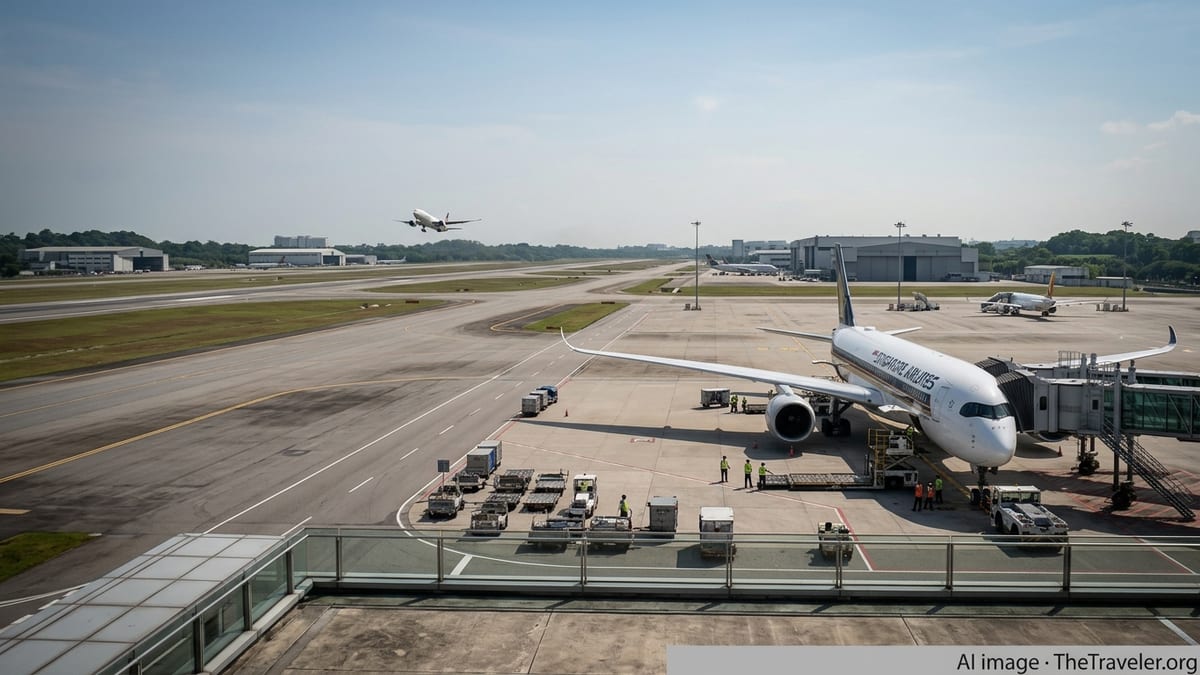
What the New Singapore–Hangzhou Service Looks Like
Publicly available schedule data and recent route updates indicate that Hangzhou Xiaoshan International Airport will return to the Singapore Airlines network from 1 June 2026, with services planned as a daily non-stop link from Singapore Changi. Industry route trackers and airline timetable summaries describe the Hangzhou resumption as part of a broader 2026 network expansion focused on high-demand Asian markets.
Hangzhou has previously appeared in Singapore Airlines’ list of destinations, but direct passenger services were paused during the pandemic-era reshaping of international networks. The June 2026 restart marks the first regular mainline operation on the route in several years, complementing existing non-stop services by Chinese and low-cost carriers between the two cities.
While final aircraft allocations may still shift as the season approaches, the daily frequency signals strong confidence in year-round demand. For travellers, this pattern translates to consistent departure times, easier planning for connections beyond Singapore, and more flexibility on both weekdays and weekends.
The route will plug directly into Changi’s extensive long-haul network, meaning passengers from Australia, Southeast Asia, India and parts of Europe will be able to connect to Hangzhou on a single ticket, often with coordinated baggage handling and through-check where eligible.
Why Hangzhou Is Poised to Be Singapore’s Next Big Chinese Gateway
Hangzhou, capital of Zhejiang province, has rapidly grown from a domestic favourite into an international city known for its blend of classical scenery and high-tech innovation. The city is home to West Lake, a UNESCO-listed landscape of pagodas, willow-lined shores and causeways that is among China’s most recognisable cultural icons. At the same time, the wider Hangzhou metropolitan area has become a major base for e-commerce, fintech and digital services companies, drawing frequent business travel.
Recent tourism and aviation statistics for China’s eastern seaboard show a sharp recovery in domestic traffic and steadily growing international arrivals. Hangzhou Xiaoshan International Airport has expanded its international wing and ground transport links, including high-speed rail connections to nearby cities such as Shanghai and Ningbo, positioning it as a convenient entry point into the Yangtze River Delta.
The daily link from Singapore will give travellers a direct alternative to flying into Shanghai and then continuing by train or car. For many visitors, particularly those focused on Zhejiang’s cities and countryside, arriving directly in Hangzhou reduces overall journey time and removes an additional airport transfer from the itinerary.
For outbound travellers from Hangzhou and the surrounding region, Singapore’s role as a regional hub makes the new flight a straightforward gateway to Southeast Asia, Australia and South Asia. This is expected to appeal not only to leisure travellers but also to students, corporate travellers and visiting friends and relatives traffic heading towards Singapore and beyond.
Stronger Singapore–China Connectivity After the Travel Rebound
The decision to restore daily non-stop service to Hangzhou fits into a wider trend of intensifying air links between Singapore and mainland China. In early 2026, airlines at Changi significantly increased flights to multiple Chinese cities around the Lunar New Year period, responding to robust two-way demand for family visits, tourism and business travel. The addition of Hangzhou on Singapore Airlines further diversifies the network beyond the core gateways of Shanghai, Beijing and Guangzhou.
China’s large eastern cities have been singled out in several aviation analyses as key growth markets, with second-tier hubs such as Hangzhou, Xiamen and Chengdu increasingly attracting international capacity. For Singapore, maintaining direct connectivity with these cities helps Changi Airport consolidate its role as a preferred transfer point for travellers moving between China, Southeast Asia and long-haul destinations.
Reinstating Hangzhou also underscores a shift from temporary seasonal capacity boosts to more permanent, scheduled links. Temporary holiday flights have demonstrated underlying demand, and a daily Singapore Airlines operation brings added reliability, premium cabins and frequent-flyer integration that many international travellers look for when choosing their route.
In turn, the added capacity and choice are likely to support tourism recovery on both sides. Travellers from Singapore and neighbouring countries gain easier access to Zhejiang’s attractions and business districts, while inbound visitors from China can tap into Singapore’s mix of urban attractions, events and onward connections.
What Travellers Can Expect Onboard and On the Ground
Singapore Airlines is widely associated with full-service amenities, and the Hangzhou route is expected to follow the airline’s standard profile for regional services. Travellers can look forward to checked baggage allowances, inflight meals and snacks, and access to KrisFlyer mileage accrual and redemption, subject to fare type and booking channel. Many of the airline’s regional aircraft feature updated cabins, seatback entertainment and connectivity options aimed at business and leisure passengers alike.
For premium travellers, the daily pattern opens opportunities to combine business trips with short breaks, flying in for weekday meetings and returning over the weekend with relatively little schedule compromise. Corporate travel planners will also be able to design itineraries that route executives through Singapore to other Asian financial centres on the same carrier network.
On the ground, Changi Airport continues to invest in traveller-friendly services, including automated immigration lanes for eligible passport holders, extensive retail and dining, and late-night transport options. Arriving passengers from Hangzhou who are connecting onward can benefit from Changi’s reputation for efficient transfers, while those ending their journey in Singapore will find quick access to the city by train, taxi or private-hire car.
At Hangzhou Xiaoshan, the return of Singapore Airlines adds another international full-service option alongside existing regional and Chinese carriers. For passengers flying out of Hangzhou, this provides more flexibility in terms of departure times, cabin products and onward connection possibilities through Singapore’s hub.
Planning Ahead for June 2026 and Beyond
With the route restart scheduled for June 2026, travellers considering trips around that time can begin to factor a direct Singapore–Hangzhou leg into their plans. As airlines frequently fine-tune aircraft types and timings in the lead-up to a season, checking the latest schedules close to the travel date will be important, especially for those aiming to secure specific connection windows or seats in premium cabins.
For leisure travellers, the mid-year launch aligns well with popular school holiday periods in Singapore and other regional markets. It creates new opportunities for family itineraries that pair time in Singapore with several days in Hangzhou, exploring its lakeside parks, teahouses and nearby countryside, or combining Zhejiang with side trips to Shanghai and Suzhou via high-speed rail.
Travel industry observers expect that, once established, the daily service could pave the way for further capacity adjustments if demand continues to build. This might include upgauging aircraft during peak periods or refining schedules to support specific connection banks at Changi. For now, the confirmed return of Hangzhou to the Singapore Airlines route map is already being welcomed by travellers who prefer a familiar full-service carrier on this busy corridor.
As Asia’s aviation recovery continues into 2026, the move highlights how carriers are redeploying capacity into markets with both tourism appeal and strong business fundamentals. For passengers on either side of the route, the upcoming daily Singapore–Hangzhou flights represent a timely new option for exploring, working and reconnecting across one of the region’s most dynamic travel corridors.