

More news on this day
Singapore Airlines has introduced a new daily service between Singapore and Hangzhou, adding fresh capacity on a key China route and expanding travel options for business and leisure passengers across Southeast Asia.
Get the latest news straight to your inbox!
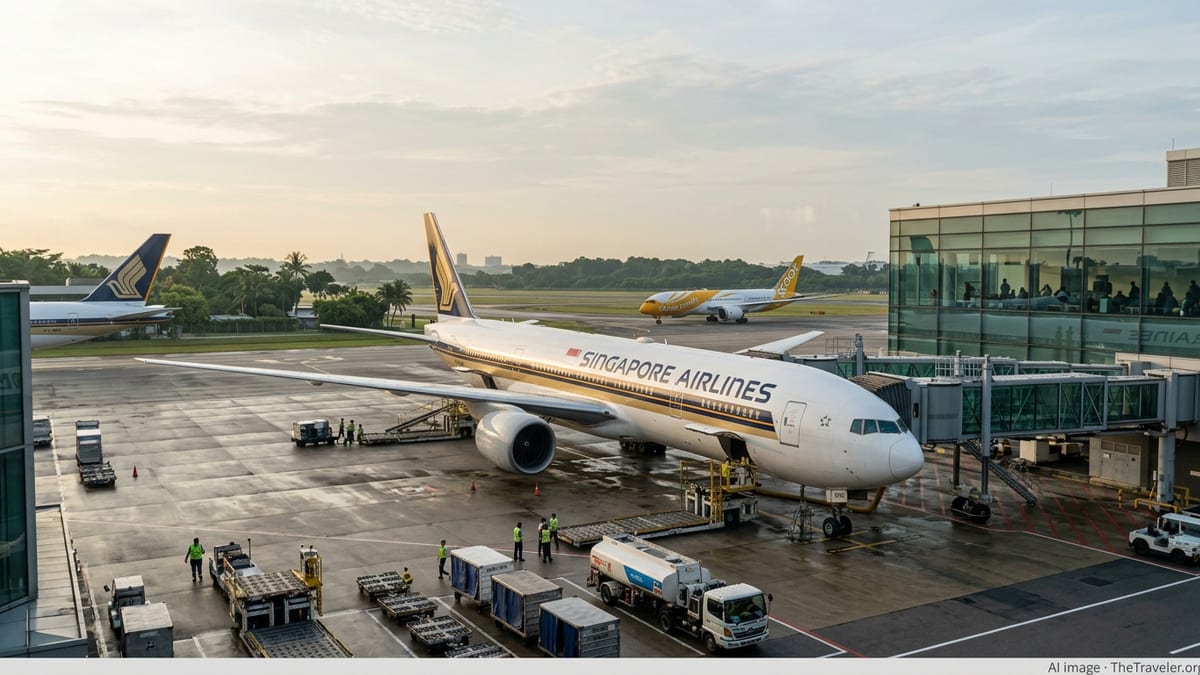
New Link Strengthens Singapore–China Air Network
The new Singapore–Hangzhou route positions Singapore Airlines to capture growing demand for travel between Southeast Asia and China, as both markets report rising passenger numbers and a steady recovery in outbound tourism. Publicly available schedules indicate that the daily service connects Singapore Changi Airport with Hangzhou Xiaoshan International Airport, a fast-growing gateway for China’s affluent Yangtze River Delta region.
Industry data shows that China has re-emerged as one of Singapore’s largest source markets, while Singapore continues to serve as a key transfer hub for Southeast Asia, Australia and South Asia. By adding Hangzhou to its roster of mainland Chinese destinations with daily frequency, Singapore Airlines is broadening its China footprint beyond Beijing, Shanghai and Guangzhou and tapping demand from second-tier cities with strong economic fundamentals.
The move also complements existing connectivity provided by regional and Chinese carriers on the Singapore–eastern China corridor. The additional capacity is expected to support a more even distribution of traffic away from already congested hubs, while giving passengers more choice of timings and one-stop itineraries via Changi.
For the airline, the new daily Hangzhou rotation helps deepen its exposure to a market where travel demand is increasingly diversified, with family visits, education travel and short breaks gaining ground alongside traditional corporate traffic.
Unlocking Tourism and Short-Break Travel
The daily schedule is set up to appeal to leisure travelers from both ends of the route. From Singapore and neighboring Southeast Asian countries, Hangzhou is marketed as a classic Chinese heritage destination, famed for West Lake, tea plantations and historic canals, but also as a modern city with upscale hotels and shopping districts.
Travel analysts note that improved air access often generates new itineraries that combine major metropolises with secondary cities. With the new link in place, multi-stop holidays that pair Hangzhou with Shanghai, Suzhou or nearby cultural towns become easier to package, particularly when using Singapore as a convenient one-stop gateway.
In the opposite direction, the additional flight into Changi creates more opportunities for residents of Zhejiang province and neighboring areas to explore Southeast Asia. From Singapore, travelers can connect onward to popular resort destinations such as Bali, Phuket and Langkawi, as well as city breaks in Kuala Lumpur, Jakarta and Ho Chi Minh City on a single ticket.
Travel trade reports suggest that tour operators are likely to bundle the new flight into themed itineraries focused on gastronomy, coastal escapes and family attractions. This reflects a broader trend in the China outbound market, where travelers are moving towards smaller-group, higher-spend trips with more sophisticated expectations for service and connectivity.
Business and Education Travel Set to Benefit
Hangzhou is one of China’s leading technology and innovation hubs, home to major digital platforms, start-ups and research institutions. The launch of a daily Singapore–Hangzhou service is expected to make it easier for corporate travelers, venture capital firms and start-up founders to shuttle between the two innovation ecosystems.
According to aviation and investment coverage, Singapore remains a preferred base for regional headquarters and financial services operations, while Hangzhou plays a critical role in China’s e-commerce and fintech sectors. Improved nonstop connectivity between the two cities provides a direct air bridge for deal-making, site visits and partnership building without the need for a domestic connection in China.
The route is also likely to support education and family-related travel. Singapore’s universities, international schools and language programs attract students from across eastern China, many of whom travel with family members at the start and end of academic terms. A daily direct flight can reduce journey times and improve schedule flexibility, which is particularly important for parents balancing work commitments.
Similarly, Singapore residents with children studying or working in Zhejiang province now have a more straightforward way to visit, reinforcing social ties that often underpin long-term people-to-people links between the two markets.
Changi’s Hub Role and Regional Connectivity
The new service reinforces Changi Airport’s role as a connecting hub between China and Southeast Asia, as well as long-haul markets in Europe and Australia. Aviation statistics in recent months point to steady growth in passenger flows between Singapore and Chinese cities, with Changi actively courting new and resumed services to meet demand.
With Singapore Airlines adding Hangzhou to its China network on a daily basis, travelers from the city gain access to the carrier’s extensive onward network. One-stop itineraries via Changi to destinations such as Sydney, Melbourne, London and Frankfurt become more competitive, particularly for travelers who value through-checking of baggage, aligned schedules and a single loyalty program.
For Southeast Asian travelers using Singapore as a transit point, the additional daily frequency to Hangzhou expands options for same-day connections and short layovers. Airlines and travel agents frequently adjust connecting banks at major hubs to minimize transfer times, and an extra daily departure typically creates more combinations that meet preferred arrival and departure windows.
From a network planning perspective, the new Hangzhou service also helps Singapore Airlines balance capacity across its China portfolio. By distributing flights between primary and secondary cities, the carrier can respond more flexibly to seasonal peaks, shifting demand patterns and regulatory constraints on specific city pairs.
Sign of Ongoing Recovery in Asia Travel
Industry observers view the launch of daily Singapore–Hangzhou flights as part of a broader pattern of capacity restoration and expansion on Asian routes. Over the past year, several airlines in the region have reinstated or increased services to Chinese cities, citing strong load factors and improving yields on both leisure and business segments.
Publicly available traffic data from airports and tourism boards across Asia highlights a sustained rebound in intra-Asian travel, even as long-haul markets evolve at a different pace. The decision by a major full-service carrier to commit to daily frequency on a secondary Chinese city route suggests confidence in the medium-term prospects of the corridor.
Travel specialists note that airlines are now prioritizing routes that combine resilient business demand with diversified leisure and visiting-friends-and-relatives traffic. Hangzhou’s mix of technology industries, cultural attractions and proximity to other Yangtze River Delta cities aligns well with this strategy, while Singapore’s status as a stable transit and business hub adds further resilience.
As airlines continue to refine their China networks, new and restored services such as the Singapore–Hangzhou daily route are expected to broaden traveler choices, intensify competition and potentially exert moderating pressure on fares over time, even as premium demand remains robust.