

More news on this day
Singapore Airlines is sharpening its focus on Europe and the South Pacific with a new wave of capacity increases, including plans to double its London Gatwick service, restore links to Hangzhou in eastern China, and deepen its fast-growing Australian network.
Get the latest news straight to your inbox!
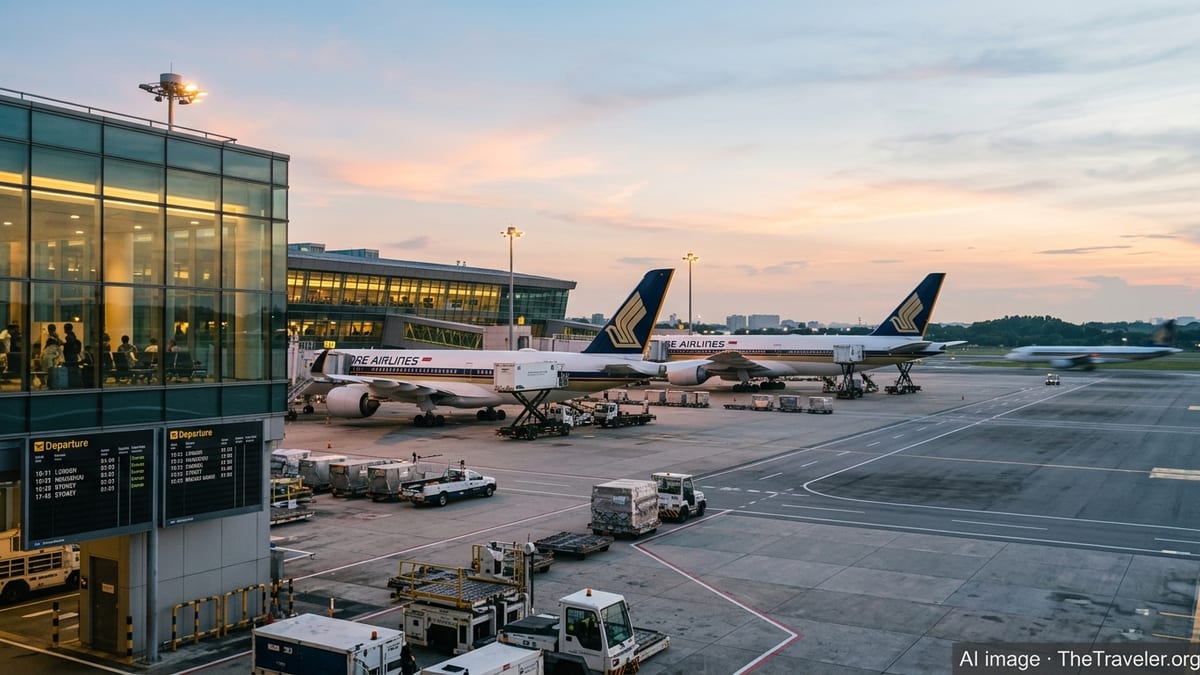
Twice-daily Singapore–London Gatwick on the horizon
Publicly available information indicates that Singapore Airlines is preparing to expand its still-young London Gatwick operation from a daily to a twice-daily service, building on strong demand between Southeast Asia and the United Kingdom. The carrier launched non-stop flights between Singapore Changi and London Gatwick in June 2024, adding a second London gateway alongside its long-established presence at Heathrow.
Corporate filings and airport reports show that Gatwick services ramped up quickly from five weekly flights to a daily schedule as demand recovered on Europe–Asia routes. The next step to twice-daily rotations would significantly increase capacity on one of the airline’s most lucrative long-haul corridors, while also offering more convenient connection options for travelers heading onward to destinations across Asia and the South Pacific.
The Gatwick build-up comes at a time when capacity at London Heathrow remains constrained and highly sought after by long-haul carriers. By leaning more heavily on Gatwick, Singapore Airlines can widen its footprint in the London market without relying solely on scarce Heathrow slots, while tapping into the growing number of passengers who now see Gatwick as a viable alternative for premium long-haul travel.
For passengers, a second daily frequency would mean more choice of departure times in both directions, improved same-day connectivity via Singapore to Australia and Southeast Asia, and greater resilience when weather or operational issues disrupt the busy North Atlantic and European airspace.
Hangzhou service returns as China demand rebuilds
The carrier is also turning its attention back to mainland China, with plans to reinstate non-stop flights to Hangzhou, a major commercial and tourism hub in Zhejiang province. Historical route data shows that Singapore Airlines previously served Hangzhou before discontinuing the route amid shifting demand and broader network restructuring.
Recent travel and aviation coverage points to a restart of Singapore–Hangzhou operations from June 2026, aligning with a wider pattern of capacity restoration into China as outbound tourism and business travel recover. Hangzhou’s role as the gateway to a fast-growing technology and e-commerce ecosystem, as well as its proximity to Shanghai by high-speed rail, make it an attractive market for premium and connecting traffic.
By returning to Hangzhou, Singapore Airlines strengthens its presence in the Yangtze River Delta region beyond the dominant Shanghai hubs. The move also gives the airline additional feed into its long-haul network from a secondary Chinese city, supporting connections to Europe, Australia and Southeast Asia through Changi.
Industry analysts note that competition in China’s coastal cities has intensified as local and foreign carriers rebuild their networks. Restoring Hangzhou allows Singapore Airlines to diversify its China portfolio and capture demand from travelers who prefer a direct international gateway over a domestic connection from nearby airports.
Australian network expands with new Western Sydney link
In Australia, Singapore Airlines is set to deepen its already extensive footprint with the launch of daily flights to the new Western Sydney International Airport, also known as Nancy-Bird Walton Airport. Information published by the airline and airport stakeholders shows that the service is scheduled to begin on 23 November 2026, using Airbus A350-900 aircraft.
The Western Sydney route will complement the carrier’s existing operations at Sydney’s primary Kingsford Smith Airport, where Singapore Airlines currently operates multiple daily flights. The additional gateway is intended to tap into the fast-growing population and business base in western Sydney, reducing travel times to the airport for many residents and offering more direct international options.
Western Sydney International has been designed with fewer operating constraints than the main Sydney airport, including the absence of a traditional night curfew. Publicly available details indicate that Singapore Airlines plans to take advantage of this flexibility with a late-night departure from Sydney, aimed at improving connectivity into the morning bank of flights at Changi and onward to Europe and Asia.
The new service underscores Australia’s continuing importance to Singapore Airlines. The carrier already serves major cities including Melbourne, Brisbane, Perth and Adelaide, and has periodically upgauged aircraft and increased frequencies on core routes as demand has rebounded. Adding Western Sydney broadens its reach in New South Wales and reinforces Singapore’s role as a key one-stop hub between Australia, Europe and North Asia.
Capacity shifts and aircraft deployments across Australia
Alongside the new Western Sydney flights, Singapore Airlines has been fine-tuning its Australian network with targeted capacity adjustments. Aviation community reports and schedule data indicate that the airline has reintroduced Airbus A380 superjumbo operations on select services to Melbourne, reflecting strong demand on the Melbourne–Singapore corridor.
The return of the A380 to Melbourne adds meaningful seat capacity and restores the flagship cabin experience on one of the carrier’s busiest Australian routes. It also supports connecting flows from southern Australia to Europe and South Asia, helping to balance demand as the airline redistributes widebody aircraft across its network.
Elsewhere in Australia, Singapore Airlines has made smaller schedule and timing changes in cities such as Darwin to better align arrival and departure times with connecting banks at Changi. These tweaks are intended to improve transit options for travelers heading to destinations across Southeast Asia, India and North Asia, while keeping overall capacity in line with local demand patterns.
Industry observers suggest that the combination of a new Western Sydney link, selective A380 deployments and timing adjustments underlines how the airline is using flexible fleet planning to respond to shifting travel flows. With Australia remaining a cornerstone long-haul market, incremental capacity adds can have a disproportionate impact on overall network performance.
Strategic push to capture Asia–Europe–Pacific flows
Taken together, the London Gatwick expansion, Hangzhou restoration and Australian growth represent a coordinated push by Singapore Airlines to capture more of the traffic flowing between Europe, China and the South Pacific. Gatwick offers additional access to the UK market; Hangzhou expands reach into a resurgent Chinese economy; and Western Sydney plus other Australian adjustments strengthen the carrier’s hold on one of its most important long-haul regions.
According to published financial and network updates, the airline has emphasized connecting traffic as a core driver of its post-pandemic recovery, with Changi positioned as a high-efficiency transfer hub. Increasing frequency to two daily flights on the Singapore–Gatwick route would dovetail with this strategy by providing more seamless one-stop options between secondary cities in Europe and a growing list of destinations across China and Australia.
The network moves also highlight the competitive pressures in long-haul markets, where Gulf carriers, European network airlines and Chinese competitors are all vying for the same pool of premium and connecting passengers. By diversifying its London access, re-entering secondary Chinese markets and anchoring itself in both of Sydney’s airports, Singapore Airlines aims to secure a larger share of that traffic while maintaining the schedule reliability and connectivity that underpin its brand.
For travelers in the United Kingdom, China and Australia, the result is a broader set of non-stop and one-stop options through Singapore, with increased frequencies and new gateways translating into more choice on departure times, aircraft types and onward connections across the airline’s global network.