

More news on this day
Singapore Airlines is warning passengers to brace for potential cancellations, longer flight times and missed connections as the escalating conflict in the Middle East forces airlines worldwide to reroute or suspend services across a key aviation crossroads.
Get the latest news straight to your inbox!
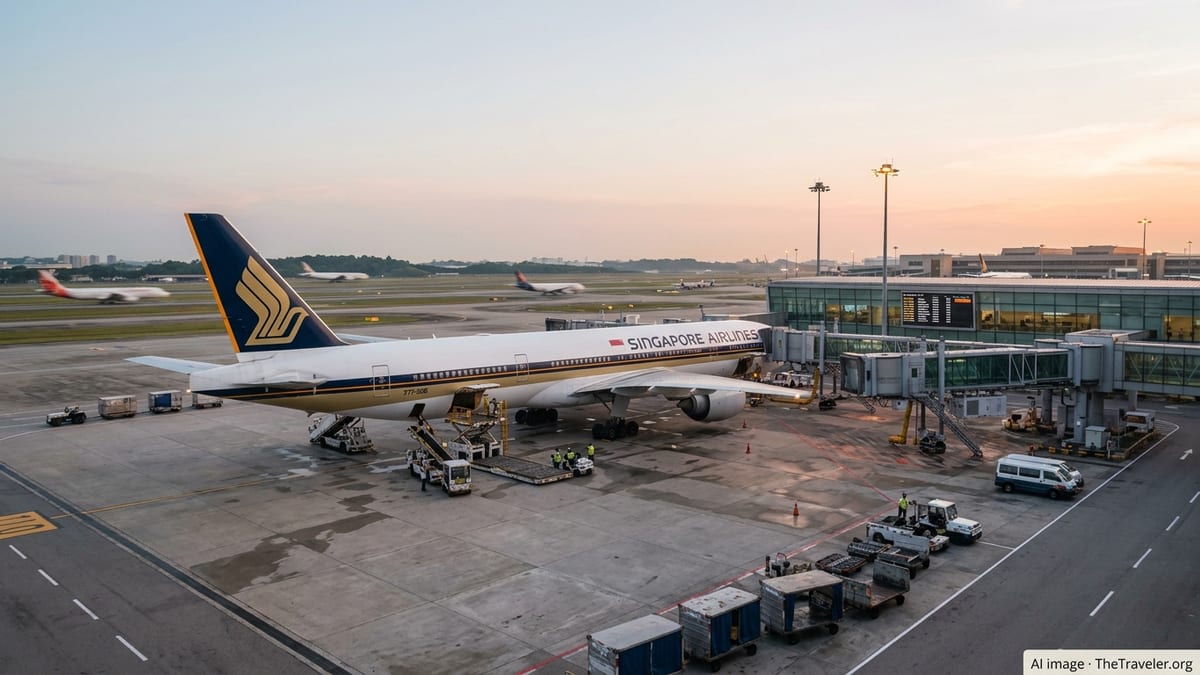
Reroutes and schedule changes as airspace tightens
Publicly available flight data and traveler reports indicate that airlines across Asia, Europe and the Gulf are contending with a patchwork of airspace restrictions linked to the widening Iran conflict. Several Middle Eastern states, including key hubs such as the United Arab Emirates, Qatar and Saudi Arabia, have imposed temporary closures or limitations on parts of their airspace in recent weeks, disrupting normal transcontinental corridors between Asia, Europe and North America.
Singapore Airlines, which relies heavily on westbound routes that pass near or over the Middle East, has been adjusting routings on selected long haul flights to avoid conflict zones. Aviation tracking platforms show Singapore bound and Europe bound services arcing further north over Central Asia or south over the Arabian Sea, adding flight time, fuel burn and complexity to an already congested global network.
According to published coverage and operational briefings from aviation risk consultancies, these detours are contributing to rolling delays, missed connections and tighter aircraft rotation windows across multiple carriers. While Singapore Airlines has so far maintained most of its core long haul schedule, it has warned that further cancellations or last minute retimings remain possible while the security situation and airspace rules continue to evolve.
Industry observers note that sophisticated re-planning tools allow airlines to keep many flights operating, but the sudden loss of well used air corridors significantly reduces flexibility. With traffic already rerouted around Ukrainian and Russian airspace on many Europe Asia services, the latest Middle East restrictions leave carriers with fewer resilient alternatives when weather, congestion or further geopolitical flare ups occur.
Dubai and Gulf hubs feel the strain
The disruption is particularly acute at Gulf mega hubs that typically funnel traffic between Europe, Africa, Asia and Australasia. Publicly shared airline notices and passenger accounts describe waves of cancellations and diversions at airports such as Dubai, Doha and Abu Dhabi after missile and drone strikes in the region prompted temporary shutdowns and tighter risk thresholds for overflying traffic.
Travelers posting recent accounts from Dubai report a sharp reduction in services by major international airlines, with many European and Asian carriers suspending or trimming schedules to the emirate while the conflict persists. Singapore Airlines, which normally operates a key link between Singapore and Dubai, has been among the carriers affected, with selected flights reportedly cancelled or subject to significant delays as operational risk assessments and airspace access change day by day.
With capacity at Gulf hubs constrained, airlines are increasingly routing passengers through alternative gateways such as Singapore, Istanbul and select European capitals. This has knock on effects for Singapore Airlines and its low cost subsidiary Scoot, which are experiencing higher demand on some connecting routes as travelers actively avoid itineraries that transit the conflict zone.
Airport disruption has also spilled over to cargo operations, compounding pressure on supply chains already stretched by longer routings and higher insurance costs for flights transiting nearby regions. Aviation analysts say that any prolonged degradation in Gulf hub connectivity would likely accelerate a broader rebalancing of long haul transfer traffic toward Asian and European hubs that are perceived as more insulated from the current conflict.
Longer flight times and higher operating costs
Beyond outright cancellations, many passengers on Singapore Airlines are encountering extended flight times as crews navigate more circuitous paths around restricted or higher risk airspace. Public flight tracking records show typical increases ranging from 30 minutes to more than two hours on some Europe Asia and North Asia Africa pairings, depending on the specific routing and wind conditions on a given day.
For the airline, these longer routes translate into higher fuel consumption, increased crew duty time and tighter turnarounds at destination airports. Industry research groups have highlighted that even modest extensions in great circle distance can materially raise operating costs when applied across a full summer schedule, particularly at a time when jet fuel prices are already sensitive to Middle East geopolitical shocks.
Aviation market analysis published in recent months also points to softer demand growth in some long haul segments as travelers weigh the risk of disruption against discretionary trips. The combination of higher operating expenses and more cautious booking behavior creates additional financial headwinds for full service carriers such as Singapore Airlines, which rely heavily on premium connecting traffic between Asia, Europe and North America.
While the airline entered 2026 with a relatively strong balance sheet and robust forward bookings, analysts caution that sustained geopolitical turbulence could slow the pace of post pandemic recovery in international travel. Any escalation that leads to broader or longer lasting airspace closures across the Gulf and adjacent regions would likely force more extensive timetable overhauls and capacity cuts.
Passengers face uncertainty over connections and itineraries
For individual travelers, the most immediate impact of the Middle East conflict is uncertainty. Recent passenger experiences posted on travel forums describe tight connections becoming riskier, overnight layovers appearing suddenly after retimings, and previously convenient one stop itineraries between Europe and Australasia turning into two or three stop journeys routed far from traditional Gulf hubs.
Singapore Airlines customers with itineraries involving Dubai or other Gulf cities appear to be among those most affected, with some reporting short notice cancellations or rebookings onto indirect routes via Singapore or other Asian hubs. Travel agents and airline schedule data suggest that seats on alternative routings through East Asia are filling quickly as both leisure and corporate travelers seek to avoid the most volatile parts of the region.
Public advisories from travel risk firms recommend that passengers traveling between Asia, Europe, Africa and the Americas in the coming weeks monitor flight status frequently, allow extra connection time and remain flexible about routing. They also highlight the importance of understanding fare conditions and travel insurance coverage, particularly in relation to schedule changes driven by conflict related airspace closures.
Consumer advocates note that rebooking options and compensation rules vary widely by jurisdiction and ticket type. While many airlines, including Singapore Airlines, have introduced more flexible waivers at various points in recent years, the application of these policies in a fast changing geopolitical environment can be uneven, leaving some travelers waiting at busy service desks or on overloaded call centers.
Outlook for Singapore as a hub
Despite the turbulence, Singapore’s position outside the immediate conflict zone has reinforced its status as a stable alternative hub for long haul travel. Flight tracking data and airline announcements show growing volumes of rerouted passengers flowing through Changi Airport as carriers redirect services away from the Gulf and other affected areas.
Singapore Airlines has invested heavily in rebuilding and expanding its network since international borders reopened, adding capacity to key markets in Europe, North Asia and North America. The current crisis may accelerate some of those plans as demand shifts further toward routings that avoid the Middle East, though this will depend on how long the conflict and associated airspace restrictions persist.
Analysts point out that the city state also faces indirect risks from sustained instability, including potential fuel price spikes, broader global economic slowdown and further disruptions along critical sea lanes near the Gulf. Any prolonged drag on global trade and corporate travel budgets would ultimately be felt in premium cabins and cargo holds on Singapore Airlines flights.
For now, publicly available information suggests that the airline is focused on tactical adjustments: rerouting flights where necessary, monitoring security assessments and advising customers that schedules remain subject to change at short notice. Travelers planning journeys that would normally cross the Middle East are being encouraged, through online updates and booking channel notices, to check their flight status regularly and prepare for a period of heightened uncertainty across the global air transport system.