

More news on this day
Singapore Airlines has taken its Australia network to a new high, with publicly available schedules indicating a record 23 daily flights between Singapore and seven Australian cities, underscoring the carrier’s push to capture surging demand across the South Pacific.
Get the latest news straight to your inbox!
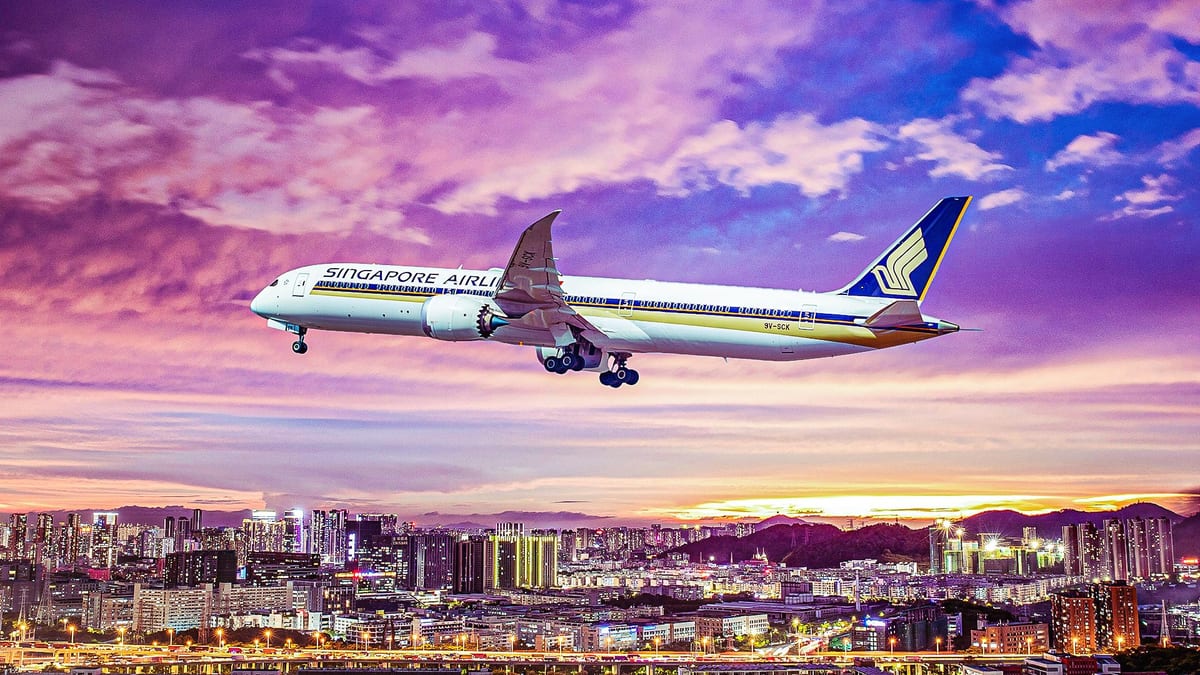
Image by Simple Flying
Record Capacity Across Seven Australian Gateways
Recent timetable filings and airport disclosures show Singapore Airlines now operating up to 23 daily departures linking Singapore Changi with Sydney, Melbourne, Brisbane, Perth, Adelaide, Cairns and Darwin. The expanded schedule includes both year-round services and seasonal boosts that collectively lift capacity on one of the carrier’s most important long-haul markets.
Adelaide Airport reports that Singapore Airlines remains its largest international carrier by passengers, reflecting the strength of the Singapore route and the role it plays in funneling South Australian travelers to Europe and Asia. Traffic figures for 2025 show Singapore as Adelaide’s leading overseas market by international passenger numbers, highlighting the demand underpinning the airline’s decision to maintain daily services to the South Australian capital.
On the eastern seaboard, Melbourne and Sydney continue to anchor the network, with multiple daily widebody flights including Airbus A350 and Boeing 777 services scheduled to and from Changi. Published data from Melbourne Airport places Singapore among its busiest international city pairs, reflecting both point-to-point travel and the large volume of passengers connecting onward through Changi to Europe, South Asia and North Asia.
In Western Australia, Perth remains a key destination for the airline’s Australian strategy. The city benefits from strong corporate and visiting-friends-and-relatives traffic, which has supported several daily frequencies and helped round out the total of 23 daily services across the country.
Western Sydney Service Adds a New Australian Gateway
The expanded total of 23 daily flights also factors in Singapore Airlines’ commitment to Western Sydney International Airport, which is slated to open for commercial operations in late 2026. Aviation industry coverage and official airport material note that the carrier will launch a daily Singapore–Western Sydney service using Airbus A350-900 aircraft, complementing its long-established operations at Sydney Kingsford Smith Airport.
Airport information indicates that Singapore Airlines was among the first international carriers to confirm plans for Western Sydney, positioning itself to tap into a fast-growing catchment in Sydney’s western suburbs. The curfew-free operating environment at the new airport is expected to support late-night departures and arrivals, giving the airline additional flexibility compared with Sydney’s main airport, which remains constrained by movement caps and night-time restrictions.
Analysts suggest that the addition of Western Sydney will effectively give the airline five daily flights to the wider Sydney basin once the service begins, strengthening its network depth on what is already one of its strongest long-haul markets. For travelers in western Sydney and regional New South Wales, the new gateway is likely to shorten surface travel times to long-haul flights, while still offering one-stop connectivity over Changi to Europe and Asia.
Although the new route will not begin until November 2026, airline schedules and airport planning documents show that the service has already been incorporated into medium-term growth projections, helping to underpin the carrier’s broader 23-daily-flight ambition for Australia.
Changi’s Hub Strategy Targets Europe and Beyond
The ramp-up in Australian services fits into a wider strategy that positions Singapore Changi as a primary hub for traffic between Australia, Europe and Asia. Singapore Airlines has recently announced significant increases on routes such as London Gatwick, where published reports describe a move from once-daily to double-daily frequencies during peak northern summer periods. The additional UK services are designed to connect seamlessly with flights arriving from Australian cities.
By adding more departures from secondary UK and European airports, the airline is creating additional one-stop itineraries for Australians whose journeys begin in cities such as Adelaide, Cairns or Darwin. The 23 daily flights from Australia into Changi give the carrier a dense bank of arrivals, allowing for coordinated onward connections to London, continental Europe, South Asia and North Asia within relatively short layover windows.
Industry commentary highlights that this model has become increasingly attractive as travelers look to avoid more congested hubs and complex routings. Singapore’s reputation for efficient transfers and on-time performance, combined with the broad spread of departure times out of Australia, is cited as a competitive advantage as rival carriers adjust schedules in response to geopolitical tensions and airspace restrictions affecting some traditional Europe–Australia corridors.
For tourism bodies in Australia, the enhanced connectivity via Singapore is seen as a two-way opportunity. It not only makes it easier for Australians to reach Europe and Asia, but also gives inbound visitors from those regions greater choice of entry points into Australia beyond Sydney and Melbourne.
Competitive Pressure on Australian and Regional Rivals
The decision to maintain and grow to 23 daily Australian flights places additional pressure on competitors, including Qantas, Jetstar and a range of Gulf and Asian carriers that also target the Europe–Australia market. Australian media reports indicate that Qantas is making its own changes to Europe-bound services via Singapore, including adjustments to flights to Paris and other European cities, reflecting the intense battle for premium and connecting traffic.
Low-cost and hybrid carriers such as Scoot, as well as Middle Eastern airlines, continue to compete vigorously on price-sensitive segments. However, Singapore Airlines’ strategy leans heavily on schedule breadth, product consistency and the strength of its loyalty program, seeking to secure repeat business from both corporate travelers and frequent leisure passengers.
Industry observers note that the higher frequency of flights also improves resilience. If one departure encounters disruption, passengers may be re-accommodated on another same-day service on the same route in many cases, a benefit that is less readily available in thinner markets served only a few times a week.
Travel trade publications suggest that the expanded schedule is likely to spur further fare competition on key Australian routes, particularly during shoulder seasons. With more seats in the market and a wider range of departure times, travelers may see sharper promotional pricing, especially in economy and premium economy cabins, while business class remains driven by corporate demand and capacity in premium-heavy configurations.
What Travelers Can Expect From the Expanded Schedule
For passengers, the headline figure of 23 daily flights translates into more choice in departure times, aircraft types and connection options. Early-morning, daytime and overnight departures feature across the core Australian gateways, giving passengers scope to match their flights to work schedules, cruise departures or onward rail and domestic connections.
Published fleet information indicates that Singapore Airlines is continuing to deploy a mix of Airbus A350-900 and Boeing 777 aircraft across the Australian network, with seasonal adjustments that may see higher-capacity aircraft used on peak departures. This mix allows the airline to fine-tune capacity by route and time of day, while maintaining a relatively consistent onboard product, particularly in long-haul business and premium economy cabins.
Travel agents and online booking platforms are already promoting the wider spread of options, emphasizing the ability to connect same day from secondary Australian cities through Singapore to major European hubs. For travelers in regional centers who first fly domestically to Perth, Brisbane, Melbourne or Sydney, the increased number of Singapore-bound departures from those cities can reduce layover times and add flexibility if plans change.
The challenge for the airline will be to sustain high load factors across such a dense schedule while navigating broader industry headwinds, including fuel price volatility and evolving environmental policies. For now, the milestone of 23 daily flights to Australia signals confidence in the market and cements Singapore’s position as one of the most important international gateways for Australian travelers.