

More news on this day
Singapore Airlines is reshaping parts of its global network in March 2026 as the escalating conflict involving Iran disrupts Middle East airspace, prompting suspensions of Dubai and Jeddah services and routing changes that ripple across flights to the United Arab Emirates, Qatar, London, Frankfurt and beyond.
Get the latest news straight to your inbox!
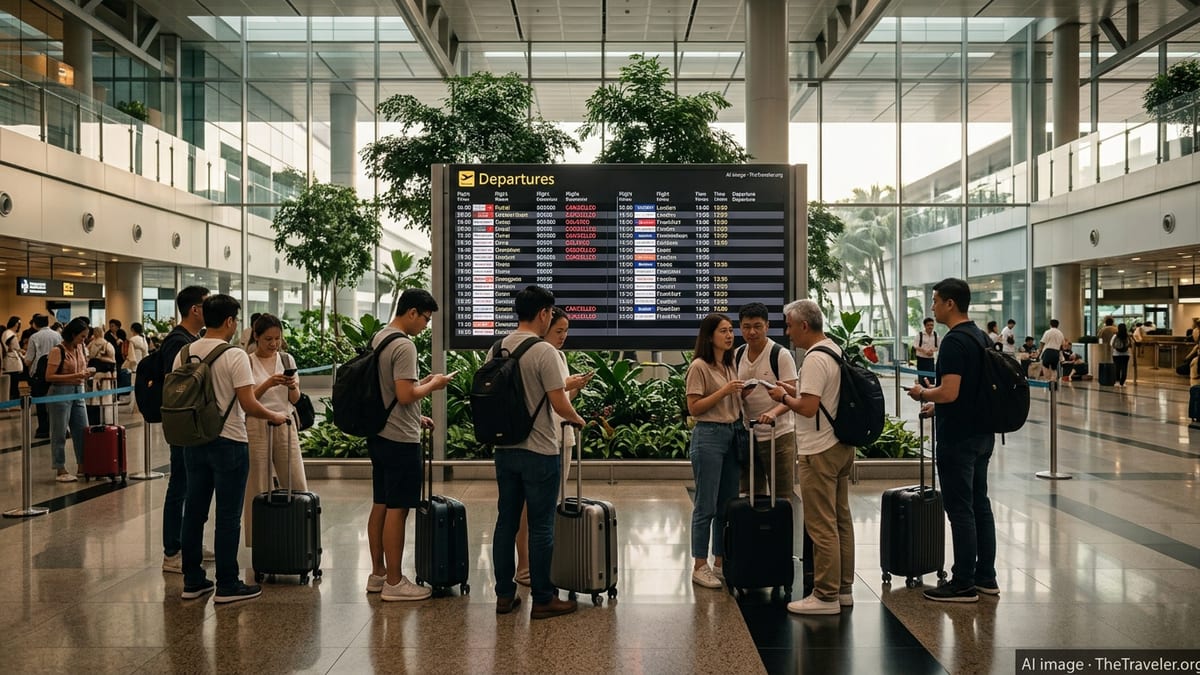
Middle East Conflict Forces Rapid Network Changes
The latest phase of the Iran war, triggered by strikes on Iranian targets on 28 February 2026, has led to widespread airspace closures and restrictions across the Gulf region. Publicly available information shows that authorities in Iran, Iraq, Israel, Syria, Kuwait, Qatar and the United Arab Emirates have imposed at least partial closures, creating a patchwork of no‑fly zones and narrow corridors for commercial traffic.
In response, Singapore Airlines has suspended its Singapore–Dubai rotation SQ494 and SQ495, initially through early March and now extended through at least mid to late March 2026, according to recent press and advisory notices. Its low‑cost sister carrier Scoot has also halted services on the Singapore–Jeddah route on multiple dates, with cancellations running through the second half of March.
Reports from regional and aviation outlets indicate that these suspensions are tied directly to the instability of flight paths over the Gulf and surrounding states, rather than demand. The cancellations sit alongside a broader pattern of diversions, elongated routings and technical stops for airlines across Asia and Europe as they seek to maintain connectivity while avoiding conflict zones.
For Singapore Airlines, the developments come just weeks before the start of the 2026 northern summer schedule, a period when the carrier had planned to boost capacity on several routes. Those expansion plans are now being recalibrated against an evolving geopolitical backdrop.
Impact on Flights to the UAE and Qatar
The most visible changes for Singapore Airlines customers involve links to the United Arab Emirates. Flights between Singapore and Dubai, a key Gulf hub feeding Europe and Africa connections, remain suspended for much of March as the carrier navigates airspace uncertainty and operational risk. Travellers who had booked itineraries routing via Dubai on Singapore Airlines metal are being shifted to alternative routings or dates, depending on fare rules and availability.
While Singapore Airlines does not operate its own scheduled passenger services into Qatar, the broader disruption to Qatari airspace and Doha’s role as a regional hub still affects many Singapore‑origin passengers. Public coverage of the conflict notes that Doha’s airport and airspace have faced intermittent disruption, leading to cancellations and retimings by other Gulf carriers. This, in turn, has reduced the number of one‑stop options between Singapore, Europe and parts of Africa that normally rely on Gulf connections.
Travellers transiting the Gulf with codeshare or interline connections from Singapore are encountering a tighter network, with fewer departure times and busier remaining services. Some itineraries that once routed conveniently via the UAE or Qatar are now being rebooked through alternative hubs in East Asia, South Asia or Europe, sometimes with longer overall journey times.
Advisories highlighted in regional media encourage passengers with bookings touching the Middle East to maintain up‑to‑date contact details in their reservations and to monitor airline notifications closely, as additional schedule changes remain possible on short notice.
Rerouted Paths and Longer Flight Times to London and Frankfurt
Singapore Airlines flights to major European gateways such as London and Frankfurt continue to operate, but with adjustments to routing to steer well clear of the most volatile areas. Aviation tracking data and traveler reports describe Europe‑bound flights across multiple airlines avoiding traditional corridors over parts of the Middle East, instead bending further south over the Arabian Sea, Oman and Egypt, or further north via Central Asia and Eastern Europe.
These detours can add measurable time to long‑haul services. Passengers on Singapore–London and Singapore–Frankfurt flights in early March have reported slightly extended flight times as crews follow more circuitous routes around closed or restricted airspace. While the added duration varies by day, weather and tactical routing, travelers should anticipate potential schedule padding and modest arrival delays compared with pre‑conflict norms.
Publicly available industry analysis suggests that the rerouting also carries fuel and cost implications for carriers, though Singapore Airlines has signaled through its broader summer schedule announcements that it still intends to maintain strong capacity on core European routes. In some cases, aircraft type and departure times may be adjusted to better absorb the operational impacts of longer flight paths.
For passengers, the most practical effect on London and Frankfurt services is less about outright cancellations and more about altered timings and longer in‑air periods. Those with tight onward connections in Europe or North America should build in additional buffers when planning transfers, particularly where itineraries involve multiple airlines on separate tickets.
What Travelers Should Expect If They Are Booked to the Region
For those currently holding Singapore Airlines or Scoot tickets involving the UAE, Saudi Arabia, Qatar or connecting Gulf hubs, the most immediate risk remains short‑notice cancellations or time changes. Travel industry reports show that the airlines have been notifying affected passengers by email, messaging and app alerts, with options typically including rebooking on alternative dates or routes, or applying existing fare rules for refunds and changes.
Passengers are being advised through public advisories and media coverage to check their booking status frequently in the days leading up to departure, rather than relying solely on day‑of‑travel information boards at the airport. Travelers who booked through travel agencies or third‑party platforms may need to work through those channels for rebooking, which can add time and complexity during periods of widespread disruption.
Those still planning new trips that would ordinarily route over the Middle East are increasingly steering towards itineraries via Northeast Asian, Southeast Asian or European hubs, or opting for airlines and routings that do not rely on currently affected airspace. Singapore Airlines’ ongoing network adjustments for the 2026 northern summer season, including added capacity on certain intra‑Asia and Europe services, may provide alternative one‑stop options that bypass the Gulf entirely.
As the situation in the Middle East remains fluid, publicly available information from aviation authorities and industry trackers indicates that airspace restrictions can tighten or relax with little warning. Prospective travelers are therefore encouraged to stay flexible on dates and routings, allow extra time for connections, and remain prepared for itinerary changes even after tickets are issued.
Outlook for Singapore Airlines’ Global Network
Looking ahead, Singapore Airlines faces the dual task of maintaining global connectivity while responding to conflict‑driven constraints in one of the world’s most strategically important aviation corridors. The carrier has recently outlined wider network adjustments for the March to October 2026 season, with incremental increases in capacity on some Asian and European routes to meet strong travel demand.
Industry observers note that the conflict in and around Iran, and related disruptions in the Strait of Hormuz and Gulf airspace, have already prompted airlines to develop alternative routings that could persist even if tensions ease. For Singapore Airlines, that may mean a longer‑term shift away from reliance on certain overflight paths for Europe and Middle East services, and a greater emphasis on using its Singapore hub to channel traffic via more southerly or northerly corridors.
At the same time, the underlying demand for travel between Southeast Asia, the Gulf and Europe remains significant. As airspace conditions evolve, Singapore Airlines is expected by aviation analysts to gradually restore suspended Middle East routes such as Dubai and Jeddah when operationally feasible. Until then, the carrier’s focus is likely to remain on preserving schedule reliability on active routes, even if that requires added flying time and higher operating costs.
For travelers, the key takeaway is that flights between Singapore, the UAE, Qatar, London and Frankfurt are still broadly available, but under a new set of constraints shaped by conflict. Careful itinerary planning, close attention to airline updates and a willingness to accept schedule changes will be essential for anyone flying through or around the region in the weeks ahead.