

More news on this day
Singapore Airlines is set to bring its Airbus A380 superjumbo and flagship Suites cabin back to Melbourne from March 29, 2026, restoring one of the region’s most sought-after premium travel experiences on the busy Singapore–Melbourne corridor.
Get the latest news straight to your inbox!
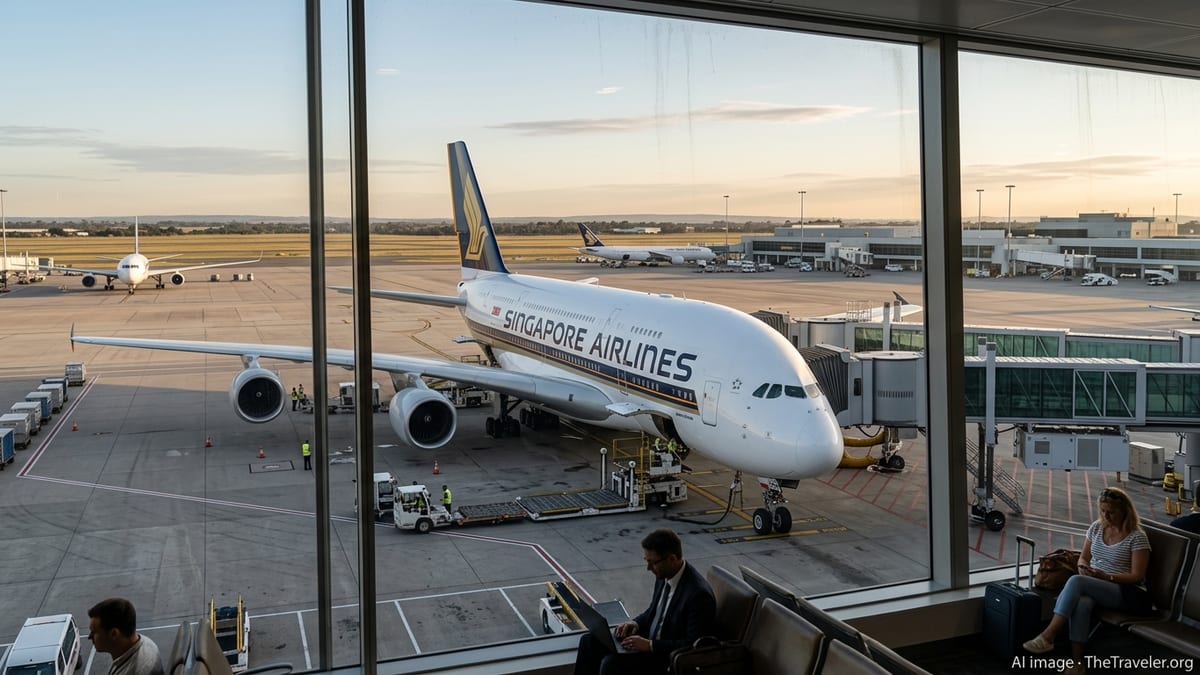
A380 Returns to Singapore–Melbourne From March 29
According to schedule data and industry reports, Singapore Airlines has filed an aircraft change that will see the Airbus A380 return to the Singapore–Melbourne route from March 29, 2026. The move follows several years of the airline serving Melbourne primarily with smaller widebody aircraft, including the Airbus A350 and Boeing 787-10.
The updated schedule indicates that at least one of the daily Singapore–Melbourne rotations will be operated by the double-deck A380, significantly boosting capacity in all cabins. The adjustment comes at the start of the northern summer scheduling period, a time when airlines typically introduce network changes and capacity shifts.
The decision to restore the A380 reflects the strength of demand between Singapore and Melbourne, both for point-to-point traffic and for passengers connecting through Changi Airport to Europe and Asia. It also underscores the carrier’s strategy of deploying its largest aircraft on routes where premium and connecting demand are strongest.
Reports indicate that the A380 deployment has been enabled in part by broader adjustments elsewhere in the network, with aircraft rotated from other long-haul markets back into Asia-Pacific.
Flagship Suites Cabin Returns to Victoria
The return of the A380 also means the return of Singapore Airlines’ Suites cabin to Melbourne, restoring access to the airline’s most premium in-flight product for travelers to and from Victoria. Suites, located on the upper deck at the front of the A380, offer enclosed private spaces, separate seats and beds on selected aircraft, and enhanced service compared with the standard First Class cabin on other aircraft types.
Publicly available seat maps and product descriptions show that the A380 carries a small number of Suites seats, making availability particularly limited compared with business class. For Melbourne-based travelers, the reinstatement of this cabin brings the city back into the select group of destinations served by the airline’s flagship product.
The move is expected to appeal to both cash and frequent flyer customers, particularly those using Singapore Airlines’ KrisFlyer program or partner airline points to secure premium redemptions. Specialist frequent flyer publications note that A380-operated routes are often prioritized by enthusiasts looking to experience high-end cabins such as Suites.
With Suites once again bookable to and from Melbourne, the route will compete more directly with other premium-heavy services into Australia, including A380 and high-density widebody operations into Sydney and other major gateways.
Capacity Boost on a Key Asia–Australia Corridor
Industry analysis highlights the Singapore–Melbourne market as one of the most important Asia–Australia corridors, serving a mix of corporate, leisure, student and visiting-friends-and-relatives traffic. The A380’s higher seat count compared with twin-engine widebodies provides a significant increase in available capacity on peak services.
Reports from aviation forums and schedule tracking sites indicate that the upgauge to the A380 follows a period of strong load factors across Australia routes, with Singapore Airlines and its low-cost subsidiary Scoot both carrying substantial volumes of traffic into the country. The A380 enables the airline to consolidate demand into fewer, larger flights at slot-constrained Changi while maintaining schedule coverage.
The additional capacity also supports connecting traffic between Europe and Australia via Singapore, a market segment that has rebounded sharply as more travelers return to long-haul itineraries. For Melbourne, this may translate into more seats available to key European hubs via Changi, even if non-stop alternatives remain limited.
From a network planning perspective, reintroducing the A380 can help the airline balance aircraft utilization across long-haul and regional routes, especially as other carriers adjust capacity in response to geopolitical and economic developments affecting Middle East and European hubs.
Competitive Pressure for Premium Travel to Melbourne
The restoration of A380 and Suites service adds pressure in Melbourne’s already competitive premium travel market. Qantas, Emirates, Qatar Airways and other international airlines all target high-yield passengers on long-haul services into Victoria, using a mix of A380s, Boeing 777s and modern twin-engine widebodies.
Travel and loyalty program commentators have frequently highlighted Singapore Airlines as a benchmark for premium cabins to Australia, particularly on routes where the A380 operates. With Suites once again available to Melbourne, the airline strengthens its positioning against rivals that offer enclosed suites, upgraded first class products or next-generation business class seats.
For corporate travel buyers and high-spend leisure travelers, the presence of a true Suites product may influence airline choice, especially on itineraries that can be routed either through Singapore or via Gulf and Asian hubs. Publicly available booking data often shows that even limited first class capacity can play a significant role in winning corporate contracts and premium traffic.
The change also adds another differentiator between Melbourne and other Australian gateways. While Sydney has consistently attracted a concentration of A380 services from multiple carriers, Melbourne’s access to such aircraft has been more cyclical. Restoring the Singapore Airlines A380 helps rebalance that picture and enhances the city’s long-haul connectivity profile.
What Passengers Can Expect on Board
Singapore Airlines’ latest-generation A380s feature four cabins: Suites, business class, premium economy and economy. According to product overviews and cabin reviews, the aircraft offers one of the carrier’s most up-to-date on-board experiences, including modern inflight entertainment, enhanced seating and improved lighting.
Business class on the A380 provides lie-flat seating in a one-two-one configuration, giving all passengers direct aisle access. Premium economy offers wider seats and extra legroom compared with standard economy, while the main cabin benefits from updated seats and personal screens. The overall layout allows the airline to cater to a wide range of price points on the same flight.
For travelers specifically targeting Suites, availability is expected to remain limited given the small number of seats per aircraft and strong interest from frequent flyers. Industry guidance suggests that early booking and flexibility on travel dates will be important for those seeking to secure a seat in the top cabin.
As the March 29, 2026 launch date approaches, schedules and aircraft assignments may continue to be refined, but the filing of the A380 back onto the Singapore–Melbourne route represents a notable shift in capacity and product for one of Australia’s busiest international city pairs.