

More news on this day
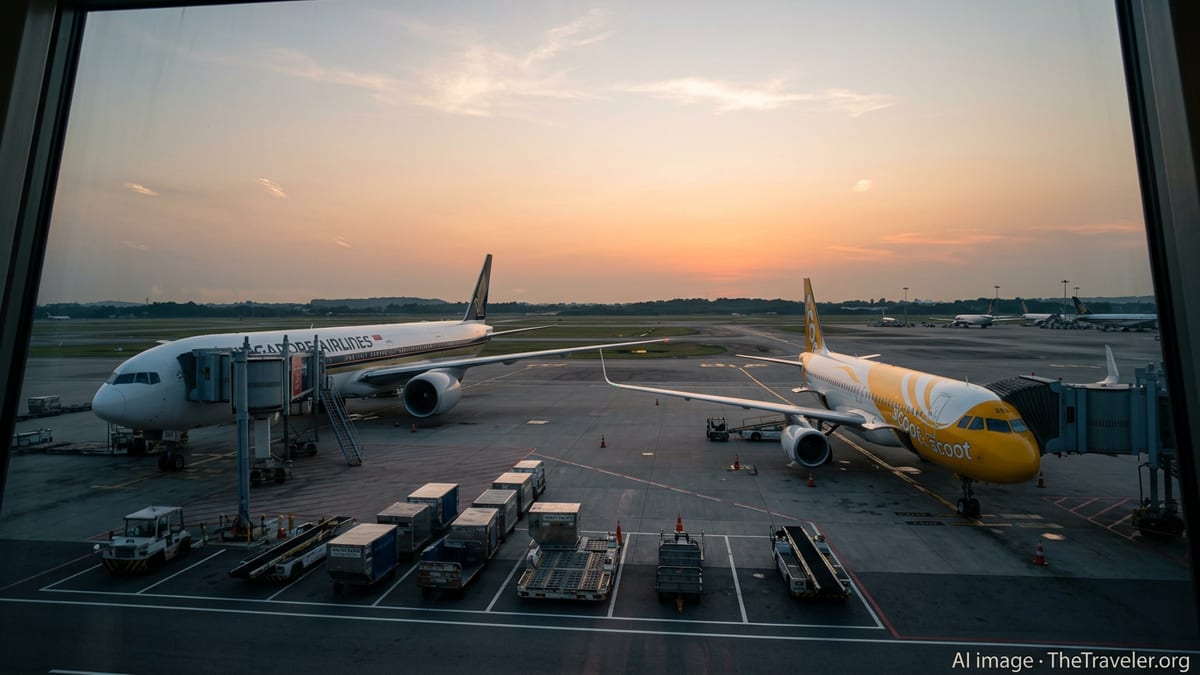
Singapore Airlines and its low cost subsidiary Scoot have extended the suspension of passenger flights between Singapore and Dubai until March 28, citing the ongoing geopolitical volatility in the Middle East and continued uncertainties around regional airspace and operational risk.
Get the latest news straight to your inbox!
Suspension on Singapore–Dubai Route Now Extended to Late March
Publicly available updates from Singapore Airlines indicate that flights SQ494 from Singapore to Dubai and SQ495 from Dubai to Singapore will remain cancelled through March 28. Earlier advisories had set the suspension until March 15, but the carrier has pushed back the restart date as the regional security picture remains unsettled.
Reports from regional and international outlets note that the decision comes amid the continuing war involving Iran and heightened tensions affecting multiple Middle East air corridors. Flight paths that would typically connect Southeast Asia to the Gulf have been subject to rapidly changing restrictions and risk assessments, complicating planning for both airlines and passengers.
Low cost carrier Scoot, part of the same airline group, has likewise continued cancelling selected Middle East services, including flights to Jeddah, as part of a broader review of routes exposed to the conflict zone. While Scoot does not operate its own Dubai service, its network adjustments underscore the group wide approach to managing exposure to affected airspace.
Singapore based travel agents and online booking portals show the Singapore–Dubai pairing temporarily grayed out or marked as unavailable for much of March, reflecting the extended suspension period and ongoing schedule revisions.
Geopolitical Risks and Airspace Restrictions Shape Airline Decisions
According to published coverage in regional business and travel media, the latest extension is directly linked to the evolving war in and around Iran and the associated risk to civil aviation over parts of West Asia. The region hosts heavily used flight corridors between Europe, the Gulf and Asia, and any escalation can have knock on effects far beyond the immediate conflict zone.
Industry reports indicate that airlines are weighing a combination of factors, including potential threats to overflying aircraft, the reliability of alternative routings and the likelihood of sudden airspace closures. For carriers based in Asia, routes to Dubai often require passage through or near contested skies, which can rapidly become untenable if the situation deteriorates.
Singapore Airlines and Scoot had already adjusted their routings in recent years to avoid Iranian airspace and parts of Iraq, relying on more northerly or circuitous paths. The current conflict has intensified these concerns, pushing some routes beyond commercially viable flying times and adding complexity to crew and fleet planning.
Published analyses from aviation observers describe the present environment as highly fluid, with flight paths and timetables subject to abrupt change. In this context, outright suspension of specific city pairs such as Singapore–Dubai is being used as a risk management tool while airlines seek clearer visibility on the trajectory of the conflict.
Impact on Travellers and Options for Rebooking or Refunds
The extended suspension has left business travellers, leisure passengers and transit customers needing to rethink their itineraries at short notice. Travel forums and social media posts from affected passengers describe disrupted journeys, with some needing to reroute through alternative hubs in East or Southeast Asia and others opting to postpone trips entirely.
Based on information available on airline and agency channels, customers booked on the cancelled Singapore–Dubai services are generally being offered the choice of rebooking on alternative routes, changing travel dates or requesting refunds. For some, especially those relying on Dubai as a connection point to Europe or Africa, securing replacement seats during a period of tight capacity has proven challenging.
Travel planners report that alternative routings via cities such as Istanbul, Doha, Kuala Lumpur or Bangkok are seeing increased demand as travellers look to bypass the most affected airspace. However, the wider regional disruption means that these options can be subject to schedule changes as well, requiring close monitoring of booking details and notification preferences.
Passengers currently holding tickets for travel later in March are being advised by travel intermediaries to watch for updates as the new March 28 date approaches, as any further deterioration in the security outlook could prompt additional changes.
Broader Middle East Flight Disruptions Affect Global Networks
The extension of the Singapore–Dubai suspension forms part of a much larger pattern of disruption across Middle East aviation. According to recent news reports, several major carriers in Europe, the Gulf and Asia have temporarily halted or reduced flights to destination cities in the region, including Dubai, Doha, Abu Dhabi, Tel Aviv and others, in response to airspace closures and shifting risk assessments.
Some airlines have opted to keep serving certain hubs while flying longer diversionary routes that skirt affected airspace, adding hours to flight times and increasing fuel and crew costs. Others have chosen to suspend operations on specific routes or for defined periods to avoid the unpredictability associated with sudden corridor closures and reroutes.
Travel industry analysts quoted in international coverage suggest that the ripple effects extend well beyond the Middle East, as disrupted hubs and longer routings can lead to rolling delays and equipment shortages in other parts of global networks. Connecting passengers, including those traveling between Asia, Europe and Africa, are among the most affected groups.
Singapore Airlines and Scoot, while relatively small players in the Middle East compared with regional giants, play an important role in linking Southeast Asia to Gulf hubs and beyond. Their continued suspension of the Dubai route underlines how even limited exposure to the region can have outsized consequences during periods of intense geopolitical stress.
What Travellers Should Watch in the Weeks Ahead
For travelers with tickets in late March and into April, the key variables will be the evolution of the conflict and any changes to government guidance on the safety of overflight and operations in affected areas. Aviation authorities and risk consultancies are expected to continue issuing assessments that airlines will use to determine whether further extensions, partial resumptions or full restarts are feasible.
Travel media commentaries recommend that passengers keep their contact details updated with airlines and booking agents, enable app notifications, and check flight status regularly in the days leading up to departure. Given how quickly circumstances have changed in recent weeks, same day schedule adjustments and aircraft substitutions remain a distinct possibility.
Observers also note that once conditions allow, the restoration of the Singapore–Dubai link is likely to be a priority for Singapore Airlines, given the route’s role as both a point to point connection and a feeder for long haul services. However, the timing and scale of any restart will depend on whether airspace constraints ease sufficiently to support stable and commercially sustainable operations.
Until clearer signs of de escalation emerge, travelers planning to move between Southeast Asia and the Middle East are expected to continue facing a mix of cancellations, prolonged journeys and higher fares, with the extended suspension by Singapore Airlines and Scoot serving as one of the more visible indicators of the aviation sector’s caution.