

More news on this day
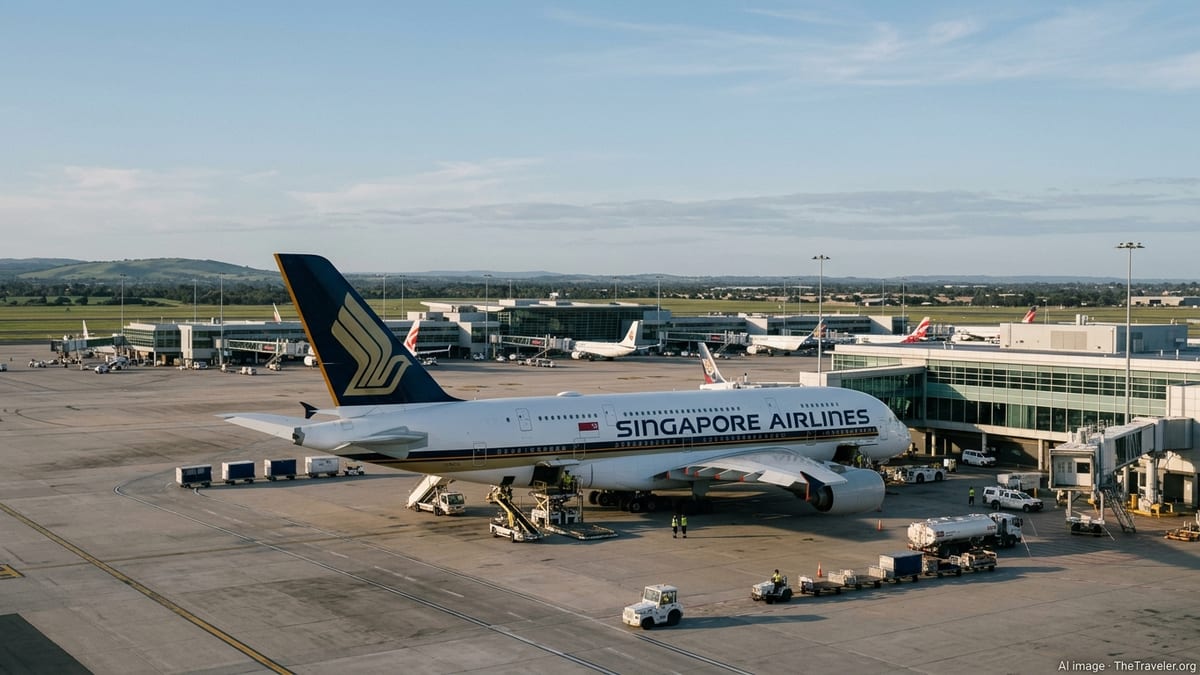
Singapore Airlines is moving one of its flagship Airbus A380 aircraft off the Singapore–Dubai route and onto the busy Singapore–Melbourne corridor, as the continuing conflict involving Iran and the resulting airspace disruptions reshape long-haul travel patterns across the Middle East and Asia-Pacific.
Get the latest news straight to your inbox!
Conflict Fallout Reshapes Regional Flight Networks
The latest round of hostilities involving Iran has triggered widespread airspace restrictions across parts of the Middle East, forcing airlines to rethink schedules and routings on key Europe–Asia and Asia–Gulf corridors. Publicly available flight-tracking data and media coverage indicate that airspace over Iran and neighboring states has faced intermittent closures and capacity reductions in recent weeks, with knock-on effects at major hubs such as Dubai.
Reports on the evolving situation describe temporary suspensions and diversions for flights that would ordinarily traverse Iranian airspace, as carriers factor in longer routings, crew duty limits and higher fuel burn. For airlines like Singapore Airlines, whose Dubai services typically rely on overflight permissions across this region, the operational complexity has increased sharply since late February.
Dubai International Airport, one of the world’s busiest transit hubs, has also experienced periods of suspended or reduced operations after security incidents linked to the broader conflict. While activity has partially resumed, published coverage suggests that schedules remain more fragile than usual, with passengers advised to check the status of flights close to departure.
Against this backdrop, redeploying large widebody aircraft such as the Airbus A380 from vulnerable or frequently disrupted sectors to more stable markets has become a key capacity management tool. Singapore Airlines’ decision to move an A380 away from its Dubai schedule reflects this strategic recalibration.
From Gulf Hub to Australian Gateway
Publicly available timetable data and aviation community discussions show that Singapore Airlines will restore A380 service on selected Singapore–Melbourne rotations, drawing capacity away from the Singapore–Dubai route where demand and operational certainty have both been hit by the conflict. The move effectively turns Melbourne into one of the main beneficiaries of the current Middle East upheaval.
The airline had previously deployed the A380 on Melbourne services on a seasonal or limited basis, supplementing a mix of Boeing 777 and Airbus A350 aircraft. However, earlier schedule adjustments had seen Melbourne lose some A380 capacity as the carrier balanced its global fleet following the pandemic recovery. The latest change marks a reversal of that trend, returning the double decker to one of Australia’s busiest international city pairs.
For Dubai, the redeployment represents a notable loss of premium capacity. The A380 has been central to Singapore Airlines’ product strategy on high-yield routes, offering its latest-generation suites, business class and a high-density economy cabin that tends to attract both premium and leisure travelers. With the aircraft reassigned, the airline is expected to maintain Dubai connectivity using smaller widebodies that are easier to schedule around conflict-related disruptions.
In contrast, Melbourne stands to gain additional seats and upgraded cabin options at a time when Australia–Asia demand remains strong. The shift highlights how quickly global network carriers can pivot toward markets that offer both resilient demand and more predictable operating conditions when geopolitical risks surge elsewhere.
What the A380 Shift Means for Passengers
For travelers booked on Singapore–Dubai services, the most immediate impact of the A380 redeployment is a change of aircraft type and, in some cases, a change of schedule or routing. Publicly available advisory notices and community reports indicate that passengers have been contacted with rebooking options, including transfers onto alternative Singapore Airlines flights or itineraries routed via other hubs when necessary.
The capacity reduction on the Dubai route may lead to tighter seat availability in the near term, particularly in premium cabins that are popular with business travelers and high-spend leisure customers. Fares can also become more volatile when capacity is constrained, although broader demand weakness linked to the conflict may offset some of that pressure.
On the Singapore–Melbourne corridor, the return of the A380 is likely to be viewed positively by many passengers. The aircraft’s spacious cabin, larger premium sections and high overall seat count translate into more choice across fare classes. Travelers monitoring schedules report that certain Melbourne flights are now showing A380 equipment during upcoming travel periods, which may encourage new bookings and upgrades from existing ticket-holders who value the larger jet’s comfort features.
Airport experience will differ as well. In Dubai, reduced A380 activity can ease gate pressure and jet bridge congestion associated with superjumbo turnarounds, but it also diminishes the spectacle and capacity that have become part of the airport’s identity. Melbourne, by contrast, must ensure that terminal resources, boarding gates and ground handling teams are ready to accommodate more frequent A380 operations during peak waves.
Strategic Fleet Management in a Volatile Region
The redeployment of the A380 underscores how airlines are using fleet flexibility to navigate the unpredictable security environment surrounding Iran. Widebody aircraft such as the A380 require high, relatively stable demand and reliable routings to justify their operating costs. Conflict-driven closures and reroutes undermine those fundamentals on some Middle East sectors, making it more attractive to place the aircraft on longer, consistently busy routes to markets like Australia.
Publicly accessible analysis by aviation commentators has highlighted how the latest conflict has revived questions about concentration risk at Gulf hubs that rely heavily on overflight permissions and regional political stability. Some network carriers are now spreading their capacity more evenly across different geographic regions, strengthening positions in Asia–Pacific and North America while dialing back exposure to routes that regularly traverse contested airspace.
For Singapore Airlines, which operates a relatively small subfleet of A380s, each individual aircraft represents a significant share of its top-end capacity. Moving just one of these jets can meaningfully alter the balance between regions in terms of available premium seats and total capacity. The pivot from Dubai to Melbourne therefore signals a broader strategic choice to favor routes where both demand and operational reliability are forecast to remain robust despite global uncertainties.
The longer the Iran conflict and associated airspace restrictions persist, the more likely it is that such temporary reallocations become embedded in medium-term planning. Carriers may lock in revised schedules for upcoming seasons, renegotiate airport slots, and adjust marketing efforts to reflect new flagship routes featuring their most marketable aircraft types.
Travel Planning in an Era of Geopolitical Risk
For travelers, the redeployment of Singapore Airlines’ A380 is another reminder that geopolitical events can quickly reshape even well-established international routes. Public information on recent disruptions shows how airspace closures and airport suspensions can cascade through global networks, affecting flights far beyond the immediate conflict zone.
Industry guidance consistently recommends that passengers monitor airline communications and flight status tools closely when planning trips that involve or overfly the Middle East. Even when core city pairs like Singapore–Dubai remain on the map, aircraft types, departure times and routings can shift at short notice in response to new risk assessments or regulatory changes.
At the same time, markets benefiting from redeployed capacity, such as Melbourne in this case, may enjoy a period of enhanced connectivity and product offerings. Travel agents and frequent flyers often track these developments closely, aligning their plans with routes that receive flagship aircraft and more generous seat supply.
As the situation around Iran and regional airspace continues to evolve, observers expect more adjustments across airline networks. The A380’s move from Dubai to Melbourne is one prominent example of how carriers are rewriting their playbooks to keep aircraft full, passengers moving and risks contained in a period of heightened geopolitical tension.