

More news on this day
Singapore Airlines is facing a new legal challenge after a California passenger filed suit in Singapore, alleging she suffered a severe allergic reaction to an in-flight meal on a Bali to Singapore service and that the carrier failed to respond adequately during the midair medical emergency.
Get the latest news straight to your inbox!
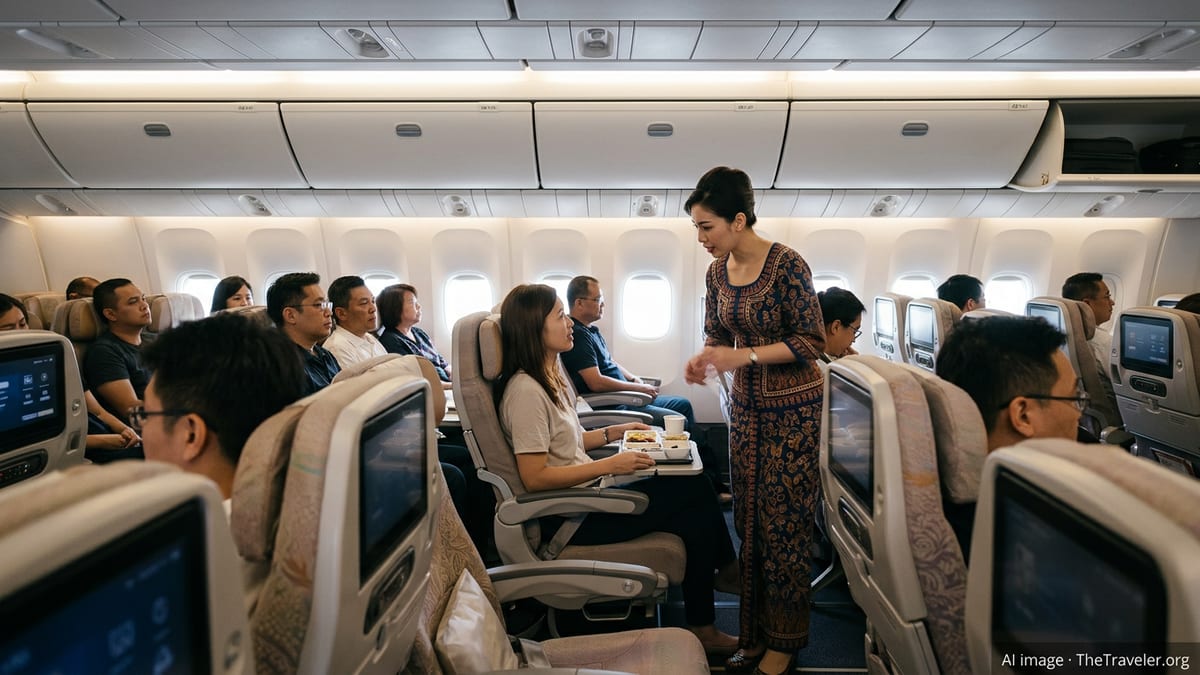
California Passenger Brings Claim to Singapore Courts
The lawsuit, filed in Singapore and brought by a passenger from California, centers on a flight operated by Singapore Airlines between Denpasar’s I Gusti Ngurah Rai International Airport in Bali and Singapore’s Changi Airport. According to the complaint, the traveler, who has a documented seafood allergy, suffered a serious reaction shortly after eating part of her meal during the regional flight.
In court filings, the passenger claims the incident unfolded after she consumed food that allegedly contained shrimp or shrimp-derived ingredients, despite having notified the airline of her allergy and reiterating it to cabin crew. She alleges that the dish was either incorrectly labeled or not adequately checked against her stated dietary restrictions, leaving her exposed to a potentially life-threatening allergen.
The claimant is seeking damages under international air carriage rules and Singapore law for physical injury, emotional distress and what she describes as a traumatic on-board experience. The suit adds to a growing body of passenger litigation worldwide that tests how far airlines must go to protect travelers with serious allergies.
Allegations of Inadequate Medical Response on Board
Beyond the composition of the meal itself, the complaint focuses heavily on the crew’s response once the passenger began to suffer symptoms she says included swelling, difficulty breathing and gastrointestinal distress. The lawsuit alleges that crew members did not promptly administer appropriate first aid, did not immediately seek medical assistance from other passengers and were slow to access emergency equipment in the cabin.
The passenger further claims that her condition worsened because of delays in treatment, asserting that crew initially downplayed the severity of the situation and continued routine service before fully addressing her distress. The filing states that only after repeated pleas for help did staff escalate the response, by which time her symptoms had become more pronounced.
Airlines are generally trained to follow detailed inflight medical protocols, including the use of emergency medical kits, oxygen and epinephrine auto-injectors where available, as well as contacting ground-based medical support. The lawsuit contends that these procedures were either not followed in a timely manner or not implemented to the standard reasonably expected of a full-service international carrier.
Jurisdictional and Liability Questions for Cross-Border Travel
The case underscores the complex legal landscape that governs international flights. The journey at issue began in Indonesia and continued to Singapore, with the passenger ultimately traveling onward to San Francisco International Airport. As with most cross-border itineraries, the rights and remedies available to passengers are shaped by international conventions, carrier conditions of carriage and the laws of several potential forums.
By choosing to bring the action in Singapore, where the airline is headquartered and where part of the itinerary was operated, the plaintiff is testing how Singapore’s courts interpret carrier obligations in cases involving foreign passengers and medical emergencies. The proceeding may consider whether the alleged allergy reaction constitutes “bodily injury” under international air law and what standards of proof apply when an inflight event involves food service rather than turbulence or mechanical issues.
Legal observers note that such cases are often fact-intensive, turning on cabin records, medical reports and crew testimony. They can also influence how airlines document passenger notifications about allergies, how meals are prepared and labeled, and the training and checklists crews follow when responding to medical episodes at cruising altitude.
Airlines Face Growing Scrutiny Over Food Allergies
The lawsuit arrives at a time when severe food allergies are an increasingly prominent concern in commercial aviation. Passengers regularly ask airlines to accommodate allergies to nuts, shellfish and other ingredients, and carriers have adopted a mix of policies, ranging from offering allergen-sensitive meal options to limiting certain snacks and posting advisories about potential cross-contact in galley kitchens.
Advocates for allergy sufferers argue that flight environments present unique risks: cabins are confined, medical care is distant and reactions can escalate rapidly. They contend that airlines should apply rigorous procedures to record allergy information at booking, communicate it clearly to catering partners and cabin crew, and verify that special meals are correctly handled and delivered to the right passenger.
Airlines, for their part, often caution that they cannot guarantee completely allergen-free cabins or meals, citing shared preparation facilities and the possibility of passengers bringing their own food on board. Many carriers set out these limitations in their conditions of carriage while still emphasizing crew training and the availability of basic emergency equipment. The outcome of the Singapore case could help clarify how courts balance these competing realities when a serious reaction occurs midflight.
What the Case Means for Travelers on Asia–Pacific Routes
For travelers regularly flying between Southeast Asia and North America, the lawsuit is a reminder to review airline policies and take proactive steps when managing significant allergies. Medical professionals commonly advise passengers with a history of severe reactions to carry doctor-prescribed medication such as epinephrine auto-injectors, travel with written treatment plans and notify both the airline and cabin crew of their condition before departure.
Industry experts say the case may prompt carriers operating in and out of major hubs like Bali and Singapore to reexamine cabin procedures, from pre-flight briefings about passengers with flagged allergies to the way special meals are labeled, plated and cross-checked before service. Some may also refine training modules on recognizing early signs of anaphylaxis and coordinating with ground-based medical teams to guide treatment decisions.
Depending on how the Singapore proceedings unfold, the lawsuit could ultimately influence not only compensation standards but also day-to-day practices on popular regional and long-haul routes. For now, it has added a new layer of scrutiny to how one of Asia’s flagship airlines handles a high-stakes medical scenario at 35,000 feet, and it is likely to be closely watched by both the aviation industry and frequent flyers with serious allergies.