

More news on this day
Singapore Airlines is preparing to relaunch daily non stop services between Singapore and Hangzhou from June 2026, a move that aligns with broader efforts by Singapore and China to expand air connectivity and support rising demand for business and leisure travel between the two markets.
Get the latest news straight to your inbox!
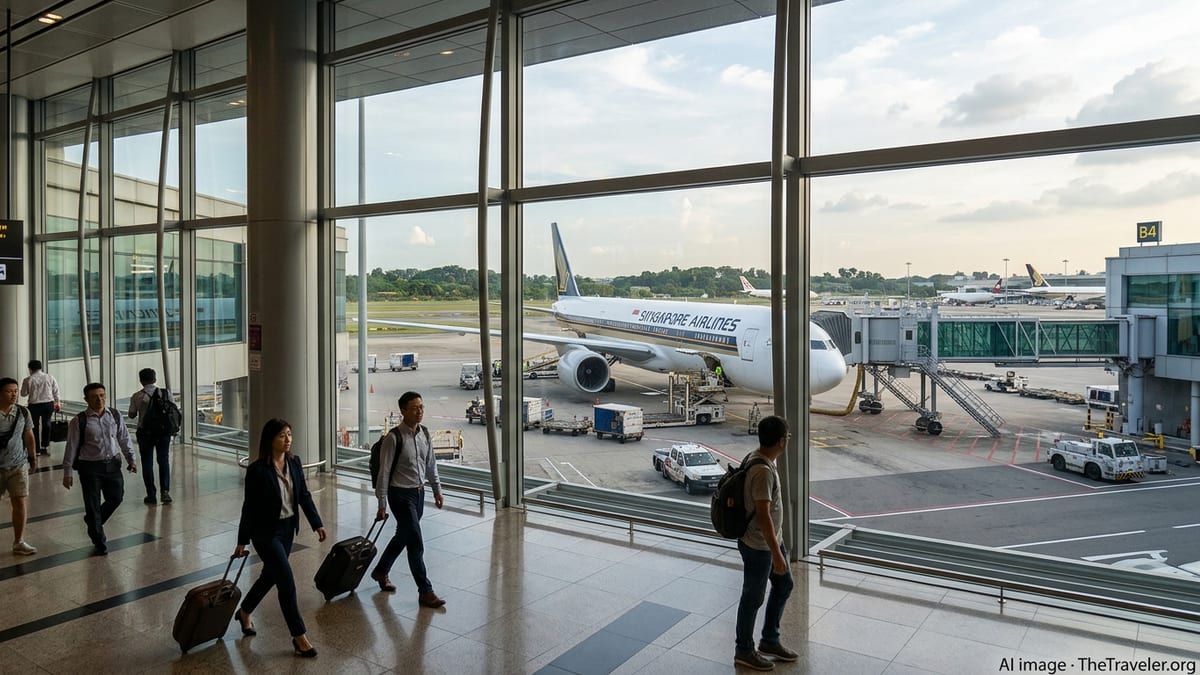
New Daily Service Strengthens Singapore–China Air Links
Publicly available schedule information and industry commentary indicate that Singapore Airlines is planning a daily Singapore–Hangzhou rotation from June 2026, restoring a link that has historically formed part of the carrier’s wider network in eastern China. The move comes as Chinese and Singaporean stakeholders place renewed emphasis on air connectivity as a pillar of economic and people to people ties.
The new operation is expected to sit alongside services to other major Chinese cities from Singapore, reinforcing Changi Airport’s role as a Southeast Asian hub for traffic to and from the Chinese mainland. Network data and recent schedule filings show that Singapore Airlines is progressively rebuilding and reshaping its China portfolio through the 2025 to 2026 seasons, in line with a steady rebound in passenger volumes.
The Singapore–Hangzhou sector gives the airline another point in the fast growing Yangtze River Delta region, complementing existing links to Shanghai and other nearby commercial centers, and offering travelers an alternative gateway into eastern China beyond the most congested airports.
Industry reports also note that other carriers, including Chinese airlines, are expanding services between Hangzhou and Singapore in the mid 2020s, underlining both cities’ interest in deepening aviation ties and responding to sustained demand for two way travel.
Seamless Connections for Business and Leisure Travelers
The timing of the new daily flights is expected to be coordinated with Singapore Airlines’ global bank of connections at Changi Airport, giving travelers from Hangzhou one stop access to destinations across Southeast Asia, Australia, Europe and North America. Timetabling patterns on existing China routes suggest that at least one direction of the flight pairing will be optimized for onward connectivity.
For business travelers, the route creates a non stop link between one of China’s leading technology and manufacturing hubs and Singapore’s financial and services center. The Yangtze River Delta region, with Hangzhou as a key node, has become a base for e commerce, fintech and advanced manufacturing, while Singapore continues to attract regional headquarters and investment firms. A daily schedule allows for greater flexibility for short trips, meetings and project work across the two cities.
Leisure travelers are also likely to benefit. Hangzhou, known for West Lake, tea plantations and surrounding cultural landscapes, is one of China’s best known domestic tourism destinations and is increasingly featured in regional itineraries. At the same time, Singapore’s profile as a stopover and short break destination has remained strong, with Changi Airport’s connectivity enabling multi city itineraries that combine the city state with other Southeast Asian or Pacific destinations.
Travel industry analyses point out that daily frequencies generally support more competitive fares and smoother connection options, making it easier for tour operators and corporate travel planners to design products around reliable arrival and departure patterns.
Policy Backdrop: Deepening Bilateral Connectivity
The planned launch sits against a backdrop of intensified cooperation between Singapore and China on aviation and transport. Recent high level meetings between the two governments, including joint councils focused on bilateral cooperation, have highlighted aviation, logistics and connectivity as priority areas for the next phase of ties, alongside finance, digital economy and green development.
Official readouts and public reporting from these meetings describe air links as both an economic enabler and a symbol of the broader relationship. Expanded flight capacity supports trade in goods, cross border investment and professional exchanges, as well as student mobility and tourism.
Policy changes in recent years have also facilitated greater two way movement. Singapore’s decision to offer visa free entry for many short term visitors from China, and reciprocal or complementary measures from the Chinese side, have been cited in industry coverage as contributing factors to the surge in demand. Airlines and airports in both countries are responding by adding services on established routes and opening connections to so called secondary cities such as Hangzhou, Ningbo and others beyond Beijing and Shanghai.
In this context, Singapore Airlines’ decision to mount a daily service to Hangzhou in June 2026 fits within a wider pattern of capacity growth between the two countries, involving both full service and low cost operators and multiple provincial gateways in China.
Changi and Hangzhou Airports Position for Growth
The route development also reflects strategic planning at both Changi Airport and Hangzhou Xiaoshan International Airport. Changi has repeatedly highlighted its ambition to restore and exceed its pre pandemic connectivity with China, one of its largest source markets. Seasonal peaks, such as the Lunar New Year travel period, have seen substantial increases in flights between Singapore and a wide spread of Chinese cities, pointing to robust underlying demand.
Hangzhou Xiaoshan, for its part, has invested in terminal expansions and route diversification, seeking to position itself as a major international gateway for Zhejiang province and the wider Yangtze River Delta. Industry news and airport statements describe efforts to attract more long haul and regional carriers, with a particular focus on Southeast Asia as a growth market.
By introducing a daily service, Singapore Airlines adds to this momentum, potentially boosting connectivity for both inbound and outbound travelers through Hangzhou. The link offers residents of Zhejiang and neighboring regions a premium option for reaching Southeast Asia and long haul destinations through Singapore, while also making it easier for visitors from ASEAN, Australia and Europe to include Hangzhou in their travel plans.
Aviation analysts note that increased frequency and more diverse airline choices at a given airport can generate network effects, as improved connectivity stimulates additional tourism, business activity and aviation services such as cargo and maintenance.
Competitive Dynamics and Future Prospects
The Singapore–Hangzhou corridor is becoming increasingly competitive, with Chinese and international carriers adding capacity ahead of the mid 2020s. Reports from aviation data providers show that several airlines are scheduling or planning new flights on the city pair around 2025 and 2026, responding to a mix of tourism growth, regional integration and rising disposable incomes in eastern China.
Singapore Airlines’ daily service from June 2026 is expected to compete on product, network connectivity and brand positioning, rather than price alone. The carrier’s integration of the route into its global timetable, frequent flyer program and partnerships may be particularly attractive for corporate accounts and frequent travelers who value through check in, lounge access and consistent service standards.
Looking ahead, observers suggest that if demand on the Singapore–Hangzhou route continues to strengthen, additional capacity adjustments are possible, whether through upgauging of aircraft or further frequency changes in subsequent seasons. The airline’s broader 2026 summer schedule, which features increased services on a number of Asia Pacific and long haul routes, indicates a willingness to fine tune deployment as market conditions evolve.
For now, the decision to anchor Hangzhou in the network with a daily non stop service from June 2026 signals confidence in the long term potential of the Singapore–China market and underscores the role of aviation in knitting together two of Asia’s most dynamic economic regions.