

More news on this day
Singapore Airlines is set to expand its Australian network in November 2026 with a new non-stop daily service between Singapore Changi Airport and the soon-to-open Western Sydney International Airport, in a move expected to reshape long-haul connectivity to Sydney and support the growth of the city’s second international gateway.
Get the latest news straight to your inbox!
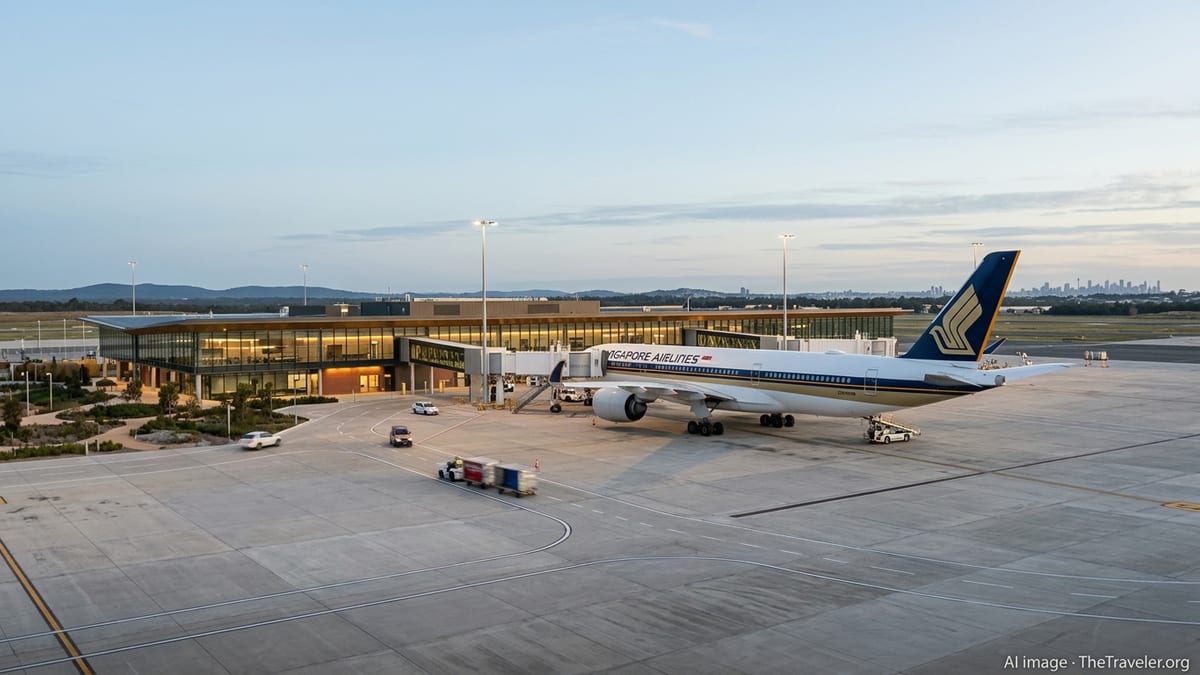
New Daily Link to Sydney’s Second International Gateway
Publicly available information indicates that Singapore Airlines has scheduled the start of its Western Sydney International Airport operations for 23 November 2026, with a non-stop daily flight connecting the new airport to the carrier’s Singapore Changi hub. The route will operate alongside Singapore Airlines’ existing services to Sydney Kingsford Smith Airport, adding capacity into the broader Sydney market rather than replacing current flights.
The airline has long been one of the largest foreign carriers in Australia, with multiple daily services into major cities including Sydney, Melbourne, Brisbane, Perth and Adelaide. The new Western Sydney operation will give the carrier a second point of entry to the country’s largest city, reflecting both demand from the fast-growing western suburbs and the strategic role of the new airport in Australia’s aviation system.
Western Sydney International Airport, officially named after pioneering aviator Nancy-Bird Walton, is slated to open for passenger services in late 2026. Government and airport documents describe it as a full-service, curfew-free airport offering domestic, international and air cargo operations, designed to complement rather than replace Sydney’s existing Kingsford Smith Airport.
The planned Singapore Airlines service positions the carrier among the first wave of international airlines to commit regular passenger flights to the new airport. Reports indicate that other launch partners include Qantas, Jetstar and Air New Zealand, with further airline announcements expected as the airport moves closer to opening.
Boost for Connectivity Across Greater Sydney and Beyond
The addition of a daily non-stop service from Western Sydney to Singapore is expected to have a significant impact on connectivity for both leisure and business travellers. From Changi, passengers will be able to connect to more than a hundred onward destinations across Asia, Europe and North America, according to network information published by the airline and airport stakeholders. This effectively gives Western Sydney residents a one-stop link to many of the world’s major cities.
For the broader Sydney region, the new flight helps to distribute demand across two international gateways. Kingsford Smith Airport continues to operate under a night-time curfew and movement caps, while Western Sydney International is being developed as a 24-hour airport. Analysts note that the availability of overnight departures and arrivals at the new airport could improve schedule options for long-haul passengers and ease operational pressures during peak periods.
There are potential benefits for regional travellers as well. Plans for Western Sydney International include domestic services under the same terminal roof as international operations. This co-location is intended to create smoother transfers between domestic and international flights, which could make connecting via Western Sydney and Singapore an attractive alternative to existing routings through other hubs.
Freight operators are also expected to benefit from the new connection. Industry commentary highlights that direct widebody services to Singapore from Western Sydney will add bellyhold cargo capacity, supporting exporters and importers in western New South Wales and reducing the need to truck goods to the existing Sydney airport precinct.
Western Sydney International Airport Nears Opening Milestones
Construction updates from Australian government and airport sources show that major works at Western Sydney International are now largely complete, including the runway and terminal structure. Recent briefings indicate the focus has shifted to fit-out, systems testing and operational readiness trials as the airport gears up for an opening targeted for late 2026.
The terminal has been designed to handle both domestic and international operations in a single building, incorporating abundant natural light, sustainable materials and energy-efficient systems such as extensive rooftop solar panels and rainwater harvesting. The layout aims to offer short walking distances and intuitive wayfinding, reflecting a broader push to position Western Sydney International as a modern, passenger-friendly hub.
Transport infrastructure is gradually being put in place around the airport. The new M12 Motorway, which connects the site to Sydney’s motorway network, has opened ahead of the airport’s launch, providing a key link for private vehicles, freight and bus services. Separate to the road network, a dedicated metro rail line is under construction, although publicly available reports suggest rail services are not expected to commence until after the airport’s first full summer season.
Authorities have promoted the airport as a catalyst for wider economic development in Western Sydney, with logistics, advanced manufacturing, hospitality and tourism businesses expected to cluster around the new gateway. The arrival of a major full-service international carrier such as Singapore Airlines is viewed by industry observers as an important endorsement of the airport’s long-term growth prospects.
What the New Route Means for Travellers and Tourism
For travellers, the new Singapore Airlines service from Western Sydney is likely to offer additional choice in departure times, airport access and fare options. People living in western and south-western Sydney, as well as regional centres to the west, will be able to reach an international hub airport without crossing the city to the existing airport on the coast, potentially cutting travel times on the ground by hours.
Travel industry analysis suggests that the timing of the new flight will be an important selling point. The absence of a night-time curfew at Western Sydney International allows late evening or overnight departures, which can align more closely with early-morning bank connections at Changi. This may be particularly attractive for travellers heading to Europe, South Asia and parts of East Asia, who often face long layovers when flying from curfew-restricted airports.
The additional capacity into Sydney is also expected to support inbound tourism to New South Wales. Tourism bodies have highlighted Western Sydney’s growing visitor appeal, from new cultural and sporting venues to nature-based experiences in nearby national parks. The new non-stop route should make it easier for international visitors to combine stays in Western Sydney with time in central Sydney and other regions of the state.
At the same time, observers caution that the passenger experience will depend on how quickly ground transport links, terminal services and surrounding amenities ramp up. Local commentary has pointed to the importance of reliable road access, public transport connections and competitively priced parking, as well as accommodation and hospitality offerings in the airport’s immediate catchment.
Strategic Move in Intensifying Australia–Asia Aviation Market
From an airline strategy perspective, the launch of Singapore Airlines’ Western Sydney route comes amid intensifying competition in the Australia–Asia market. Gulf carriers, Asian network airlines and growing low-cost operators all vie for passengers travelling between Australia, Europe and Asia. Establishing an early presence at Western Sydney International gives Singapore Airlines a first-mover advantage at a new 24-hour gateway close to one of Australia’s largest population centres.
Industry observers note that the additional Sydney-area capacity could help the airline better balance demand across seasons and manage disruptions at times when weather or congestion affects operations at Kingsford Smith. Operating from two airports in the same city also provides more flexibility in aircraft and crew deployment, particularly during peak holiday periods.
The route strengthens Singapore Changi Airport’s role as a key connecting hub for Australian travellers. By adding Western Sydney to its existing Australian network, Singapore Airlines further integrates the new airport into its global timetable, which may encourage other alliance and codeshare partners to consider services or marketing partnerships focused on the new gateway.
As Western Sydney International moves toward its opening date, the Singapore Airlines announcement has become a focal point in discussions about how the new airport will reshape aviation patterns around Sydney. With a daily non-stop service to a major Asian hub locked in from November 2026, the contours of the region’s future air connectivity are beginning to come into clearer view.