

More news on this day
The Singapore Tourism Board has deepened its aviation links with Oman through a landmark direct charter between Singapore and Muscat, developed in partnership with Omani low cost carrier SalamAir and positioned as both a strategic tourism bridge and an urgent travel lifeline amid ongoing disruption in Middle East airspace.
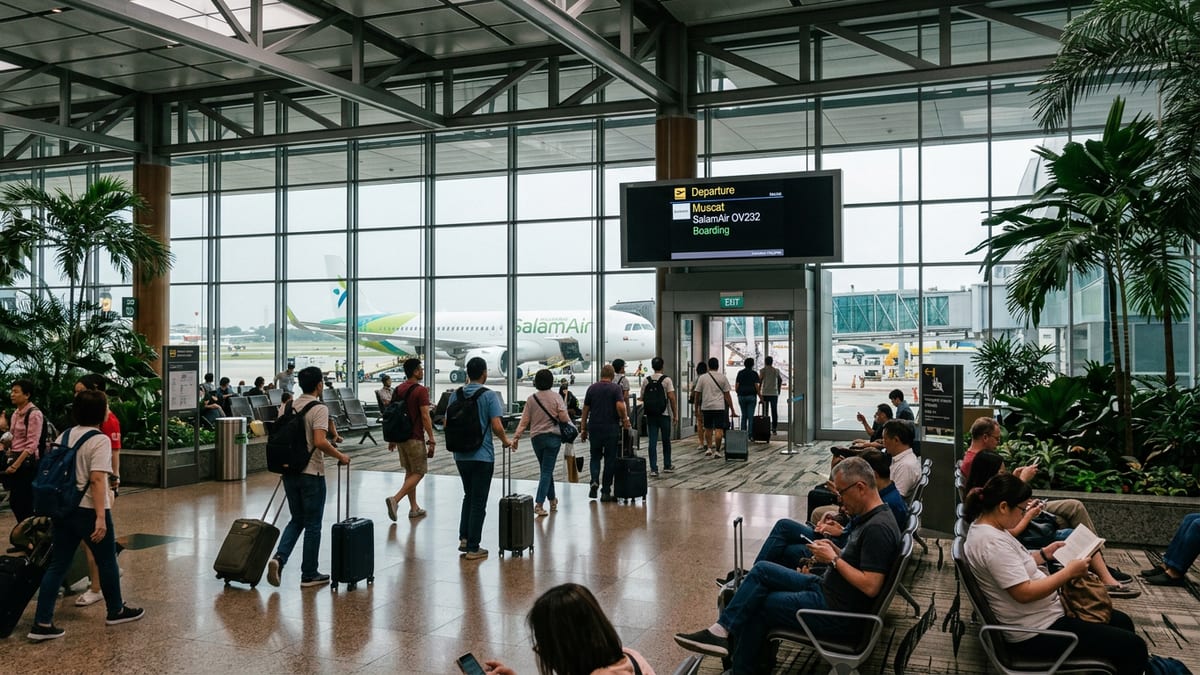
New Direct Muscat Charter Marks Milestone in STB–SalamAir Ties
The special charter service connects Singapore Changi Airport with Muscat International Airport, giving travellers a rare nonstop option between the Southeast Asian hub and the Omani capital. It is the first time Singapore’s tourism authorities have moved in tandem with SalamAir on a direct Muscat operation, underscoring how tourism boards and value focused carriers are collaborating more closely in response to fast changing regional dynamics.
While Singapore Airlines is operating a series of repatriation and special flights on the route, SalamAir’s involvement on the Muscat side reflects the airline’s growing role as Oman’s agile connector, able to quickly mount charter links that complement scheduled services. For Singapore, the arrangement adds a fresh layer of connectivity into the Gulf and beyond, reinforcing the city state’s status as a resilient transit and tourism hub even as conventional routings across the region remain constrained.
The charter has been structured as a tightly coordinated operation between aviation and tourism stakeholders in both countries, with capacity calibrated to urgent demand from stranded visitors and onward connectivity available via SalamAir’s expanding network from Muscat. Industry observers say the cooperation illustrates how small, targeted charters can serve as test beds for longer term route development, particularly on city pairs that have yet to see regular nonstop commercial service.
A Strategic Response to Middle East Airspace Disruptions
The Muscat charter emerges against the backdrop of widespread airspace closures and flight cancellations across parts of the Middle East, following a sharp escalation in regional tensions in late February. With key corridors temporarily restricted, airlines have been forced to reroute or suspend services, leaving many travellers in Asia scrambling for alternatives and prompting governments and tourism agencies to explore ad hoc solutions.
In Singapore, tourism authorities have taken the unusual step of directly facilitating a dedicated flight to Oman for non resident visitors whose journeys were disrupted and who have been unable to secure new itineraries. Seats on the Singapore–Muscat charter have been offered at a fixed, economy style fare, with clear eligibility criteria and a time limited registration window to ensure that those most affected by the closures can be prioritised.
For Oman, receiving a direct influx of passengers on a coordinated charter aligns with the sultanate’s broader positioning as a stable, accessible gateway for travellers transiting around regional hotspots. Muscat International Airport has increasingly been used as a staging point for repatriation and humanitarian flights, and the new charter further embeds the city in a web of contingency corridors designed to keep people moving even when traditional routes are cut.
SalamAir’s Growing Role as Oman’s Flexible Connector
The partnership builds on SalamAir’s rapid expansion as a key player in Oman’s aviation landscape. The budget airline has grown its fleet with next generation Airbus A321neo aircraft and now serves more than 40 regional and international destinations, including new routes into Europe and South Asia. Its ability to pivot quickly between scheduled services and short notice charters has made it a preferred partner for airports and tourism bodies seeking nimble capacity solutions.
In recent months, SalamAir has operated a series of humanitarian and emergency charters across the Gulf, including flights via Muscat that connect travellers from secondary airports in the United Arab Emirates to major cities in India, Türkiye and Pakistan. Those operations have given the carrier valuable experience in handling complex, time sensitive missions, from coordinating with local authorities to managing large numbers of passengers with diverse onward travel needs.
By aligning with the Singapore Tourism Board on the Muscat charter, SalamAir gains a higher profile in Southeast Asia, a region with rising interest in Oman’s landscapes, culture and emerging adventure tourism offerings. The cooperation may also open the door to future joint marketing campaigns, trade missions and potentially scheduled services, especially as Omani tourism officials work to diversify source markets beyond the Gulf and Europe.
Strengthening Bilateral Tourism and Trade Opportunities
Beyond its immediate humanitarian function, the direct charter is being viewed as a meaningful signal of the growing economic and tourism relationship between Singapore and Oman. Both countries have identified travel, aviation and logistics as strategic sectors, and have invested heavily in modern airports, cruise infrastructure and tourism precincts designed to attract high yielding visitors and cargo flows.
Singapore has long positioned itself as a gateway to Southeast Asia and the wider Asia Pacific, supported by a dense network of air links and a proactive tourism promotion strategy. Oman, for its part, is working to leverage its location on the Arabian Sea and the Indian Ocean to become a complementary hub, connected by air and sea to major markets in Asia, Africa and Europe. Enhanced air connectivity between Singapore and Muscat supports that vision by shortening travel times and making multi destination itineraries more attractive.
Travel trade insiders note that even a one off charter can catalyse new patterns of demand. Tour operators in both markets are closely watching load factors and passenger profiles on the Muscat flight, with an eye to developing bespoke itineraries that combine city stays in Singapore with coastal and desert experiences in Oman. Business travellers in sectors such as logistics, energy and finance may also benefit from a more direct corridor between the two hubs, especially if charters pave the way for regular services.
Outlook: From Emergency Link to Lasting Aviation Corridor
Whether the Singapore–Muscat charter evolves into a recurring service will depend on several factors, including the duration of the current airspace restrictions, the performance of the initial operation and the willingness of airlines to commit aircraft to a niche but strategically significant route. For now, officials on both sides have framed the charter primarily as a targeted response to exceptional circumstances, though they acknowledge that it offers valuable data on latent demand.
For passengers using the Muscat flight, the charter provides a rare degree of predictability during a volatile period: a confirmed departure time from Singapore, a clear arrival point in Oman and the reassurance of coordinated support from both tourism authorities and airline partners. For the broader industry, it offers a case study in how tourism boards and carriers like SalamAir can collaborate quickly to plug connectivity gaps, protect visitor confidence and, potentially, seed new corridors that outlast the crises that spawned them.
As the Middle East’s aviation map continues to shift in response to geopolitical developments, Singapore’s engagement with SalamAir on this historic direct charter underlines a wider trend. Destination marketing bodies are no longer confined to promotions and branding; they are increasingly stepping into the operational arena, helping to shape the very routes that bring visitors to their shores and keeping global travel networks resilient in uncertain times.