

More news on this day
Singapore-based investors are emerging as some of the most active foreign buyers and developers in Vietnam’s hotel market, channeling capital into coastal resorts, branded residences and urban serviced apartments as the country’s tourism recovery gathers pace.
Get the latest news straight to your inbox!
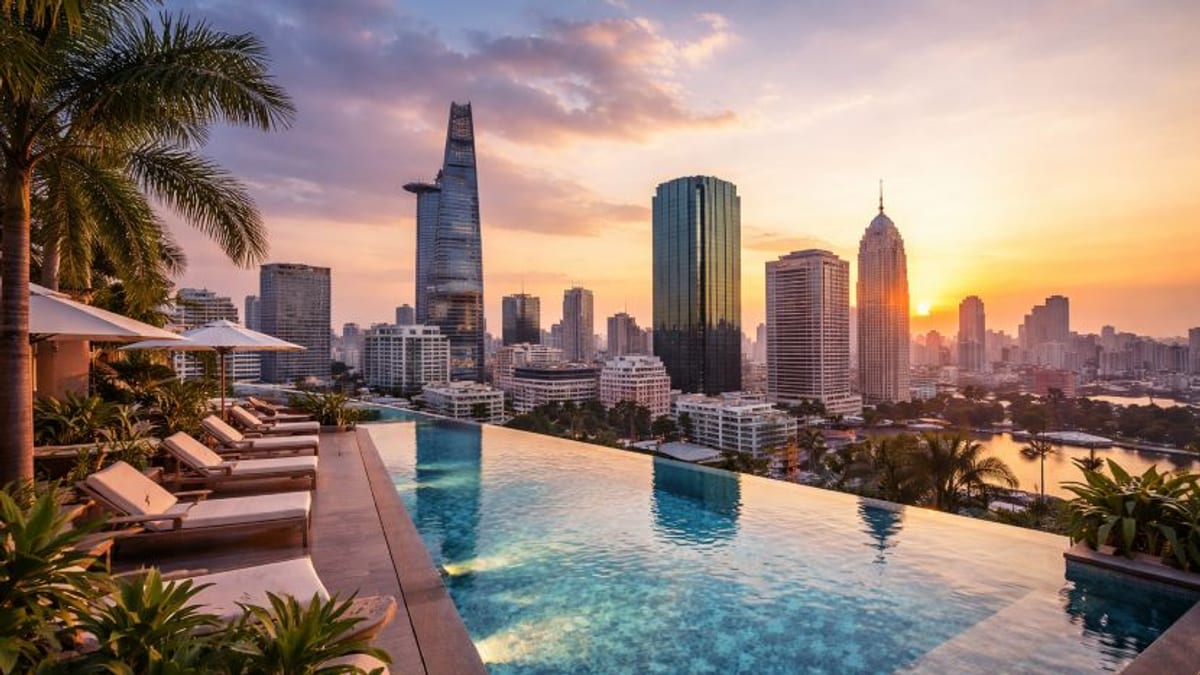
Image by International Hotels News, Hotel Industry & Hospitality News
Singapore Rises as Vietnam’s Leading Foreign Investor
Recent foreign direct investment data shows that Singapore has consolidated its position as Vietnam’s largest or one of its largest foreign investors by registered capital, with billions of dollars committed annually across manufacturing, real estate and services. Within this broader flow of capital, hospitality and tourism-related assets are becoming an increasingly visible target, from greenfield resort developments to acquisitions of operating hotel platforms.
Publicly available figures compiled by research platforms tracking Vietnam’s investment approvals indicate that in a recent year Singaporean firms accounted for more than a quarter of newly registered FDI capital, with a growing slice directed toward accommodation, food services and mixed-use tourism projects. The trend reflects both Vietnam’s rising role in regional travel and Singapore’s function as a financing and asset-management hub for Asia Pacific hospitality.
Policy frameworks between the two countries are also providing momentum. Economic cooperation arrangements signed in recent years have highlighted innovation, sustainability and digital connectivity, but they have indirectly supported tourism and real estate by giving investors greater confidence in Vietnam’s long-term growth story. For hospitality groups and real estate funds headquartered in Singapore, this has translated into more aggressive expansion plans in Vietnamese destinations.
Hotel Deals Accelerate From Coastal Resorts to City Assets
Transaction reports from international brokerages describe a notable pick-up in Vietnam hotel deals involving Singapore-linked capital. One of the most prominent recent moves is the planned acquisition of Vietnam-based Fusion Hotel Group by Singapore’s SC Capital Partners, reported by industry publication Skift in March 2026. The transaction gives the private equity firm exposure to a portfolio of upscale wellness resorts and hotels concentrated in Vietnam’s key leisure markets.
Analysts note that coastal destinations such as Da Nang, Nha Trang and Phu Quoc, where room rates and occupancies have rebounded quickly, are drawing particular interest from Singapore buyers seeking yield and potential capital gains. These investors are often comfortable with development and repositioning risk, targeting under-managed resorts or incomplete projects that can be transformed into higher-yielding assets.
At the same time, there is a parallel wave of investment into city hotels and serviced apartments in Hanoi and Ho Chi Minh City. Global broker JLL has highlighted Vietnam as one of the more attractive hotel markets in Asia for returns, with recent commentary cited by local media suggesting annual yields in the mid-single to high-single digit range for well-located assets. That performance is underpinning deals structured around income growth as tourism and business travel continue to normalize.
Singapore Hospitality Brands Deepen Their Vietnam Footprint
Beyond individual asset trades, Singapore-headquartered hospitality platforms are steadily expanding their operational presence in Vietnam. The Ascott Limited, the lodging arm of CapitaLand Investment, has identified Vietnam as one of its key growth markets in Southeast Asia, with multiple openings and signings over recent years across brands such as Somerset, Citadines and Oakwood. Earlier corporate disclosures have pointed to record signings in Vietnam and strategic partnerships with local developers to deliver large-scale serviced residence complexes.
Other Singapore-based or Singapore-backed hotel brands are following a similar path. Budget and midscale platform RedDoorz lists Vietnam among its core Southeast Asian markets, targeting domestic travelers and cost-conscious regional tourists. Azerai, a Singapore-based luxury boutique chain founded by veteran hotelier Adrian Zecha, operates a trio of upscale resorts in Vietnam, positioning itself at the higher end of the market in heritage-rich or waterfront locations.
Market commentary from consultancy Savills indicates that international operators, including several from Singapore, manage the majority of Hanoi’s upcoming serviced apartment pipeline, underscoring foreign brands’ role in shaping Vietnam’s urban extended-stay segment. Their presence is often backed by Singapore-listed real estate investment trusts and private funds, which rely on stable management contracts and rising average daily rates to support returns.
Tourism Recovery and New Financial Hubs Support Growth
The investment push is taking place against the backdrop of Vietnam’s fast-recovering visitor numbers. Government tourism statistics for 2025 point to international arrivals surpassing pre-pandemic levels on several peak months, helped by expanded air connectivity, simplified visa rules for key markets and the country’s mounting appeal as both a manufacturing base and leisure destination. This demand backdrop is crucial for underwritten hotel cash flows and is repeatedly cited in transaction and fundraising documents related to Vietnam deals.
Structural shifts in Vietnam’s economy are also creating new demand drivers for hotels. The establishment of the Vietnam International Financial Centre across Ho Chi Minh City and Da Nang, formalized in 2025, is intended to position the country as a regional hub for financial services and high-value business activity. As this initiative progresses, industry analysts expect a corresponding rise in corporate travel, long-stay expatriate demand and MICE-focused hotel development in both cities.
These growth pillars align closely with the investment criteria of Singapore-based capital, which typically favors markets where tourism is backed by diversified economic activity. Asset managers in Singapore have been highlighting Vietnam’s young population, competitive costs and integration into regional supply chains as reasons to allocate more capital to its hospitality assets, provided that regulatory and currency risks are manageably priced into deals.
Opportunities and Risks in a Crowded Pipeline
Despite the positive momentum, published research from brokerages and consultancies cautions that Vietnam’s hotel investment story is not without risks. A robust development pipeline in popular beach destinations raises the possibility of oversupply in certain segments, especially if global economic conditions weaken or if key source markets in North Asia and Europe face prolonged slowdowns. For investors using higher leverage, any dip in occupancy or room rates could compress returns.
Regulatory complexity and land-use procedures also remain considerations. Foreign investors typically work with local partners to navigate approvals and title structures, and this reliance can slow execution or complicate exits. Currency volatility and interest-rate trends, both in Vietnam and in Singapore where many investors raise their funds, add another layer of uncertainty to projected cash flows.
Nevertheless, industry data points to continued appetite from Singaporean buyers, particularly those with longer investment horizons such as sovereign-related funds, institutional managers and listed lodging trusts. With Vietnam seeking to attract higher-spending tourists and to push up service standards, the combination of Singapore capital, international brand expertise and local development capacity is likely to remain a defining feature of the country’s hotel market in the coming years.