

More news on this day
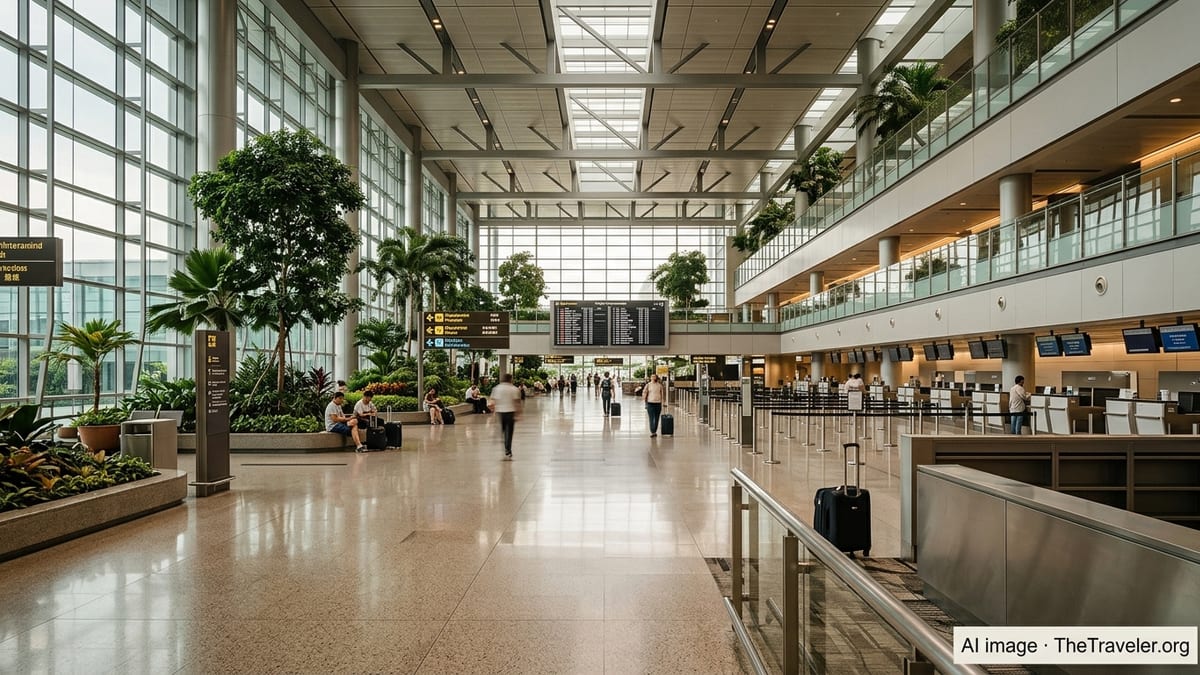
Singapore’s Changi Airport has consolidated its reputation for spotless terminals and meticulous hygiene, joining a select group of hubs in Japan, South Korea, Taiwan, Qatar, the United Arab Emirates and elsewhere that dominate the latest global rankings of the world’s cleanest airports for 2026.
Get the latest news straight to your inbox!
Asia’s Airports Tighten Their Grip on Cleanliness Rankings
Recent Skytrax-based rankings and related industry surveys for 2024 and 2025 show that Asia’s leading hubs continue to set the pace on airport cleanliness, a trend that is expected to carry into the 2026 lists. Japan’s Tokyo Haneda has repeatedly been recognised at or near the top, with Seoul Incheon, Singapore Changi, Doha’s Hamad International and Taipei’s Taoyuan International consistently appearing in the top tier of global cleanliness tables.
Singapore’s inclusion among the projected front-runners for 2026 reflects a pattern rather than a sudden leap. Publicly available data on past awards indicates that Changi has moved between second and third place in recent years on global cleanliness rankings, while also reclaiming the World’s Best Airport title for 2025. That combination of overall quality and hygiene performance positions the hub firmly among the world’s cleanest large airports.
Across the region, cleanliness is now treated as a core competitive metric alongside punctuality, retail and connectivity. Japanese airports such as Haneda, Narita, Kansai and Nagoya Centrair, together with South Korea’s Incheon and Taiwan’s Taoyuan, have all been repeatedly cited by Skytrax and other rankings for spotless interiors, high‑frequency cleaning routines and well‑maintained restrooms and gate areas.
For travellers, this means that itineraries routed through North and East Asian hubs are increasingly associated with consistent hygiene standards. The same few airports recur in independent rankings and media coverage, indicating a level of reliability that is unusual in such a fast‑growing sector.
Middle Eastern Hubs in Qatar and the UAE Raise the Bar
While Asian airports dominate the cleanest‑airport tables, hubs in the Gulf region have rapidly closed the gap. Doha’s Hamad International in Qatar and major airports in the United Arab Emirates, notably in Dubai and Abu Dhabi, are frequently highlighted in industry reporting for polished interiors, extensive maintenance operations and visible cleaning teams throughout terminals.
The Middle Eastern approach blends large‑scale investment in new infrastructure with an emphasis on immaculate presentation. Terminals are typically finished with hard‑wearing, glossy materials that both showcase architectural design and simplify cleaning. Wide concourses, uncluttered seating areas and integrated waste‑management systems make it easier to keep passenger spaces pristine, even during peak transfer banks.
Reports from aviation analysts suggest that Gulf hubs see cleanliness as part of a broader brand strategy. With a high proportion of long‑haul connecting passengers, airports in Qatar and the UAE compete aggressively on perception and comfort. Clean floors, odour‑free restrooms and well‑maintained prayer rooms, children’s zones and quiet areas form part of a deliberate effort to make transfers feel calm and orderly, despite heavy traffic volumes.
As 2026 rankings take shape, it is increasingly common to see the same Middle Eastern airports mentioned alongside long‑established Asian leaders. This reinforces the idea that the race for cleanliness is no longer regional but global, with Gulf hubs cementing their place near the top.
How Singapore Changi Earned Its Place Among the Cleanest
Singapore Changi’s rise into the very top tier of the cleanest‑airport rankings is closely tied to its broader transformation into a high‑tech, amenity‑rich gateway. Terminal design at Changi emphasises natural light, clear sightlines and generous circulation space, all of which support both passenger flow and the practical work of cleaning teams.
Publicly available information from airport documents and industry coverage describes a layered hygiene strategy. This includes frequent deep‑cleaning cycles in restrooms and high‑touch areas, extensive deployment of sensors to monitor usage levels, and rapid‑response crews to tackle spills and clutter before passengers notice. Automated systems, such as smart restroom indicators and centralised waste handling, help staff focus on visible quality rather than manual checks alone.
Changi also integrates greenery and water features, including its well‑known indoor garden spaces, without sacrificing cleanliness benchmarks. That balance requires careful material selection and maintenance routines, from non‑slip, easy‑to‑wash flooring to filtration systems that keep indoor air and water clear even under heavy visitor loads.
The result is a passenger environment that feels consistently tidy, from check‑in halls to security lanes and transit areas. As ranking organisations update their surveys for 2026, Changi’s track record across multiple years, combined with its latest upgrades, underpins its status alongside Japan, South Korea, Taiwan, Qatar and the UAE in any discussion of the world’s cleanest airports.
What “Cleanest Airport” Actually Measures
Although the phrase “cleanest airport” sounds straightforward, rankings typically fold a wide set of factors into a single score. Skytrax and similar survey‑based assessments ask passengers to rate the cleanliness of floors, seating, terminal air, washrooms, food courts and gate areas, as well as the condition of trolleys, signage and other shared equipment.
Hygiene performance during security screening and immigration is another recurring theme. Airports that perform well tend to keep queue areas uncluttered, bins regularly emptied and trays or screening surfaces wiped down frequently. Restrooms adjacent to these high‑traffic points are often refurbished ahead of other facilities, reflecting their impact on passenger perception.
Behind the scenes, clean‑airport leaders typically invest in staff training, cleaning robots or mechanised systems, and centralised monitoring of hygiene metrics. While such details seldom feature in marketing materials, they are increasingly discussed in trade publications and sustainability reports that outline how airports manage water use, chemical consumption and waste separation while keeping terminals spotless.
These underlying practices help explain why the same hubs repeatedly appear near the top of cleanliness rankings. Consistency over multiple survey cycles suggests that high scores are not the product of one‑off refurbishments, but of embedded operational routines and long‑term spending on facility upkeep.
Implications for Travellers and Competing Hubs
For travellers planning long‑haul itineraries into 2026, the clustering of cleanest‑airport titles in Singapore, Japan, South Korea, Taiwan, Qatar and the UAE has clear practical implications. Connections via these hubs often mean fresher restrooms, better air quality in crowded spaces and more orderly gate areas, which can significantly shape overall trip satisfaction.
Airlines that use these airports as primary hubs also benefit from association with strong hygiene standards. A transfer through a visibly clean, well‑maintained terminal reinforces brand messages about reliability and safety, even if those themes are not explicitly mentioned in marketing campaigns.
For competing airports elsewhere, the latest rankings serve as a benchmark and, increasingly, a warning. Passengers share experiences quickly on social media and review platforms, and visible lapses in cleanliness can now be contrasted in real time with images from top‑ranked hubs. This places pressure on operators in Europe, North America and other regions to modernise restrooms, streamline waste‑collection systems and adopt more data‑driven cleaning regimes.
As the 2026 awards season approaches, the cleanest‑airport race highlights a broader industry shift. Cleanliness, once treated as a basic expectation, has become a critical point of differentiation, and airports that invest in visible, consistent hygiene standards are emerging as the preferred gateways in an increasingly competitive global network.