

More news on this day
Singapore is pushing back the start of its planned green aviation surcharge, pausing the rollout of a sustainable aviation fuel levy just as conflict in the Middle East roils jet fuel prices and disrupts flight paths across the region.
Get the latest news straight to your inbox!
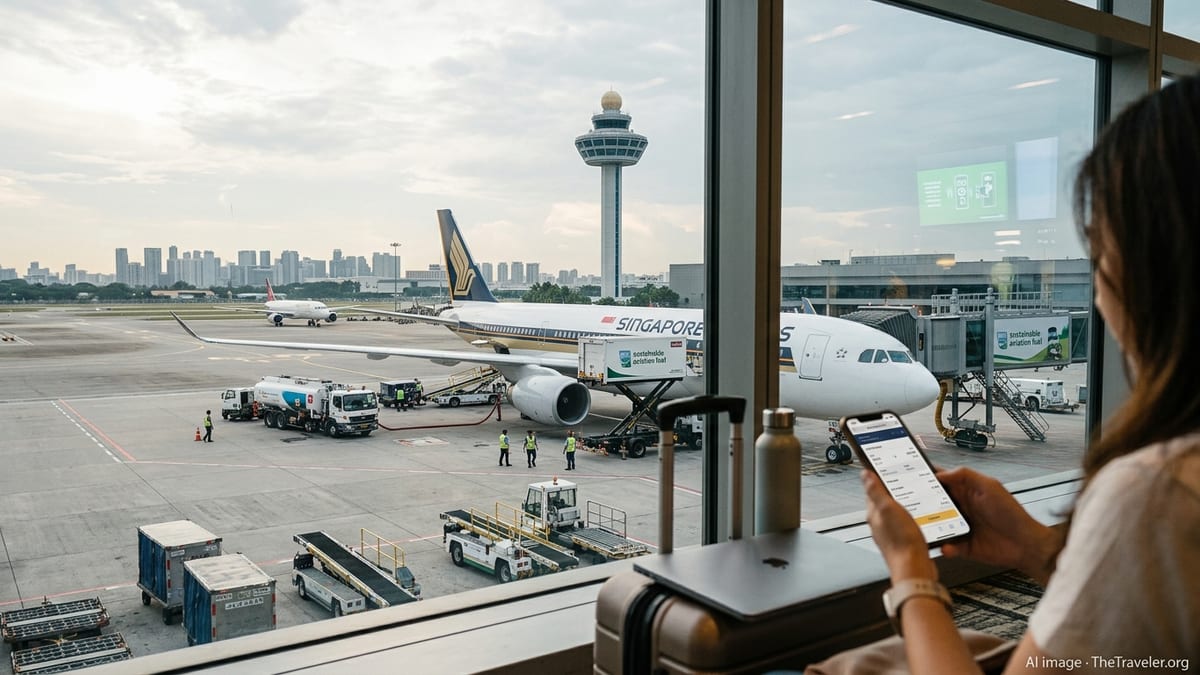
What Changed in Singapore’s Green Flight Plan
Singapore had been preparing to introduce a Sustainable Aviation Fuel levy on tickets for flights booked from April 1, 2026, with departures from Changi and Seletar airports later in the year. The charge was intended to support the use of cleaner jet fuels and help meet a national target for sustainable aviation fuel to account for around 1 per cent of total jet fuel use in 2026. Publicly available information indicates that the levy would have appeared as a separate tax line on tickets for passengers beginning their journeys in Singapore.
In late March 2026, authorities deferred the April rollout, citing the need to reassess the timing as jet fuel markets reel from the latest escalation in the Middle East. Reports from industry and policy circles suggest that planners are weighing how to balance environmental goals with the immediate cost pressures facing airlines and travelers.
The postponement does not mean Singapore is abandoning its aviation decarbonisation agenda. Government statements and earlier strategy documents continue to emphasise long term objectives such as expanding access to sustainable aviation fuel and aligning with global net zero targets for aviation by 2050. The delay instead reflects a recalibration in light of a rapidly shifting cost environment.
For now, this means that the extra green surcharge that was expected to appear on tickets booked from early April will not be applied, buying time for airlines and passengers already grappling with higher base fares linked to the fuel shock.
How the Middle East Conflict Is Hitting Jet Fuel and Air Routes
The decision to postpone the levy comes as the conflict involving Iran and other actors in the Middle East pushes energy markets into fresh turmoil. Analysis of recent market commentary shows that regional instability has tightened crude supplies, driven up risk premiums and contributed to a spike in jet fuel prices far above levels seen before the war.
Airlines across Europe, Asia and the Gulf are rerouting or suspending flights that would normally cross sensitive Middle Eastern airspace. Coverage from aviation and travel outlets highlights mass cancellations to some destinations, the diversion of long haul routes and, in some cases, the addition of refuelling stops in safer hubs such as Singapore. Longer flight times and detours translate directly into greater fuel burn and higher operating costs.
Some carriers, including European and Asia Pacific airlines, have already introduced fare increases and higher fuel surcharges in response to the jump in jet fuel prices. Reporting on Aegean Airlines in Greece, for example, describes modest fare hikes tied explicitly to the surge in fuel costs, while industry commentary notes similar moves by other carriers as they attempt to pass on part of the burden to passengers.
For a hub that sits at the heart of Europe Asia traffic flows, Singapore is particularly exposed to these dynamics. Even when flights do not cross conflict zones, disruptions to refineries and supply chains feeding the region, along with broader volatility in global oil markets, can push up the price of fuel uplifted at Changi.
What the Postponement Means for Ticket Prices Out of Singapore
Before the deferral, estimates circulating in Singapore’s policy and aviation community suggested that the sustainable fuel levy would add only a modest amount to most tickets. Earlier figures indicated possible increases of around a few Singapore dollars on short haul economy itineraries to regional destinations and under twenty dollars on long haul flights to Europe.
With the levy on hold, these specific green surcharges will not appear for now. However, travelers should not assume that overall ticket prices will fall. Airlines operating from Singapore are already contending with elevated jet fuel costs linked to the Middle East turmoil, and industry examples from around the world show that many carriers are using higher base fares and fuel surcharges to manage the impact.
Travel analysts note that the absence of the SAF levy may slightly soften the upward pressure on Singapore originating fares compared with what had been expected from April. Yet the dominant factor in pricing in the coming months is likely to be the cost of conventional jet fuel rather than environmental charges. The postponement essentially removes one planned cost increase, but it does not shield passengers from the broader energy shock.
For travelers, the key takeaway is that headline ticket prices out of Singapore will continue to reflect a mix of market forces. Any relief from the delayed levy may be offset, and in some cases overshadowed, by airline adjustments to cope with their rising fuel bills, especially on long haul routes that require more fuel or complex rerouting.
Practical Guidance for Travelers Using Changi Airport
Travel specialists recommend that passengers planning to depart from Singapore over the next several months pay close attention to fare conditions and the breakdown of taxes and surcharges on their receipts. While the specific SAF levy line will not appear for now, carriers may still adjust fuel surcharges or introduce other fees as conflict related volatility persists.
Booking earlier can help lock in lower fares before further cost pass throughs work their way into pricing. Some international travel coverage suggests that fuel driven increases can appear quickly once airlines update their revenue management systems, particularly on high demand summer and holiday routes. Flexible tickets and comprehensive travel insurance remain useful tools if itineraries are disrupted by route changes or further instability in the region.
Travelers with multi stop itineraries that rely on Middle Eastern hubs may wish to consider alternative routings through Southeast Asia or Europe where available, given ongoing capacity cuts and uncertainty on some Gulf corridors. Even when flights operate as scheduled, detours to avoid conflict zones can extend journey times, so passengers should allow additional connection buffers when planning tight transfers.
For those concerned about their environmental footprint, some airlines serving Singapore continue to market voluntary carbon offsets or optional contributions to sustainable fuel programs. These are separate from the postponed government levy and remain at the discretion of individual carriers and passengers.
Singapore’s Longer Term Green Aviation Ambitions
Despite the short term pause, Singapore’s broader strategy for greening its aviation sector remains in place. Policy documents and industry studies released in recent years describe a multi decade pathway that includes scaling up sustainable aviation fuel, exploring hydrogen and other low carbon technologies, and improving operational efficiency at Changi Airport.
Targets discussed in earlier plans include raising the share of sustainable aviation fuel beyond the initial 1 per cent level by 2030, in line with international moves to decarbonise flight. Singapore’s position as a major refining and trading hub in Asia is seen as both a challenge and an opportunity, with policymakers exploring how to attract investment into low carbon fuel production while managing the costs for airlines and consumers.
The current Middle East crisis has underlined a further argument made by some energy and transport analysts: that diversifying away from conventional jet fuel can also bolster long term energy security by reducing exposure to oil price shocks. Sustainable aviation fuel, synthetic fuels and alternative propulsion technologies are frequently framed not only as climate tools but also as buffers against geopolitical risk.
In this context, the postponement of the SAF levy looks less like a retreat and more like a tactical delay. Singapore is expected to revisit the timing and structure of the charge once energy markets stabilise and airlines have clearer visibility on their cost base. For travelers, that means the question is not whether green aviation surcharges will arrive, but when and in what form they will eventually return to the ticket.