

More news on this day
Travelers transiting Singapore Changi Airport are facing fresh disruption as four key departures have been cancelled on routes linking the hub with Melbourne, Kuala Lumpur, Bahrain and other regional destinations, according to recently published operational data and industry reports.
Get the latest news straight to your inbox!
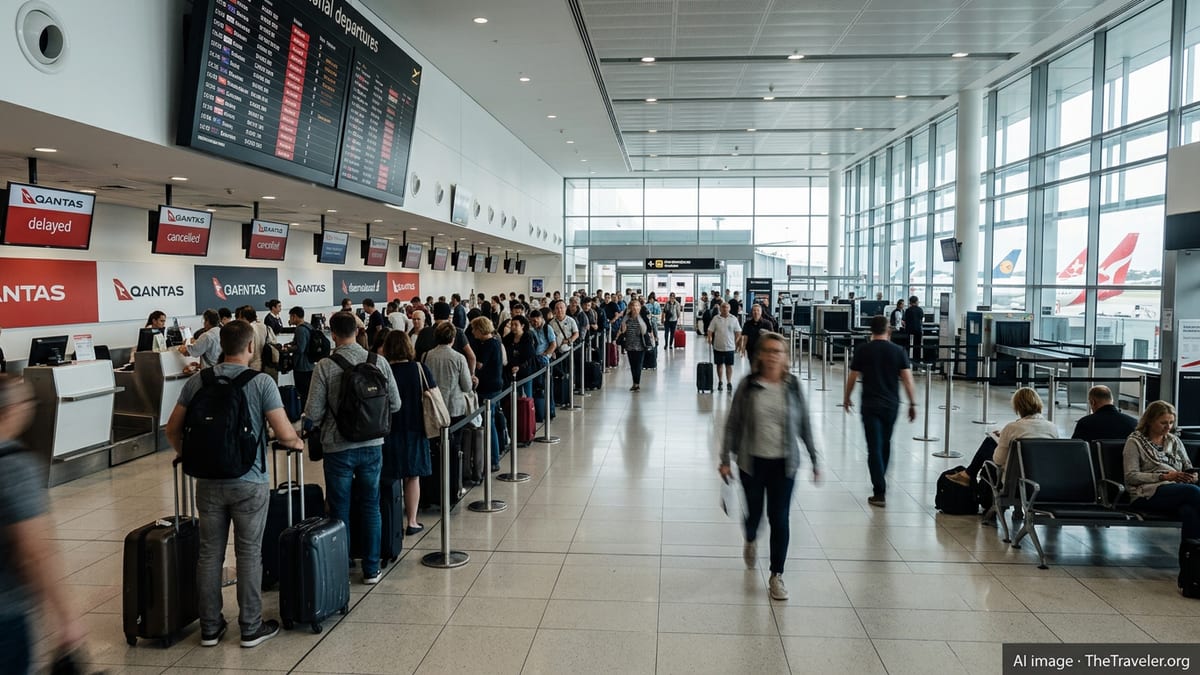
Four Cancellations Underscore Strain On Singapore Hub
Recent coverage of airline operations in Singapore indicates that four scheduled departures from Changi have been cancelled within a short window, affecting services operated or marketed by Qantas, Gulf Air and other carriers. The affected flights include links to Melbourne and Kuala Lumpur as well as connections to Bahrain and onward Gulf destinations, reducing options for both point to point and connecting passengers.
Singapore Changi functions as a critical way point for traffic between Australia, Southeast Asia and the Middle East, and the removal of even a small number of rotations can ripple across multiple itineraries. Publicly available flight status boards and aviation tracker data suggest that cancellations were concentrated on specific long haul and regional sectors rather than being part of a full scale schedule cut at the airport.
The cancellations come as airlines continue to adjust networks in response to evolving conditions in Gulf airspace and shifting demand patterns for Asia Europe and Asia Middle East travel. Singapore’s role as an alternative routing point for passengers avoiding certain Middle Eastern hubs has increased in recent weeks, heightening sensitivity to any reduction in capacity.
For travelers booked on the affected services, disruption has involved missed onward connections, last minute reaccommodation onto different routes, and in some cases forced overnight stays while waiting for new departures to become available.
Qantas Melbourne Link From Singapore Abruptly Withdrawn
Among the most visible changes is the cancellation of a Qantas operated service linking Singapore with Melbourne, identified in sector listings as QF38. Industry focused reporting notes that the withdrawal of this flight has created a noticeable gap on a route heavily used by Australian travelers connecting between Europe or Southeast Asia and Victoria’s capital.
Qantas had already been under scrutiny for a series of schedule adjustments and tactical cancellations across parts of its long haul network in 2026, reflecting aircraft availability constraints and the need to navigate disrupted routings through the Middle East. The loss of a regular Singapore Melbourne departure further tightens capacity on an already busy corridor, particularly on days when alternative services are heavily booked by rerouted passengers.
Travel search data and booking engine displays show that some passengers are being shifted onto other Qantas and partner airline departures via alternative hubs such as Sydney, Brisbane or Asian gateways including Bangkok and Hong Kong. This can add several hours of travel time and complicate baggage handling and transit formalities for those who had originally planned a more direct journey through Singapore.
Advisories from consumer groups in Australia recommend that passengers holding Qantas tickets involving Singapore and Melbourne in the coming days monitor their reservation status closely, as further rolling changes remain possible while the airline fine tunes its schedules.
Gulf Air Cancellations Tied To Bahrain Airspace Constraints
The situation for Gulf Air services involving Singapore and Bahrain is being shaped by wider operational challenges in the Gulf region. Official notices and trade advisories circulated to travel agents describe ongoing restrictions in Bahrain’s airspace following regional conflict, prompting network changes for the Bahraini carrier.
Recent industry documents outline revised ticketing and rebooking options for passengers affected by Gulf Air cancellations, including those traveling through Singapore and Bahrain. These materials reference a limited window for free changes and refunds for certain March departures, signaling that the airline has anticipated extended disruption to parts of its schedule.
Separate regional business reporting highlights that Gulf Air has been rerouting some operations via Saudi Arabia’s Dammam airport to maintain connectivity around blocked or tightly controlled airspace. While these workarounds help preserve links on some city pairs, they also introduce complexity and can reduce the feasibility of operating lower demand routes such as niche Singapore Bahrain sectors on certain days.
For travelers, the result is the cancellation of selected Gulf Air flights touching Singapore, as well as uncertainty around future rotations if airspace constraints persist. Passengers booked on these services are being encouraged through public advisories and airline notices to verify the latest status of their itineraries before departing for the airport.
Knock On Effects For Kuala Lumpur And Regional Connections
Alongside the headline routes to Melbourne and Bahrain, route maps and timetable summaries suggest that services connecting Singapore with Kuala Lumpur and other nearby Southeast Asian cities are also feeling indirect pressure. While not all of these flights have been cancelled, schedule tweaks and occasional same day withdrawals have been reported as carriers rebalance aircraft and crews.
The short hop between Singapore and Kuala Lumpur is a vital link for travelers stitching together multi segment itineraries between Australia, the Middle East and Europe. Any reduction in frequency or capacity on this corridor can quickly constrain the number of viable same day connections, especially during peak travel periods and around public holidays in the region.
Operational data from low cost and full service airlines active on the Singapore Kuala Lumpur route indicates that load factors have risen as passengers displaced from cancelled long haul services seek alternative ways to reposition. This can leave limited spare seats for late bookers and for travelers attempting to recover from missed connections, contributing to higher fares and tighter availability on key departure banks.
Travel planners note that passengers who normally rely on flexible same day changes between Singapore and Kuala Lumpur may now need to lock in confirmed seats earlier or consider alternative routings through other Malaysian or Indonesian gateways to secure their preferred timings.
What Travelers Transiting Singapore Should Watch Now
For those planning to travel through Singapore in the coming days, publicly available guidance from airlines and airports points to several practical steps. First, checking flight status repeatedly in the 24 hours before departure has become more important, as carriers reserve the option to adjust or cancel specific services at short notice in response to airspace updates or operational constraints.
Second, passengers on itineraries involving connections to or from Melbourne, Kuala Lumpur or Bahrain may wish to build in additional buffer time at Changi to accommodate potential delays, reaccommodation or gate changes. Travel insurance policies that cover missed connections and involuntary schedule changes can provide an extra layer of protection, although coverage terms vary widely.
Third, travelers who have the flexibility to choose between multiple routings might consider spreading risk by avoiding extremely tight connection windows or itineraries that depend on a single daily long haul service. Industry analysts note that itineraries with at least two alternative same day connections tend to be easier to rebook when disruptions occur.
Finally, observers of the regional aviation market suggest that the pattern of selective cancellations affecting Qantas, Gulf Air and other airlines at Singapore is likely to evolve in parallel with developments in Gulf airspace and broader geopolitical conditions. As a result, the situation remains fluid, and travelers are advised to treat current schedules as subject to revision rather than fully fixed well in advance.