

More news on this day
Air travel through Singapore remains under strain as a new wave of cancellations by Singapore Airlines, Qantas Airways, Malindo Air and other carriers has wiped out five additional flights, compounding a week of regional disruption for passengers heading to Melbourne, Kuala Lumpur, Bahrain and several other key destinations.
Get the latest news straight to your inbox!
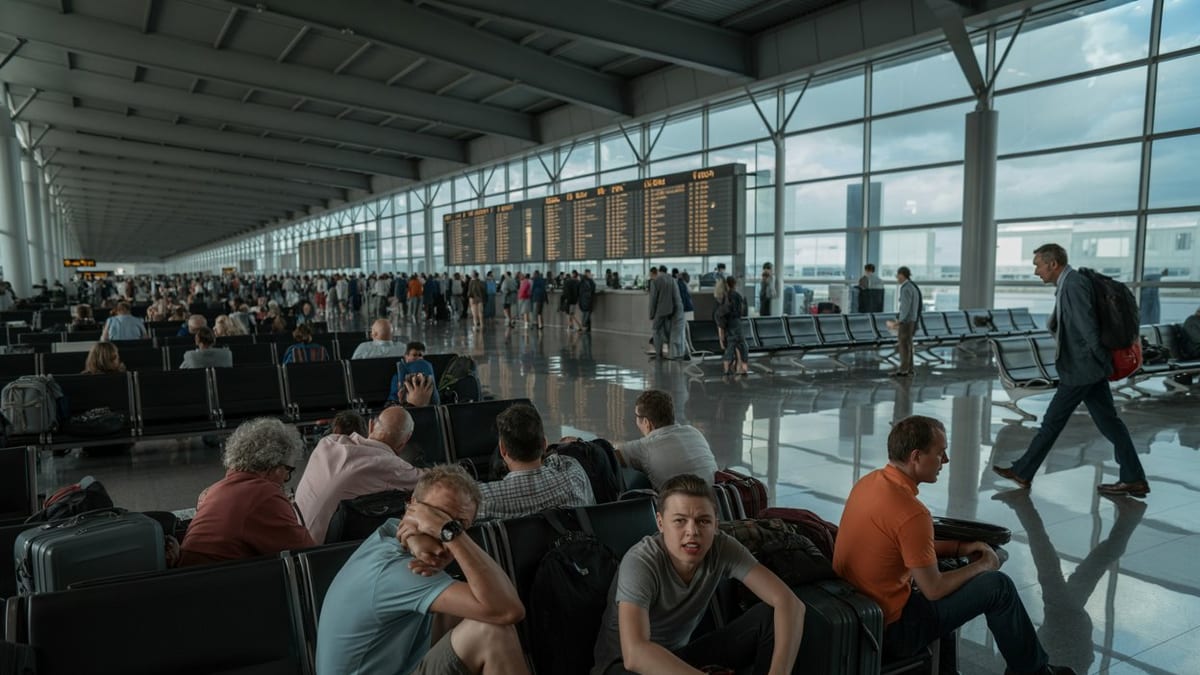
Image by Travel And Tour World
Fresh Cancellations Add to a Difficult Week at Changi
Publicly available flight data and industry coverage indicate that Singapore Changi Airport has seen a renewed cluster of cancellations affecting a mix of full service and low cost operators. The latest round, involving five more flights including services linked to Singapore Airlines, Qantas Airways and Malindo Air, follows earlier disruption that had already thinned schedules across Asia and the Gulf.
According to recent reports on regional aviation performance, Singapore has been part of a wider Asian pattern of irregular operations in recent days, with airports in Thailand, Japan, Indonesia, Malaysia and Gulf hubs all grappling with cancellations and delays. The new cancellations out of Singapore are concentrated on services connecting to Australia, neighboring Southeast Asian capitals and selected Middle East gateways.
Operational databases tracking day of departure movements show that while the absolute number of canceled flights at Changi remains modest compared with total daily traffic, the impact is magnified on routes where frequencies are limited or where aircraft are already operating close to capacity ahead of the Northern summer schedule.
For travelers, this has translated into missed onward connections, extended layovers and a scramble for remaining seats on alternative departures, particularly on popular corridors such as Singapore to Melbourne and Singapore to Kuala Lumpur.
Melbourne, Kuala Lumpur and Bahrain Among the Hardest Hit
Recent aviation and travel trade coverage highlights that the most visible fallout from the latest wave of cancellations has been felt on flights linking Singapore with Melbourne, Kuala Lumpur and Bahrain, along with several secondary cities in the region. These are markets where Singapore functions as a key transfer point, so each cancellation reverberates beyond a single point to point route.
Melbourne services have been in the spotlight because the city is a major long haul gateway for Southeast Asia and a critical link for both business and leisure traffic. Adjustments to timetables and capacity, combined with targeted cancellations, have reduced the options for passengers trying to move between Australia and Southeast Asia, especially on short notice.
Kuala Lumpur, normally one of the densest and most competitive short haul routes from Singapore, has also seen disruptions as different carriers recalibrate operations. Reports from regional media show Kuala Lumpur International Airport recording a mix of delays and cancellations in recent days, reflecting a knock on effect between the two hubs and the broader Southeast Asian network.
Bahrain sits within a separate band of disruption tied to instability and adverse weather across parts of the Gulf. Security assessments and travel risk bulletins released over the past week describe airspace interruptions and weather related challenges across Bahrain and neighboring states, circumstances that make operations more complex for airlines attempting to maintain Singapore linked services.
Multiple Causes: Regional Weather, Middle East Tensions and Operational Strain
Analysis of airline operations and travel risk briefings suggests there is no single cause behind the current pattern of disruptions. Instead, carriers using Singapore as a hub are contending with overlapping pressures that range from localized storms to the ongoing instability affecting airspace and airports in and around the Middle East.
Recent situation reports on the Gulf region describe a rare storm system bringing heavy rain and thunderstorms to parts of Saudi Arabia, Bahrain, Kuwait, Qatar, the United Arab Emirates and Oman. These conditions, combined with wider security concerns and airspace adjustments linked to regional tensions, have periodically slowed or suspended operations at several airports and forced complex rerouting of long haul traffic.
At the same time, Asia Pacific aviation has been experiencing tight aircraft and crew availability as airlines ramp up capacity for the coming peak travel season. Industry commentary notes that even minor technical issues or weather interruptions can therefore trigger larger knock on effects across networks, particularly where turnaround times are short and fleets are heavily utilized.
In this environment, Singapore based and foreign carriers alike are taking a cautious approach when reliability cannot be guaranteed, opting to preemptively cancel or consolidate flights rather than risk extended rolling delays that could tie up aircraft and crews for days.
What Travelers Through Singapore Need to Know Now
For passengers heading to or transiting through Singapore in the coming days, publicly available guidance from airlines, insurers and travel risk consultants emphasizes the importance of proactive planning and constant monitoring of flight status. With five additional flights already removed from schedules and further tactical cancellations still possible, same day itineraries that rely on tight connections are more vulnerable than usual.
Travel advisories issued this month encourage customers to check airline apps and official status pages repeatedly in the 24 to 48 hours before departure, as most last minute schedule changes are being reflected digitally first. Many carriers serving Singapore have also activated flexible rebooking policies on affected routes, allowing passengers to move to alternative dates or nearby gateways where seats are available.
Insurance providers focusing on the Singapore market have recently reminded policyholders that coverage for missed connections, delays and cancellations can vary significantly between products. Travelers are being advised, through published notices, to review terms carefully and keep documentation of any disruption, such as airline notifications or boarding passes, in case a claim is needed.
Those already en route or stranded in transit are being encouraged by consumer advocates and travel writers to speak with airport based customer service teams as soon as cancellations are announced, since accommodation, meal vouchers and rebooking options are often distributed on a first come, first served basis when large numbers of passengers are affected.
Outlook for the Days Ahead
Industry observers tracking airline scheduling feeds expect conditions at Singapore to remain fluid in the short term. While there are signs that some regional operations are stabilizing after the most acute disruption earlier in the week, the combination of unsettled weather, sensitive airspace in parts of the Middle East and tight aircraft rotations leaves little margin for error.
Forward schedules show airlines still planning to grow capacity through Singapore on a number of trunk routes in the months ahead, including enhanced services to Australian and Southeast Asian cities. However, capacity growth does not necessarily translate into day to day reliability when external shocks, such as storms or sudden airspace changes, intervene.
For now, the cancellation of five more flights touching Singapore, Melbourne, Kuala Lumpur, Bahrain and adjacent markets underscores how quickly conditions can shift across interconnected networks. Travelers who build extra time into itineraries, stay flexible on routing and remain alert to schedule changes are likely to fare better as airlines work to steady operations through one of Asia’s busiest hubs.