

More news on this day
Singapore is tightening its grip on Asia’s cruise crown as anticipation builds for Quantum of the Seas and other major vessels to return in 2027, with new regional sailings expected to intensify demand across Thailand, Japan, Vietnam, Malaysia and Hong Kong in a powerful boost to tourism and port economies.
Get the latest news straight to your inbox!
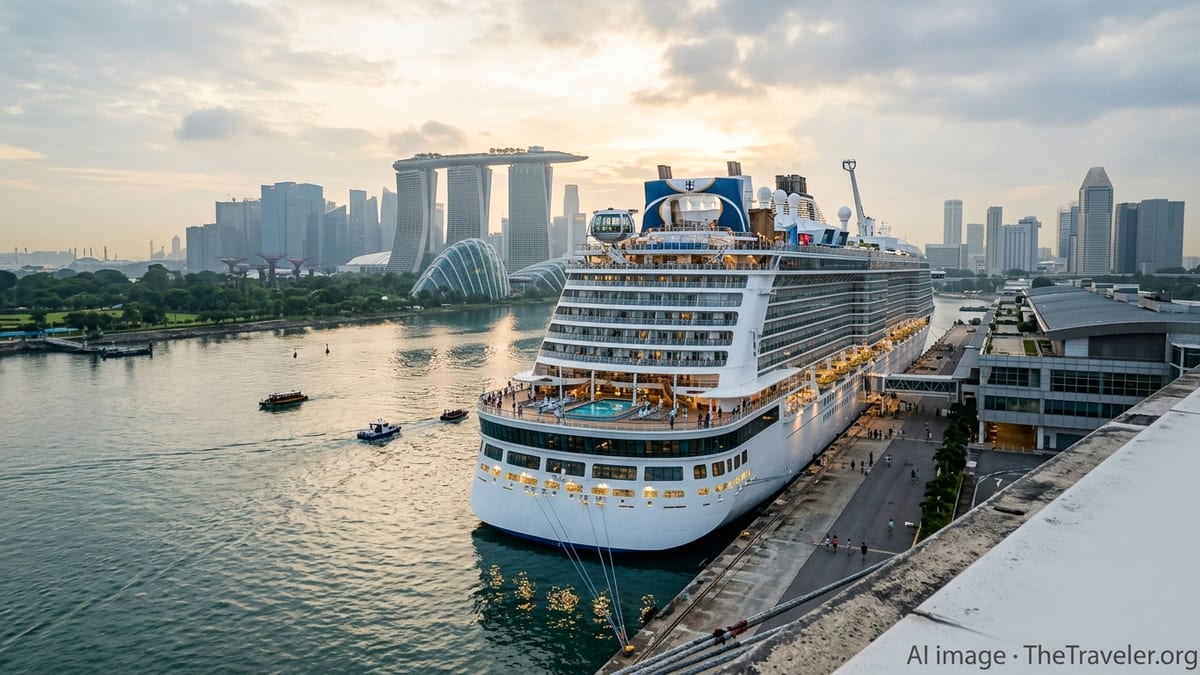
Singapore’s Cruise Hub Ambitions Enter a New Phase
Singapore has steadily positioned itself as Southeast Asia’s primary homeport for large cruise ships, and 2027 is emerging as a pivotal year in that strategy. Industry deployment schedules and trade coverage point to a continued build-up of capacity in the Lion City, with Royal Caribbean’s Quantum-class hardware central to that growth narrative. The market is already seeing expanded seasonal deployments through 2026, setting the stage for longer and more far-reaching Asia itineraries out of Marina Bay Cruise Centre.
While full Quantum of the Seas schedules for late 2026 and 2027 are still being rolled out in waves, planning documents and historical deployment patterns indicate a strong likelihood that Singapore will again anchor the ship’s regional operations. The city-state’s efficient terminals, strong air connectivity and well-established tourism infrastructure make it an attractive base for itineraries combining Southeast Asia, East Asia and key gateway ports such as Hong Kong.
Singapore’s broader cruise ecosystem has also been scaling up. Recent seasons have already seen large ships homeporting for extended periods and testing more complex routings, including longer sailings that stretch beyond traditional three- to five-night regional getaways. That trend is expected to continue toward the 2027 season, opening space for more ambitious itineraries connecting multiple Asian subregions on a single voyage.
Quantum-Class Firepower Set to Reshape Asian Itineraries
Quantum of the Seas, one of Royal Caribbean’s flagship vessels, has long been a symbol of the line’s ambitions in Asia. Publicly available deployment summaries show the ship operating between Southeast Asia and other regions in recent years, reinforcing its role as a flexible asset capable of serving both established and emerging markets. For 2027, industry expectations point to a renewed focus on Asia-based sailings that could see Quantum tracing high-demand routes from Singapore across the Gulf of Thailand and into the wider Asia Pacific.
In practice, this is likely to mean a mix of shorter regional cruises paired with longer, so-called “explorer” itineraries. Historically, Singapore-based sailings for large Royal Caribbean ships have combined ports such as Port Klang and Penang in Malaysia with Phuket in Thailand, extending on some departures to Vietnam and Hong Kong. The 2027 deployment window is expected to retain and expand on those patterns, while also setting up potential repositioning cruises between Singapore and Japanese gateways.
Quantum-class ships bring substantial passenger capacity and onboard spending power into every port they visit. Their return to an Asia-centric schedule in 2027 would signal a clear commitment to growing the region beyond pre-pandemic levels, with itineraries designed to appeal both to regional travelers and long-haul fly-cruise guests from North America and Europe seeking multi-country Asian journeys in a single trip.
Thailand, Vietnam and Malaysia Brace for Tourism Surge
Ports in Thailand, Vietnam and Malaysia are preparing for a renewed wave of cruise arrivals as capacity builds toward 2027. Penang, Port Klang and other Malaysian gateways have already benefited from repeated calls by large ships in recent seasons, creating a foundation of shore excursion operators, transport links and hospitality services that can scale up as volumes grow. Additional calls by Quantum of the Seas and sister vessels would deepen that infrastructure and support higher-yield tourism segments.
In Thailand, Phuket continues to feature prominently on regional cruise maps, with itineraries often combining beach-focused shore time with cultural experiences in nearby islands and towns. By 2027, frequent calls from Singapore-based ships are expected to reinforce Phuket’s dual role as both a resort destination and a cruise transit hub, encouraging investments in tender operations, port access and visitor handling facilities.
Vietnamese ports are also poised to gain from the evolving deployment landscape. Popular stops such as Da Nang, Nha Trang and Ha Long Bay have been increasingly present on Asia cruise lineups, and additional capacity from large international ships would channel higher-spending guests into local tours, food and retail businesses. The cumulative effect of more consistent, high-volume arrivals across these three countries could be a notable uplift in regional tourism receipts tied directly to cruise travel.
Japan and Hong Kong Reconnect With Southeast Asia by Sea
Japan and Hong Kong are emerging as strategic endpoints for longer Asia sailings that begin or end in Singapore. Recent deployment material for other Royal Caribbean ships already highlights multi-week routings connecting Tokyo, Osaka and Okinawa with Hong Kong and Southeast Asia, providing a template for what Quantum of the Seas could mirror or expand upon in 2027. These routes appeal to travelers seeking more in-depth exploration of the region without multiple separate flights.
Japan’s cruise ports have been working to accommodate larger vessels and increasing passenger volumes, and by 2027 are expected to be further integrated into pan-Asian cruise networks. Sailings that link Japanese cities with Singapore, via Vietnam and the South China Sea, promise a varied coastal narrative that combines heritage cities, modern megapolis skylines and island landscapes in a single itinerary.
Hong Kong, long a key player in Asia’s cruise market, is also set to benefit from stronger maritime ties with Singapore. Its role as both a turnaround port and a marquee call on longer itineraries positions the city to capture higher-value pre- and post-cruise stays. For passengers, the ability to sail between two of Asia’s most advanced city-states while calling at a string of resort and heritage destinations in between adds a powerful draw that could help sustain year-round demand.
Economic Stakes Rise as Asia Cruise Market Accelerates
The anticipated 2027 return of Quantum of the Seas to a Singapore-centered program comes as Asia’s cruise sector shifts from recovery to expansion. Trade data and deployment announcements across multiple lines indicate a clear intention to restore and exceed pre-2020 capacity in the region over the next several years. Large, amenity-rich ships are central to that strategy, concentrating thousands of passengers per call and driving spending not only in ports but also in aviation, hotels and related services.
For destination countries such as Thailand, Vietnam, Malaysia, Japan and the Hong Kong Special Administrative Region, the stakes are significant. Expanded cruise schedules can help diversify tourism flows, spreading demand beyond traditional city breaks and beach holidays into secondary cities and lesser-known coastal areas. Ports that successfully adapt infrastructure and visitor management to handle larger ships stand to attract repeat deployments and higher-profile itineraries.
Singapore’s role as a catalyst for this shift is likely to grow as 2027 schedules firm up. With strong government support for cruise tourism, a modern terminal and comprehensive air links, the city is well placed to anchor increasingly complex Asia routes that knit together multiple national markets. As Quantum of the Seas and other major vessels chart new courses through the region, industry observers expect the resulting network of sailings to play a prominent part in Asia’s broader tourism surge in the second half of the decade.