

More news on this day
Travel between Europe and Asia is set for a further lift as Singapore Airlines prepares to double its daily flights between Singapore Changi and London Gatwick from March 2025, creating a stronger direct corridor between Southeast Asia and the United Kingdom’s second‑busiest airport.
Get the latest news straight to your inbox!
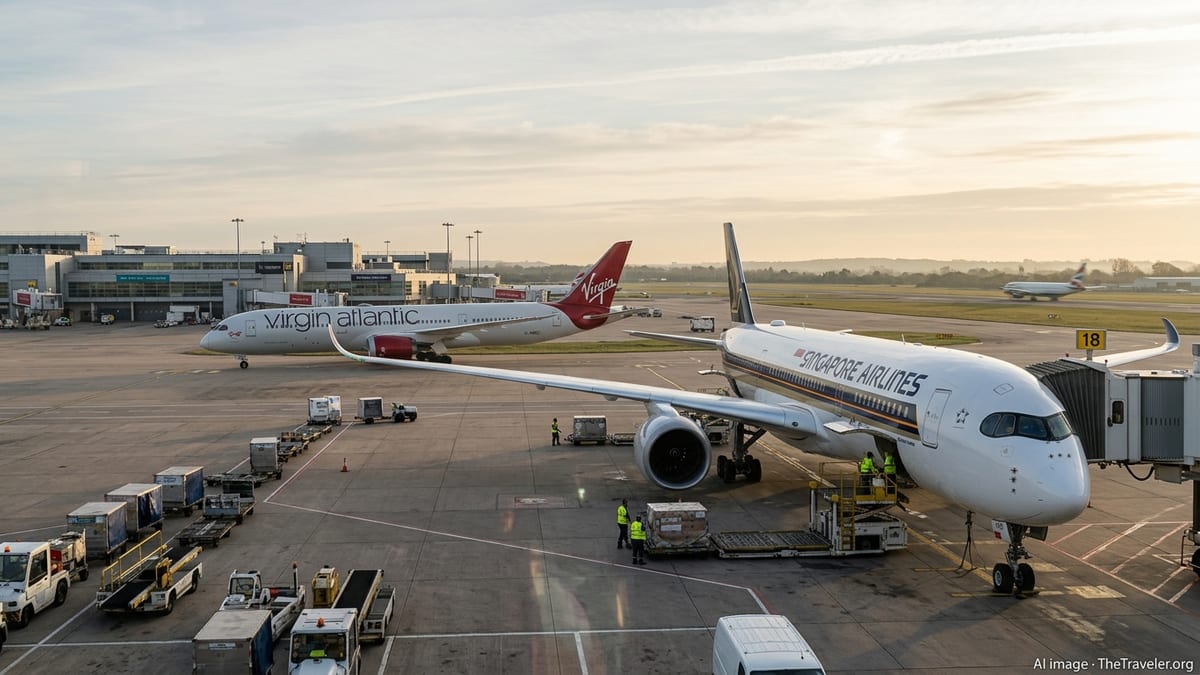
From Five Weekly to Double Daily at Gatwick
Publicly available schedules indicate that Singapore Airlines will increase its Singapore–London Gatwick operation to a daily service for the Northern Summer 2025 season, building on its current five-times-weekly pattern. The airline’s published schedules show that flights SQ312 and SQ309 will operate every day between 30 March and 26 October 2025, using Airbus A350-900 aircraft configured for long-haul service.
The move effectively doubles the number of daily Singapore Airlines departures linking Greater London and Singapore when combined with the carrier’s extensive London Heathrow schedule. While Heathrow remains the airline’s primary UK gateway, Gatwick’s growing long-haul portfolio is giving Southeast Asian travelers an alternative point of access to London and southern England, and providing UK-based passengers with more options for reaching Asia and onward destinations.
According to the airline’s earlier launch timetable, Singapore–Gatwick flights began in June 2024 with five weekly services. The transition to daily operations is being presented in company materials as part of a broader capacity boost across the network for the peak mid‑year period, with increased frequencies also flagged to European destinations such as Barcelona, Milan, and Rome.
Industry analysts view the step-up at Gatwick as a sign that the route has gained traction quickly with both leisure and corporate travelers. The double-daily pattern across London is expected to give Singapore Airlines more flexibility in balancing demand between Heathrow and Gatwick while maintaining a strong presence in the UK capital’s highly competitive long‑haul market.
Strengthening Direct Europe–Asia Connectivity
The increase in Gatwick frequencies is positioned to enhance direct connectivity between Europe and Asia beyond point‑to‑point traffic. Singapore Changi functions as a major transfer hub, and additional seats into the London market are likely to support one‑stop itineraries to Australia, New Zealand, Southeast Asia, and parts of North Asia.
For European travelers, the expanded schedule opens up more same‑day connections from London via Singapore, particularly for long‑haul journeys to cities such as Sydney, Melbourne, and key destinations in Indonesia, Thailand, and Vietnam. Changi’s role as a transit airport, with high on‑time performance and short minimum connection windows, means the extra daily Gatwick flight can translate into more viable itineraries within a single travel day.
On the return leg, passengers originating in Asia and Oceania gain increased choice of arrival times in London and more opportunities to access southern England directly rather than routing through Heathrow. For some travelers, Gatwick’s location and rail connectivity can provide a shorter overall journey to cities along the south coast and to parts of the Midlands.
The shift also comes as Changi Airport continues to report strong passenger growth, with recent figures showing traffic volumes surpassing pre‑pandemic levels. In that context, each additional widebody frequency into key European gateways is part of a larger capacity rebuild that links Asia’s major hub airports with Europe’s diversified network of long‑haul points.
Why Gatwick Matters for Travelers
London Gatwick has been positioning itself as a competitive long‑haul alternative to Heathrow, supported by ongoing infrastructure and airspace initiatives to increase capacity. The airport’s promotion of its Northern Runway project has highlighted airline interest in additional slots, and correspondence made public during the planning process shows Singapore Airlines expressing support for the scheme and filing for daily slots to underpin its London growth plans.
For passengers, Gatwick offers several practical advantages. The airport is compact relative to Heathrow, which can shorten walking distances and time spent navigating between landside and airside. Frequent rail services link Gatwick to central London and to destinations such as Brighton, with dedicated airport trains and regular mainline services providing journey times of around half an hour to the capital’s Victoria station in typical off‑peak conditions.
Travelers originating in the south and southeast of England may also find Gatwick more accessible by road, particularly from counties such as Sussex, Kent, and Surrey. For these passengers, the expansion of long‑haul schedules at Gatwick means fewer trips across London to reach Heathrow, and a reduced need to route via European hubs when flying to Asia and Oceania.
From a network perspective, the additional Singapore flights reinforce Gatwick’s status as a growing base for intercontinental services. Other carriers in recent years have added or resumed long‑haul routes from the airport, contributing to a broader mix of options for UK travelers seeking alternatives to Heathrow’s congested environment.
Capacity, Competition and Scheduling Flexibility
Doubling daily connectivity between Singapore and the London area reflects wider competitive dynamics on Europe–Asia corridors. Airlines based in the Gulf, Turkey and Europe’s major hubs continue to contest traffic between the UK and Asia, often relying on attractive fares and extensive onward networks. By strengthening non‑stop capacity into London, Singapore Airlines can appeal to time‑sensitive travelers and those who prefer to minimize the number of flight segments.
The daily Gatwick service also gives the carrier a more balanced schedule across the day. Timetables show overnight departures from Singapore, arriving at Gatwick in the early morning, with return services leaving mid‑morning and arriving back at Changi the following morning. This pattern suits both business travelers, who value early morning arrivals in London, and leisure passengers who prefer overnight sectors on long‑haul flights.
In commercial terms, the additional frequencies provide more scope for revenue management, including the ability to offer greater flexibility on corporate contracts and to segment demand across different cabins. The Airbus A350-900 long‑haul layout used on the route delivers a mix of Business, Premium Economy and Economy seating, allowing the airline to target a range of price points without introducing additional aircraft types into the London operation.
For the broader market, the extra capacity may contribute to more stable pricing on certain Singapore–London travel dates, particularly during peak summer weeks when demand from both directions is high. While fare levels will remain subject to broader yield management strategies and competitor moves, more seats on a nonstop route typically expand choice for consumers.
Implications for Future Europe–Asia Travel Patterns
The development at Gatwick adds to a gradual reshaping of Europe–Asia travel patterns in which secondary or alternative airports within major metropolitan areas are playing a larger role. As primary hubs reach slot saturation, carriers are increasingly looking to airports such as Gatwick to secure growth opportunities while still serving core cities.
If the daily Gatwick operation proves successful across multiple seasons, observers expect it could encourage other Asian airlines to evaluate similar services, whether from Singapore or other regional hubs. Gatwick’s evolving long‑haul mix, combined with intensifying competition across Europe–Asia markets, may lead to further announcements as airlines reassess their London footprints.
For travelers, the clearest short‑term effect will be on convenience. Additional non‑stop flights between Singapore and London expand the window of departure and arrival choices, improve the chances of finding suitable connections onward in both directions, and offer an alternative airport for entering or leaving the UK capital. As published schedules for 2025 take shape, the Singapore–Gatwick route’s upgrade to daily service stands out as one of the more significant Europe–Asia capacity moves involving a non‑Heathrow London gateway.