

More news on this day
The Singapore Tourism Board has moved swiftly to assist foreign visitors stranded by the sudden closure of key Middle East air corridors, arranging a special flight from Singapore to Muscat, Oman, to provide a safe onward route for travelers whose plans were thrown into disarray.
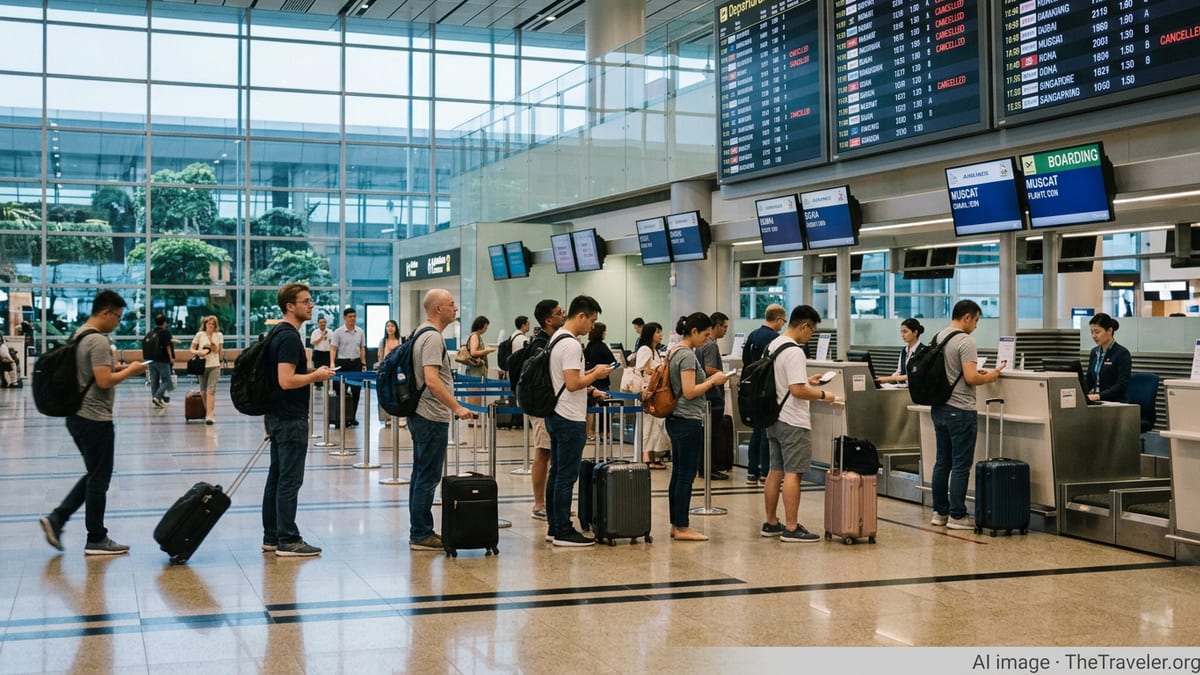
Rapid Response to Middle East Airspace Shutdown
The special service, operated on March 8, 2026, departed Singapore Changi Airport at 5.30 a.m. local time for Muscat International Airport, creating a critical bridge for travelers whose original flights had been canceled or rerouted due to regional airspace restrictions. The move followed widespread disruption across multiple Middle Eastern hubs after escalating tensions triggered airspace closures and large-scale schedule upheavals.
Singapore authorities framed the flight as an emergency facilitation measure rather than a commercial route launch, emphasizing its role in alleviating immediate pressure on stranded passengers. Seats were made available to eligible foreign visitors already in Singapore who needed to reach Muscat as an alternative hub to reconnect to Europe, the Middle East and beyond.
The initiative was announced just two days before departure, underscoring how rapidly conditions in the region had evolved. While airlines and governments across Asia and the Middle East scrambled to reconfigure networks and mount repatriation services, Singapore leveraged its position as a major transit point to provide an interim pathway for affected travelers.
How the Special Muscat Service Was Organized
According to statements issued by the Singapore Tourism Board, the special flight was coordinated in close partnership with airline and airport stakeholders, with Changi Airport Company and ground-handling teams working on an accelerated timeline. Priority was given to foreign visitors who had been stranded in Singapore after their connections through Middle Eastern hubs were canceled, particularly those with time-sensitive travel needs.
Registrations for the flight were handled through dedicated contact points publicized by the tourism authority, which also worked with foreign missions in Singapore to identify and group affected nationals. Travelers were required to hold valid onward tickets from Muscat or have credible onward travel plans, reflecting the flight’s role as a connection enabler rather than a tourism promotion exercise.
To manage demand, authorities advised that capacity on the Muscat service was limited and could not accommodate every stranded visitor who expressed interest. Some travelers who turned up at Changi hoping for last-minute seats were unable to board, highlighting both the scale of the disruption and the constraints of mounting an ad hoc operation during a regional aviation crisis.
Muscat’s Role as an Alternative Regional Hub
Muscat International Airport was selected as the destination for the special service because it remained open to commercial flights and offered onward connectivity to key markets despite the wider airspace restrictions. Oman’s capital has long served as a secondary Middle East hub, and during the latest crisis it emerged as a practical alternative for rerouting passengers around closed or congested corridors.
The choice of Muscat also reflected coordination with regional authorities, as local airport operators temporarily prioritized scheduled commercial services and government-linked operations over discretionary traffic. With private and charter flights curtailed to preserve runway and airspace capacity, structured services such as the Singapore-operated flight were more likely to secure slots and handling support.
For travelers, the routing via Muscat meant additional planning, including rebooking onward flights and adjusting accommodation and insurance coverage. Nonetheless, for many stranded in Singapore with no viable direct links back through the Middle East, the Muscat option represented one of the few realistic ways to resume their journeys within days rather than weeks.
Protecting Singapore’s Reputation as a Reliable Transit Hub
Tourism and aviation analysts noted that the Singapore Tourism Board’s intervention went beyond immediate crisis management and was also about protecting Singapore’s long-term standing as a dependable gateway between Asia, the Middle East and Europe. Changi Airport routinely handles large volumes of transit traffic, and prolonged disruption without visible support measures risked denting traveler confidence.
By organizing a targeted relief flight, Singapore signaled that it was prepared to step in when global shocks affect passengers who happen to be in its territory, even if they are not citizens or residents. The move complemented separate government-led efforts to assist Singaporeans in the Middle East, including a planned military-operated flight to support repatriation from affected countries.
Industry observers said the episode could strengthen Singapore’s case as a resilient hub that can adapt quickly to sudden geopolitical or operational shocks. The ability to marshal tourism, aviation and diplomatic resources in a matter of days, they added, would likely be remembered by both airlines and travelers when considering future routing choices.
What Stranded Travelers Need to Know Now
With the special Muscat flight now completed, authorities are monitoring whether further ad hoc services may be needed if airspace restrictions persist or expand. Travelers currently planning or undertaking journeys that would normally pass through Middle Eastern hubs are being urged to maintain close contact with their airlines, which hold the latest information on route changes, cancellations and rebooking options.
Foreign visitors still in Singapore whose travel plans have been disrupted are advised to stay in touch with their embassies or consulates, as diplomatic missions often coordinate with local authorities on group solutions or priority travel arrangements during regional crises. Travel insurers may also provide guidance on coverage for rerouting and extended hotel stays arising from airspace closures.
For now, the Singapore Tourism Board is positioning the March 8 operation as part of a broader, evolving response to an unsettled aviation environment. While there is no indication that the Muscat service will become a regular route, officials have left the door open to similar targeted interventions if circumstances require, reinforcing Singapore’s role as an active partner in keeping global travel moving safely even amid geopolitical turbulence.