

More news on this day
Corporate travel across Southeast Asia is entering a new phase of selective, sustainability focused and higher value trips, with Singapore’s latest policy moves highlighting how regional hubs from Malaysia and Indonesia to Thailand and the Philippines are recalibrating priorities for frequent flyers and travel managers.
Get the latest news straight to your inbox!
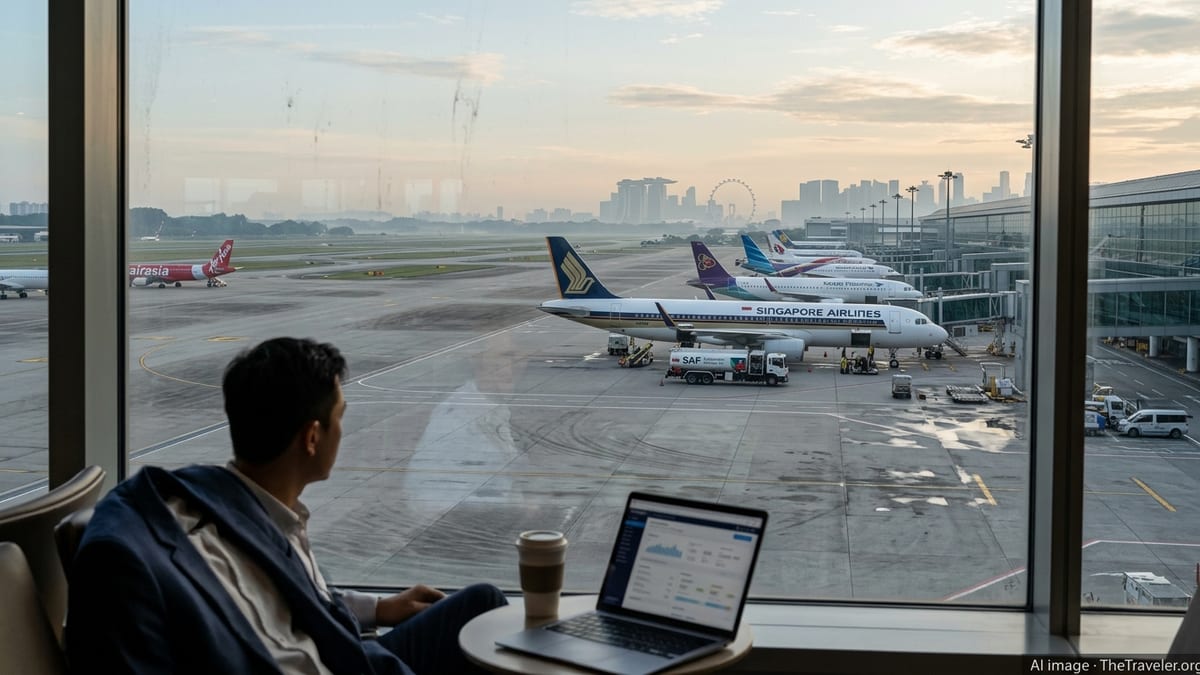
Singapore’s Sustainable Aviation Push Redefines Business Trip Economics
Singapore’s decision to introduce a dedicated levy to fund sustainable aviation fuel has become a reference point for corporate travel programs across the region. Publicly available information shows that the levy, which scales with cabin class and distance, is designed to make low carbon flying a default part of the cost base rather than a niche add on for environmentally focused companies. For firms routing executives through Singapore, this effectively prices carbon into each itinerary and forces closer scrutiny of when and how often to fly.
The move lands at a time when global corporate travel surveys indicate that nearly half of travel managers now prioritize airlines using sustainable aviation fuels or offering measurable emissions reductions. By making sustainable aviation a system wide feature rather than an optional offset, Singapore is aligning its role as a regional aviation hub with the emerging expectations of multinational procurement teams and ESG committees.
Singapore’s tourism and business events authorities have also underlined their growth ambitions in meetings, incentives, conferences and exhibitions, with publicly available planning documents pointing to a longer term goal of sharply increasing receipts from this segment. For travel managers, that combination of sustainable fuel policies and a deep meetings infrastructure is turning Singapore into a test bed for new travel policies that balance cost, carbon and commercial impact.
For frequent flyers based in Singapore or connecting through the city, the consequence is a shift away from routine short hops toward fewer, more purposeful trips. Itineraries are increasingly built around multi day regional swings, combining several client meetings and internal events into a single journey to justify higher fares and sustainability related levies.
Regional Hubs Tighten Budgets While Protecting High Value Travel
Across Southeast Asia, cost control has become as important as volume recovery. Recent global research from corporate booking and expense platforms indicates that more than eight in ten business travelers have seen their companies cut back on previously common perks such as overnight stays to avoid early flights, premium cabin bookings and non client facing trips. This pattern is visible in policy updates issued by large employers in Malaysia, Indonesia, Thailand and the Philippines, where approvals for travel are increasingly tied to revenue impact or critical operations.
At the same time, business travel spending has not disappeared. Studies from consultancy and card network analysts show that companies are channeling budgets into fewer, but longer and higher value journeys. In practice, this means regional managers flying less often between Kuala Lumpur, Jakarta, Bangkok, Manila and Singapore, but staying longer when they do travel, combining sales calls, site visits and internal workshops in one block.
Singapore’s status as the largest business travel market in South and Southeast Asia by demand has reinforced this pattern. Data from regional business travel reviews indicate that multinational firms are consolidating regional meetings and training events in the city, while using secondary hubs such as Bangkok and Kuala Lumpur for market specific engagements. This concentration enables tighter control over hotel, airline and venue contracts, but it also increases pressure on travelers to maximize productivity on every trip.
For travel managers, the operational focus has shifted from getting volumes back to pre pandemic levels to building frameworks that define which journeys are essential. Guidance documents now commonly distinguish between revenue generating, strategic relationship building and internal coordination trips, with only the first two categories consistently approved for international travel in and out of Singapore and its neighboring markets.
Sustainability and Duty of Care Reshape Policy Across ASEAN
The sustainability agenda is moving quickly up corporate travel priority lists in Southeast Asia. Industry commentary drawing on multiple global surveys suggests that around half of organizations are actively reworking travel programs to mitigate environmental impact, whether through supplier choice, carbon budgets, or stricter trip justification thresholds. Singapore’s sustainable aviation levy has sharpened this discussion by attaching a clear cost to greener flying at the ticket level.
In Malaysia, Indonesia, Thailand and the Philippines, the conversation is playing out through softer measures such as preferential contracting with airlines that publish emissions data, the use of modern, fuel efficient fleets on key business routes, and the rollout of internal guidelines encouraging rail or virtual meetings for shorter distances where possible. While infrastructure limits mean air travel remains dominant, travel managers report that executive buy in for emissions conscious decision making is higher than it was even a year ago.
Duty of care considerations are adding another layer of complexity. Published analyses of corporate travel in 2025 highlight growing expectations around traveler well being, including limits on back to back overnight flights, minimum rest periods after long haul sectors and safeguards around regional connections. For heavy users of Singapore’s hub, this has translated into policies that favor fewer red eye connections and more direct flights, even when those options are marginally more expensive.
Travel risk, from geopolitical tensions to extreme weather events, is also shaping routing decisions. Companies with large footprints in Indonesia’s industrial regions or Thailand’s resort economies increasingly route staff through well resourced hubs such as Singapore and Kuala Lumpur, where airport facilities, medical access and alternative flight options are more robust. This risk aware routing, combined with sustainability filters, is redefining how itineraries between Southeast Asian capitals are constructed.
Business Travel Demand Returns, But With a New Profile
Tourism and hospitality data across ASEAN show that business travel volumes are now close to, or above, pre pandemic levels in several markets, but the mix has changed. Reports on Southeast Asia’s hospitality sector describe Singapore and Thailand as leading the regional recovery, with high occupancy in city hotels attributed not only to leisure travelers but also to conferences, exhibitions and corporate meetings.
Malaysia and Indonesia have seen solid rebounds in both domestic and regional corporate traffic, helped by low cost carriers rebuilding networks between secondary cities and major hubs. Airlines in Thailand and the Philippines have also been expanding regional connectivity, targeting routes that link manufacturing zones, technology corridors and financial centers rather than focusing solely on beach destinations.
Published regional tourism outlooks highlight the growing importance of intra ASEAN travel, with travelers from neighboring countries such as Malaysia, Indonesia, Thailand and the Philippines accounting for a large share of international arrivals in Singapore. For corporate travelers, this translates into denser schedules of short haul flights, more cross border project teams and a rising number of multi stop itineraries that stitch together meetings in several countries in a single trip.
At the same time, premium cabin demand tied to executive and client facing travel is proving resilient. Surveys of frequent business travelers indicate that while upgrades and business class travel have been curtailed for mid level staff, senior executives and revenue critical roles are still flying in premium cabins, especially on long haul routes from Singapore to Europe and North America. The sustainability levy attached to these tickets is being absorbed as part of a broader push to demonstrate responsible growth rather than unchecked expansion.
Implications for Frequent Flyers and Travel Managers in the New Landscape
The combined effect of Singapore’s policy shifts and wider regional trends is a more complex environment for both frequent flyers and the people who manage their journeys. For travelers, the days of routine monthly hops between Singapore, Kuala Lumpur, Jakarta, Bangkok and Manila are giving way to carefully sequenced trips that demand more preparation and time on the road but occur less often. Loyalty strategies are evolving too, with a stronger focus on securing flexible fares, changeable tickets and lounge access that supports productivity between tightly packed meetings.
Travel managers in Singapore headquartered companies, as well as firms based in Malaysia, Indonesia, Thailand and the Philippines, are under pressure to reconcile several competing objectives: containing costs, demonstrating sustainability progress, safeguarding traveler welfare and supporting ambitious growth targets in fast moving markets. Publicly available case studies show that many are investing in more sophisticated booking and reporting platforms that provide real time visibility into emissions, spend and traveler whereabouts across the region.
Negotiations with airlines and hotel groups are also becoming more strategic. Instead of chasing the deepest discounts, procurement teams are weighing network breadth, aircraft type, sustainable aviation commitments and schedule reliability when selecting preferred partners for routes touching Singapore and the wider ASEAN region. This is particularly evident on trunk routes such as Singapore to Bangkok, Jakarta and Manila, where multiple carriers compete and corporate contracts can tilt capacity decisions.
Looking ahead, industry forecasts suggest that corporate travel in Southeast Asia will continue to expand, but within clearer guardrails. Singapore’s early adoption of structured sustainable aviation funding, combined with the pragmatic cost controls emerging across Malaysia, Indonesia, Thailand and the Philippines, points to a future in which every business trip must justify itself not only in terms of revenue, but also its impact on people and the planet.