

More news on this day
Travel between Europe and Asia is set to become smoother from 2025 as Singapore and the United Kingdom move toward doubling daily flights between Singapore Changi and London Gatwick, significantly expanding long-haul capacity outside Heathrow and reshaping how passengers connect across both regions.
Get the latest news straight to your inbox!
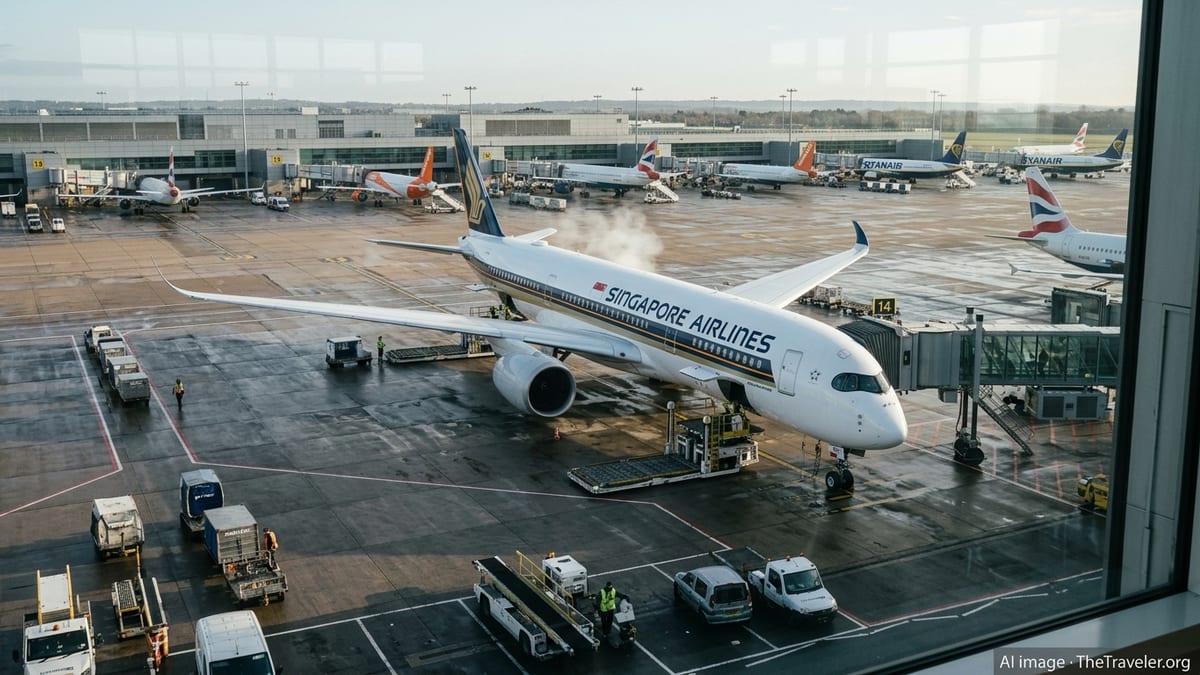
Gatwick–Singapore Route Ramps Up to Daily Service
Publicly available information from Singapore Airlines and Gatwick Airport shows that the non-stop Singapore–London Gatwick route, launched in June 2024 with five weekly flights, is being upgraded to a full daily schedule from the start of the 2025 northern summer season. From 30 March 2025, flight pair SQ312 and SQ309 between Singapore and London Gatwick will operate every day, reflecting robust demand on the corridor.
The move brings Gatwick’s non-stop connectivity to Singapore in line with major European hubs, offering passengers in the UK’s southeast a daily alternative to Heathrow. Industry coverage notes that this increase contributes to a total of around 40 weekly Singapore Airlines flights between the UK and Singapore, consolidating the carrier’s position as a leading operator on the Europe–Asia axis.
For travellers, the daily schedule improves flexibility for both leisure and business trips, with more options to tailor outbound and return dates and better align with regional connections at each end. For Gatwick, it represents another milestone in its strategy to build a broader long-haul network into Asia, following recent expansions to destinations such as Bangkok and the Middle East.
Doubling Daily Frequencies and What It Means for Travellers
While the Singapore–Gatwick operation is moving from less-than-daily to daily service, sector analyses indicate that planners on both sides are working toward effectively doubling the number of daily non-stop options linking Singapore and Gatwick by the middle of the decade. In practice, this means that what is currently a single daily pattern is expected to evolve into two distinct daily departure windows, one favouring daytime travel and the other overnight options.
Doubling the daily frequency in this way changes the nature of the route. Travellers gain a choice of timings that improve same-day connections onward into continental Europe via Gatwick’s short-haul network, as well as late-evening departures that arrive in Singapore early morning for onward links across Southeast Asia, Australia and New Zealand. This mirrors the scheduling flexibility already seen at major hub airports but delivered through Gatwick, which is often more convenient for passengers based south of London.
More daily flights also tend to stabilise fares over time, as additional capacity gives airlines more room to segment demand across cabins and travel dates. While premium seats on non-stop Europe–Asia routes remain highly sought after, greater frequency typically widens the range of price points in economy and premium economy cabins, creating opportunities for advance bookers and off-peak travellers.
Gatwick’s Growing Role as a Europe–Asia Gateway
Gatwick Airport has spent the past few years gradually repositioning itself as a long-haul gateway rather than purely a leisure and low-cost base. Airport news releases highlight rising passenger numbers on services to Asia, including double-digit year-on-year growth on routes to China and Singapore, alongside new links such as Norse Atlantic’s service to Bangkok and additional Middle East frequencies.
The strengthening of the Singapore connection fits this strategy. With a daily or better pattern of long-haul departures to key Asian hubs, Gatwick can offer more convenient one-stop itineraries from regional UK and European cities served by short-haul carriers. For example, passengers from secondary markets in France, Italy, Spain or the Nordic countries can now connect via Gatwick to Singapore, avoiding the need to route through Heathrow or continental mega-hubs.
This evolution also diversifies the London market. Heathrow remains the UK’s primary long-haul gateway, but shifting some Asia-bound traffic to Gatwick spreads demand more evenly across the capital’s airport system. That can ease pressure on constrained Heathrow slots while giving airlines greater flexibility to grow in London without navigating the same capacity limits and waiting lists.
Enhanced Connectivity Across Asia-Pacific and Europe
From the Asia-Pacific perspective, a more frequent Gatwick schedule plugs directly into Singapore Changi’s role as a major transfer hub. Singapore Airlines and its partners offer onward services to destinations across Southeast Asia, North Asia and Oceania, including Australia and New Zealand, which are especially popular with UK travellers. A doubled daily Gatwick pattern increases the number of viable same-day connections on these longer itineraries.
On the European side, Gatwick’s expanding short-haul network, including new double-daily flights to major cities such as Paris and growing links to Mediterranean leisure destinations, means travellers from Asia can connect efficiently to both business centres and holiday hotspots. The result is a denser web of one-stop itineraries between secondary European cities and Asian destinations via a London airport that has historically been underused for this purpose.
These developments also benefit corporate travel planners. With more predictable daily schedules and multiple long-haul departure options, companies can design travel policies that take advantage of Gatwick’s connectivity while avoiding surface transfers between Heathrow and Gatwick. This reduces travel time and complexity for employees while keeping itineraries within preferred airline portfolios.
Competitive Dynamics and Passenger Experience
The push to double daily Singapore–Gatwick flights reflects broader competitive dynamics on Europe–Asia routes. Airlines across the Middle East and Europe continue to add capacity into both Singapore and London, while Gulf and Middle Eastern carriers further intensify competition by offering alternative one-stop options. Strengthening a direct Gatwick link helps maintain non-stop connectivity within this crowded marketplace.
For passengers, the expansion is not only about frequency but also onboard experience. Industry reports highlight that the Singapore–Gatwick route is operated with modern long-haul aircraft configured with lie-flat business-class seats, premium economy and upgraded in-flight entertainment, aligning the product with what travellers expect on flagship intercontinental services. Combining these features with more daily departures gives the route a profile similar to long-established Heathrow services.
Looking ahead, aviation analysts expect Gatwick’s Asia portfolio to keep growing, particularly if the doubled daily pattern between Singapore and Gatwick maintains strong load factors. Successful performance is likely to encourage airlines and regulators to consider further capacity increases or new city pairs, reinforcing Gatwick’s emergence as a significant secondary gateway between Europe and Asia.