

More news on this day
Singapore’s land checkpoints and Changi Airport processed a record 245 million travellers in 2025, a surge in cross-border movements that is rapidly reshaping tourism, commuting and connectivity across Southeast Asia.
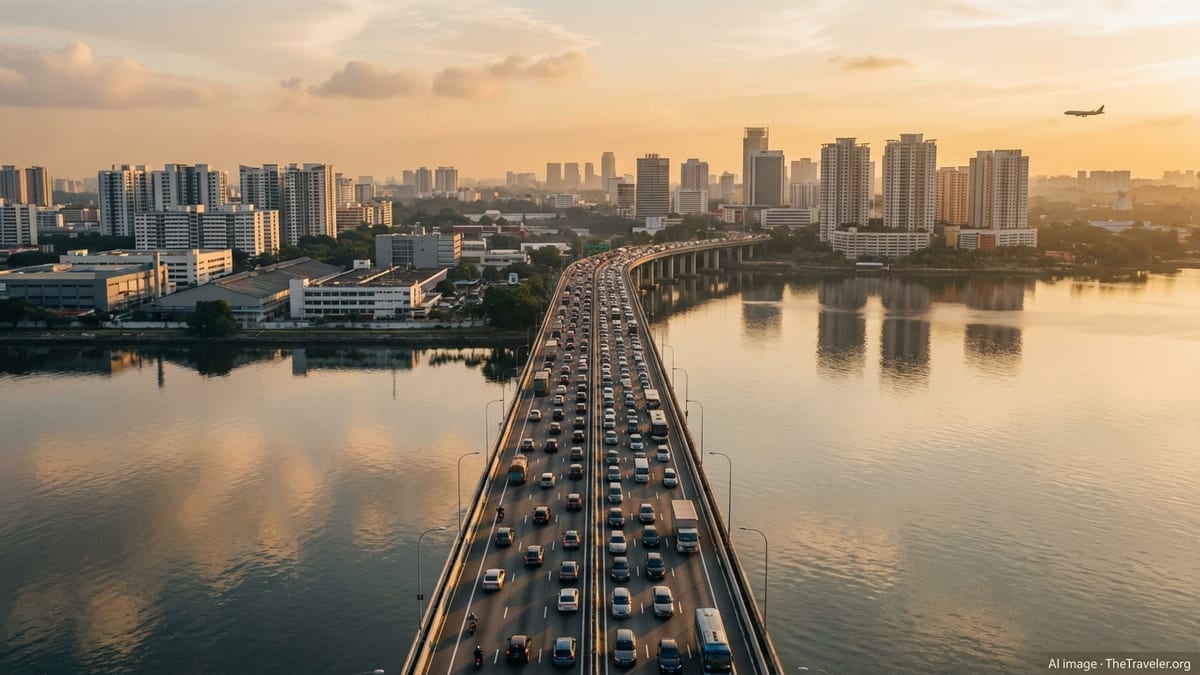
A Record Year at Singapore’s Borders
Official figures released by Singapore’s Immigration and Checkpoints Authority show that close to 245 million people crossed the country’s borders in 2025, eclipsing both the 230 million movements recorded in 2024 and pre-pandemic highs in 2019. The milestone underlines how fully travel has rebounded in one of Asia’s busiest transit hubs, and how central Singapore has become to the region’s short-haul tourism and labour flows.
Roughly three in four of those crossings were made via land, predominantly through the Woodlands and Tuas checkpoints that link Singapore with Johor Bahru in southern Malaysia. At the height of the year-end holidays, volumes reached almost 589,000 travellers in a single day, putting sustained pressure on border infrastructure while signalling renewed appetite for cross-border leisure and shopping trips.
At the same time, Changi Airport handled around 70 million passengers in 2025, an all-time high that marginally surpassed its 2019 record. The combination of booming land and air traffic has pushed Singapore into a new phase as a regional mobility gateway, with knock-on effects for neighbouring Malaysia and Indonesia as well as long-haul travellers planning Southeast Asian itineraries.
Woodlands, Johor Bahru and the New Cross-Border Commute
The Woodlands corridor between Singapore and Johor Bahru has long been one of the world’s busiest land crossings, but 2025’s numbers underscore how deeply integrated the two cities’ economies and tourism sectors have become. Daily flows of workers, families and day-trippers are once again crowding the Causeway, helped by more efficient border clearance systems and pent-up demand after years of pandemic disruption.
For Johor Bahru, the surge is translating into fuller hotels on weekends, busier malls catering to Singaporean shoppers, and more frequent shuttle services linking key commercial districts with the checkpoints. Operators in retail and hospitality report that the return of Singapore visitors is reshaping opening hours and pricing strategies, as businesses cater to short-stay and same-day spending patterns.
For Malaysian residents who commute into Singapore, the higher volumes mean renewed concerns about congestion, but also more transport options and extended operating hours on some cross-border bus and coach routes. Authorities on both sides are leaning heavily on digital tools, including QR-based immigration clearance, to keep queues manageable during peak holiday periods and school breaks.
Changi Airport’s Record Traffic and Indonesia’s Connectivity
In the air, Changi Airport’s near 70 million passengers in 2025 highlight the strength of Singapore as a transfer point for Indonesia-bound travellers. Indonesia consistently ranks among Changi’s top markets, with popular routes from Singapore feeding traffic into Jakarta, Bali, Surabaya and a growing number of secondary destinations.
The rebound is particularly evident on leisure routes. Bali and emerging Indonesian beach and diving locations are benefitting from renewed European, North American and Middle Eastern demand funnelled through Changi. For many long-haul travellers, Singapore remains the preferred first stop in Southeast Asia before continuing to Indonesia, thanks to frequent connections, streamlined transfers and a wide choice of airlines.
For Indonesian carriers and airports, this dynamic is a mixed blessing. On one hand, strong flows through Singapore help fill regional jets and support new point-to-point routes from Indonesian cities into Changi. On the other, it reinforces Singapore’s role as an offshore hub, meaning some premium long-haul traffic bypasses Jakarta and other domestic gateways altogether. The net effect for travellers, however, is more choice, competitive fares and more flexible timings for multi-country trips.
Technology, Security and the Passport-Free Border
The record 2025 numbers were made possible in part by the rapid rollout of automation and biometrics at Singapore’s checkpoints. Authorities report that about half of all travellers cleared immigration without presenting a physical passport last year, relying instead on QR code systems at land borders and tokenless biometric gates at air and sea terminals.
At Woodlands and Tuas, widespread adoption of QR code clearance by motorists, motorcyclists and bus passengers has shortened individual processing times even as overall volumes climb. Travellers heading to or from Johor Bahru now routinely preload their details on mobile apps before reaching the checkpoints, a practice that officials say will become even more important once the cross-border Rapid Transit System opens at the end of 2026.
In parallel with smoother clearance, authorities have tightened security and risk screening. The number of travellers denied entry to Singapore rose significantly in 2025, as did detections of contraband goods. For visitors, that means more visible enforcement and occasional targeted inspections, but it also reassures international tourists that high safety and security standards remain a priority even as traffic soars.
What This Means for Global Travellers Planning 2026 Trips
For travellers planning trips in 2026 and beyond, Singapore’s 2025 border data carries several practical implications. First, those intending to cross between Singapore and Johor Bahru by road should expect heavy traffic at peak times and plan around holiday weekends, school vacations and major shopping events. Off-peak travel windows and pre-registered QR code clearance can make a noticeable difference to journey times.
Second, Changi’s record-breaking passenger volumes mean more flight options across Southeast Asia, including to secondary cities in Malaysia and Indonesia that are increasingly plugged into Singapore’s network. Itineraries that combine a stop in Singapore with beach time in Malaysia’s islands or Indonesia’s archipelagos are becoming easier to arrange on a single ticket, often with shorter layovers than before.
Finally, the scale of Singapore’s land and air movements reinforces its role as a strategic starting point for multi-country trips across Southeast Asia. Whether travellers are flying in from Europe or North America, hopping over from Australia, or moving within the region, the 245 million border crossings logged in 2025 signal an ecosystem that is not just back to normal but entering a new phase of growth, integration and choice.