

More news on this day
As Disney Cruise Line’s new Disney Adventure sails toward its year-round homeport in Singapore, tourism leaders across Southeast Asia are bracing for a surge in family travel, cruise demand and regional competition that many are already calling a once-in-a-generation shift.
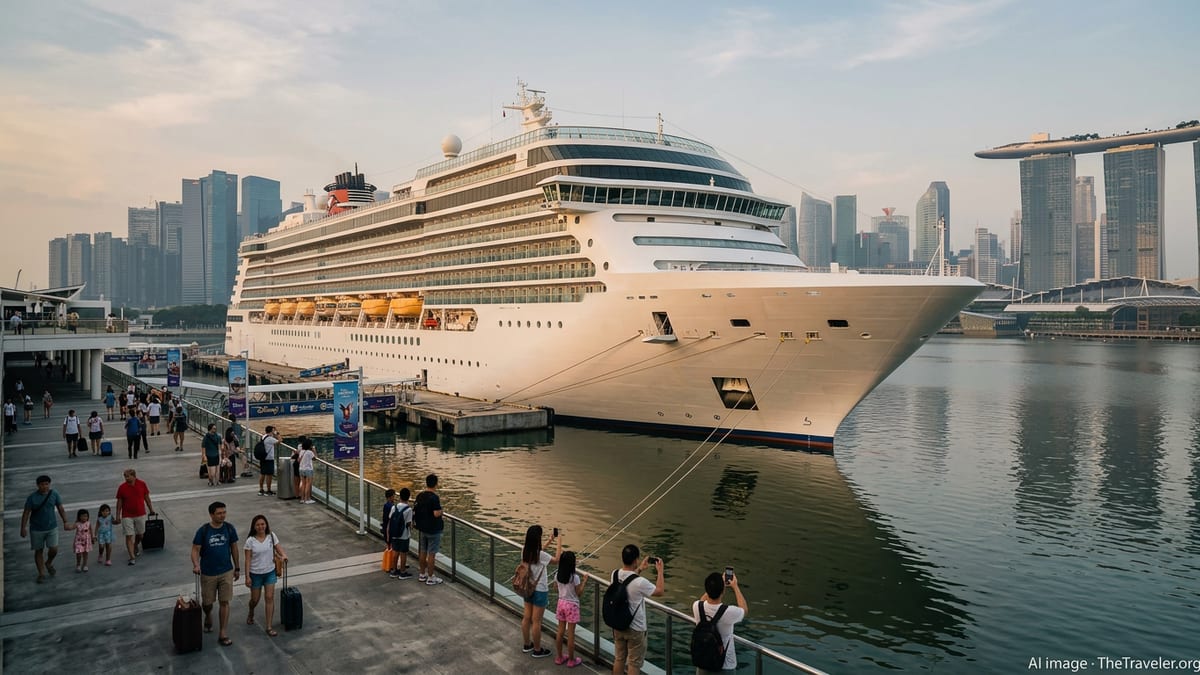
A Mega-Ship Signals a New Era for Singapore Cruises
Disney Adventure, the largest vessel in the Disney Cruise Line fleet, is on her delivery voyage from Europe to Singapore and is scheduled to begin commercial sailings from Marina Bay Cruise Centre in March 2026. The ship, refitted from the partially built Global Dream, will be the first Disney vessel to homeport year-round in Asia, under a multi-year agreement with the Singapore Tourism Board. Industry analysts say the deployment effectively cements Singapore’s status as the region’s primary family-cruise gateway.
Originally slated to launch in December 2025, Disney Adventure’s maiden season was pushed back by about three months due to shipyard delays and additional fitting-out work. Travel agents across Asia report that many early-booked guests have rebooked into the revised 2026 schedule rather than cancel altogether, a sign of pent-up demand for Disney-branded cruising close to home. For Singapore, the rescheduled start still falls firmly within its broader strategy to anchor marquee ships in the city and drive repeat regional visitation.
The vessel is expected to carry around 6,000 passengers at double occupancy, placing it among the largest cruise ships ever based in Southeast Asia by capacity. With three- and four-night itineraries targeted at regional travelers, each turnaround sailing will inject thousands of visitors into the city’s hotels, attractions and retail districts before and after cruises.
Tourism Windfall for Singapore and Its Neighbours
The economic implications for Singapore are significant. Cruise authorities in the city estimate that a large homeported vessel can generate substantial onshore spending from pre- and post-cruise stays, excursions and retail activity. With Disney Adventure committed for at least five years of year-round operations, local tourism businesses are planning for a steady stream of family travelers, multigenerational groups and fly-cruise visitors using Changi Airport as their entry point.
Neighbouring destinations around the Malay Peninsula, Indonesia and the Gulf of Thailand are also positioning themselves to benefit. While Disney has yet to publish a full list of confirmed ports for its short sailings, regional tourism boards are quietly upgrading cruise piers, customs facilities and shore-excursion offerings in hopes of securing calls once itineraries diversify beyond sea days. The prospect of Disney-branded shore experiences, from beach days to cultural tours, is particularly attractive for destinations seeking more family and premium segment business.
This comes as Southeast Asia’s broader cruise scene accelerates. Other major lines have announced expanded 2026 and 2027 deployments from Singapore, leveraging the city’s air connectivity and port infrastructure. Industry observers say Disney’s arrival raises the bar on product quality and theming, which could prompt competitors to refresh ships, enhance entertainment and tailor more offerings to Asian families.
Onboard Storytelling Designed for Asian Families
Disney Adventure will debut a collection of themed zones and experiences that blend Disney, Pixar and Marvel story worlds with touches tailored to Asian tastes. Early previews highlight multiple immersive neighborhoods, family dining concepts that accommodate extended groups, and entertainment scheduled to suit guests flying in from different time zones around the region. The ship’s design also takes into account the popularity of shopping, gaming and multigenerational travel among Asian cruisers.
Cabin inventory is weighted toward family cabins and connecting staterooms, while public spaces are configured to handle large groups moving between shows, character experiences and outdoor deck areas. Analysts say this configuration reflects Disney’s belief that Southeast Asia can sustain a dedicated family-cruise product, rather than simply reassigning a ship seasonally from North America or Europe.
For Disney, the ship is also a showcase of how it can adapt a vessel originally designed for another brand to meet its own safety, entertainment and service standards. Behind the scenes, the refit has involved extensive work by Walt Disney Imagineering teams, from reconfiguring atrium spaces to installing new restaurants, kids’ clubs and entertainment technology tuned to multilingual audiences.
How the Disney Arrival Reshapes Regional Competition
The decision to base Disney Adventure in Singapore for at least five years is already influencing deployment strategies of other lines in Southeast Asia. Some operators are emphasizing value-focused sailings from alternative ports such as Port Klang, Penang or Phuket, while others are doubling down on premium and luxury itineraries that differentiate themselves from Disney’s family-centric appeal. The net effect is a richer menu of cruise choices for regional travelers, from short fun-focused getaways to longer cultural voyages.
For Singapore, the ship reinforces its role at the center of this increasingly crowded map. Changi Airport’s air links, streamlined cruise terminal operations and the city’s reputation for safety and cleanliness are key selling points for families considering a first-time cruise. Hoteliers and attraction operators are already partnering more closely with cruise lines, building bundled packages that combine theme parks, cultural districts and cruises into one seamless holiday.
Tourism strategists note that Disney’s presence could also shift travel patterns beyond the city-state. Families may extend their trips to include side visits to nearby countries before or after a cruise, using low-cost carriers and regional rail links to reach beach destinations in Thailand, heritage towns in Malaysia or emerging resort areas in Indonesia. That connectivity, they say, is why Southeast Asian governments are taking the cruise opportunity seriously, investing in both hard infrastructure and cross-border marketing campaigns.
What Travelers Need to Know Before Booking
Prospective guests looking at Singapore-based Disney Adventure sailings should expect strong early demand, particularly around school holidays in markets such as Singapore, Malaysia, Indonesia, Australia and India. Travel advisers recommend planning air tickets and hotel stays together with cruise bookings, as peak-period flights into Singapore can sell out quickly once new sailings open for sale.
While Disney has indicated that early itineraries will focus on three- and four-night cruises, many guests are expected to build longer holidays around the voyage. That means factoring in at least one or two nights in Singapore before embarkation, both to recover from jet lag and to enjoy marquee attractions such as Marina Bay’s skyline, Sentosa’s beaches and the city’s food districts. Budgeting for these add-ons is crucial, as Singapore is generally more expensive than many nearby destinations.
Families should also be aware of the highly themed nature of the Disney product. Onboard activities, entertainment and dining schedules tend to be packed, and advance planning via cruise apps and pre-booked experiences may be necessary to secure the most popular character meet-and-greets and specialty dining slots. For first-time cruisers, travel agents recommend choosing sailings that align with school calendars and shoulder seasons to strike a balance between atmosphere and crowd levels.
For Southeast Asia’s tourism industry, however, the key message is clear: with Disney Adventure’s arrival, the region is entering a new phase where cruise vacations are no longer a niche or outbound-only product. Instead, they are becoming a mainstream option that ties together airports, ports and cities across multiple countries, reshaping how families experience the region from the sea up.