

More news on this day
Flying out of Singapore will become slightly more expensive from late 2026, as the city-state rolls out a pioneering levy on departing flights to fund cleaner jet fuel and accelerate the aviation industry’s shift toward lower-carbon travel.
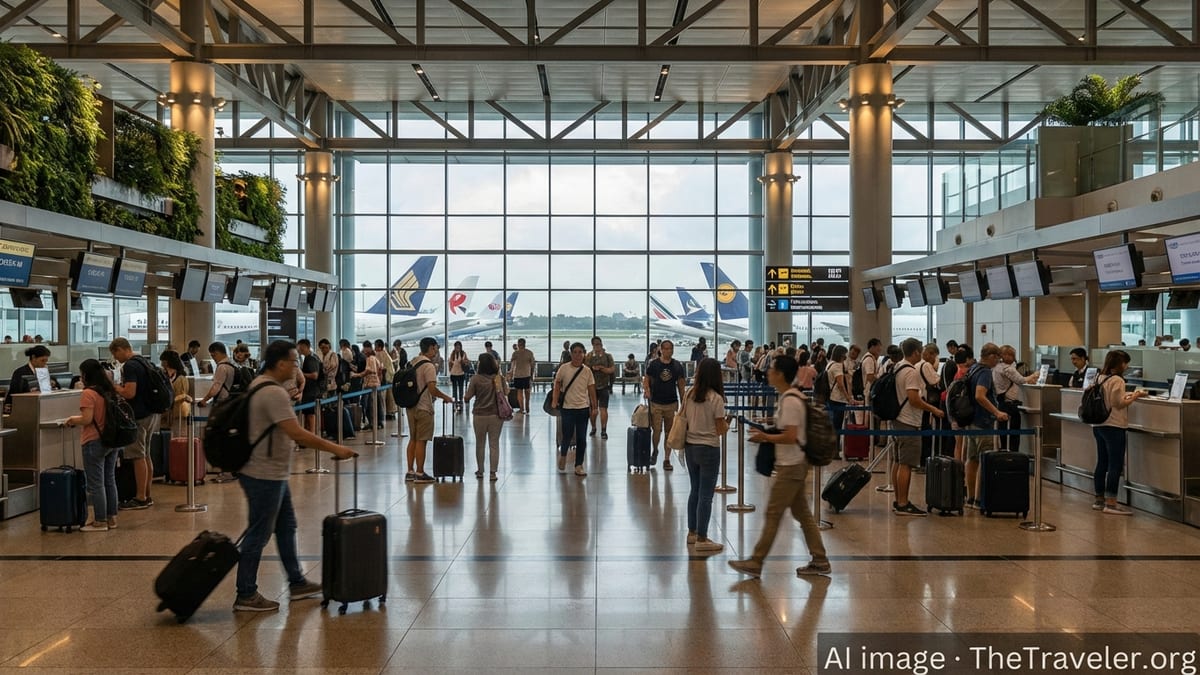
A World-First Green Fuel Charge on Tickets
Singapore is positioning itself at the forefront of sustainable aviation by introducing what officials describe as one of the world’s first nationwide levies dedicated specifically to financing sustainable aviation fuel, or SAF, for all departing flights. From tickets sold on or after April 1, 2026, for travel departing Singapore from October 1, 2026, passengers will see a separate line item on their fare that channels money directly into cleaner fuel purchases for aircraft taking off from Changi and Seletar airports.
The levy will apply to all commercial flights originating in Singapore, with the exception of passengers who are merely transiting through the hub. Authorities have chosen a levy, rather than an obligation placed directly on airlines to uplift a fixed SAF blend, as a way to make costs predictable for both carriers and travelers. The Civil Aviation Authority of Singapore has stressed that the mechanism is designed so that “all aviation users do their part” to support decarbonisation, at a level that remains manageable for Asia’s busiest air hub.
Under the framework announced so far, the funds collected through the levy will flow into a dedicated sustainable aviation fuel pool administered by Singapore’s aviation authorities. Instead of individual airlines negotiating their own supply, the state will procure SAF centrally and arrange blending into conventional jet fuel at the airport, using its scale to secure better pricing and more reliable volumes than carriers might be able to achieve alone.
How Much More Passengers Will Pay
For most travelers, the new charge will be modest, but noticeable. Economy and premium economy passengers will pay between S$1 and S$10.40 per ticket, depending on destination band, while those flying in business or first class will pay between S$4 and S$41.60. The levy is higher for long-haul routes, which burn more fuel, and for premium cabins, which occupy more space per passenger and are associated with higher per-seat emissions.
The Civil Aviation Authority has grouped destinations into four broad distance bands for simplicity. Flights within Southeast Asia sit in the lowest band and will attract the minimum S$1 charge for economy seats. Journeys to North and South America fall into the highest band and will incur the maximum S$10.40 for economy and S$41.60 for business and first class. The amounts will appear as a transparent, itemised charge on air tickets, signaling clearly to consumers that part of their fare is helping to pay for greener fuel.
While any increase in airfare is sensitive in a price-competitive market, Singaporean officials and airline executives argue that the levy has been calibrated to remain a small fraction of total ticket prices. On many regional routes, the additional S$1 to S$3 will be barely perceptible compared with normal fare volatility. Even on long-haul journeys, the S$16 to S$41.60 premium for a trip that may already cost well over a thousand dollars is framed as a manageable contribution to making aviation more sustainable.
Fueling a Mandate for Cleaner Skies
The levy underpins a clear national target: by 2026, at least 1 percent of all jet fuel used at Singapore’s two main airports must come from sustainable sources, with authorities aiming to lift that share to between 3 percent and 5 percent by 2030, subject to global supply. Sustainable aviation fuel can cut lifecycle carbon emissions by up to around 80 percent compared with conventional kerosene, depending on the feedstock and production pathway, without requiring changes to existing aircraft or airport fueling infrastructure.
Singapore’s Sustainable Air Hub Blueprint sets out a broader roadmap to net-zero emissions from both airport operations and international flights by mid-century. Beyond SAF, the plan includes expanding solar power at airport facilities, electrifying ground vehicles, and using more efficient air traffic management to cut fuel burn. But policymakers and industry leaders repeatedly emphasise that cleaner fuel will be the single biggest lever, estimated to deliver around two thirds of the emissions reductions needed for aviation globally.
By committing to a specific SAF uptake and backing it with a dedicated funding stream, Singapore is sending a demand signal to fuel producers that there will be a guaranteed market for low-carbon jet fuel in the region. Officials hope that this certainty will help unlock the billions of dollars in investment needed to build out new refineries and supply chains across Southeast Asia, bringing down costs over time and making higher blending targets more feasible.
Stability Through a Fixed Multi-Year Levy
One of the distinctive features of Singapore’s approach is the decision to fix the levy rate for an initial multi-year period, regardless of how global SAF and oil prices fluctuate. Aviation regulators have indicated that the levy has been calculated around a 1 percent SAF blend in 2026 and will remain constant even if the actual market price of sustainable fuel swings significantly higher or lower.
This design is meant to provide price certainty for passengers and airlines in a notoriously volatile fuel market, while allowing flexibility in how much SAF is ultimately purchased. If prices fall, the same levy will buy more sustainable fuel, nudging the blend above the 1 percent baseline; if prices rise, authorities can choose to buy a smaller volume while keeping the charge per ticket unchanged, at least until the next scheduled review.
Singapore’s aviation officials argue that this model balances environmental ambition with competitiveness. As a global connecting hub, Changi competes with airports in the Gulf, East Asia, and elsewhere that may not yet impose similar green fuel costs. Singapore’s transparent, predictable levy, they say, helps avoid sudden spikes in ticket prices that could push traffic to rival hubs, while still ensuring that the transition to cleaner aviation is meaningfully funded.
Southeast Asia’s Bid to Become a SAF Powerhouse
The levy is closely tied to Singapore’s ambition to anchor a regional ecosystem for sustainable aviation fuel production. The country already hosts one of the world’s largest facilities capable of producing SAF from waste oils and residues, and expansion projects are under way to boost output in the years ahead. Policymakers see the levy-backed demand from flights as a foundation on which producers can build larger, more efficient plants.
Across Southeast Asia, governments and energy companies are racing to tap abundant feedstocks such as used cooking oil, agricultural residues, and forestry by-products. Thailand and Malaysia have both announced domestic SAF milestones, while Vietnam and Indonesia are exploring ways to scale up production through partnerships and pilot projects. Singapore aims to leverage its position as a trading and refining hub to coordinate supply, finance, and technology across the region.
Supporters say the combination of resource availability and a clear policy framework could turn Southeast Asia into a major contributor to the global SAF market by the 2030s. With global airlines under pressure to decarbonise, and regulators in Europe and elsewhere tightening climate rules, a robust, competitively priced supply of sustainable jet fuel from the region could prove strategically valuable, both economically and environmentally.
Balancing Costs, Competitiveness and Climate Pressure
Even as Singapore moves ahead, the new levy spotlights the delicate balance aviation hubs must strike between climate ambition and economic competitiveness. Airlines worldwide warn that the high cost of SAF, often several times that of conventional jet fuel, threatens to erode margins and push up fares if mandates are applied too aggressively without parallel support measures.
In Europe, where regulators are phasing in binding SAF blending requirements, some major carriers have cautioned that long-haul routes could become commercially unviable as fuel costs surge. Singapore’s strategy differs by using a dedicated passenger levy and centralised procurement instead of strict blending mandates imposed on individual airlines. Officials argue this approach gives the hub more flexibility to adjust fuel purchases and shield carriers from some price volatility, while still moving the needle on emissions.
Industry voices, including the head of the International Air Transport Association, have publicly described Singapore’s green fuel levy as a measured and sensible step that is unlikely to undermine its status as a leading global hub. Since many competing airports and airlines are also under pressure to decarbonise, the expectation is that passengers everywhere will gradually face some form of climate-related cost on their tickets, whether through levies, higher base fares, or carbon pricing schemes.
What It Means for Travelers and Airlines
For individual travelers planning trips out of Singapore from late 2026, the practical impact of the new levy will depend on their destination and chosen cabin. A holidaymaker flying in economy to a nearby Southeast Asian city may see only a S$1 surcharge, while a family heading to North America could face an additional S$10.40 per person on their long-haul tickets. Business travelers in premium cabins will bear a larger share of the cost, reflecting their greater carbon footprint per seat.
Airlines, meanwhile, will take on the administrative role of collecting the levy and passing the funds to the national SAF pool. In exchange, they benefit from centralised procurement that secures greener fuel at scale and ensures a level playing field, since all carriers operating from Singapore are subject to the same charges and fuel-blending framework. This reduces the risk that early movers pay a disproportionate price for adopting sustainable fuel.
Travel industry analysts expect the levy to become a new normal in fare structures rather than a temporary surcharge, especially as climate concerns intensify and SAF production ramps up. For frequent flyers and corporate travel buyers, the charge may also become a visible metric of the emissions-related cost of air travel, potentially encouraging more conscious decisions about route choice, cabin class and trip frequency.
A Test Case for Global Green Aviation Policy
As governments search for practical ways to reconcile booming air travel demand with climate commitments, Singapore’s SAF levy is likely to be closely watched as a test case. If the scheme succeeds in scaling up sustainable fuel use without driving traffic away from Changi, it could offer a template for other hubs seeking to put a clear price on aviation emissions while maintaining their competitive edge.
The initiative also illustrates a broader policy shift, from voluntary carbon offsets and aspirational net-zero pledges toward specific, enforceable mechanisms that link passengers’ wallets with the cost of cleaner flying. By embedding a climate-related charge directly into airfares and earmarking the proceeds for sustainable fuel, Singapore is effectively hardwiring decarbonisation into the economics of its aviation sector.
Whether this model spreads will depend on how travelers, airlines and rival hubs respond over the next few years. What is already clear is that, starting in 2026, anyone booking a flight out of Singapore will be taking part in a live experiment in funding greener skies, one small surcharge at a time.